Table of Contents
- What You’ll Need Before You Book Your Road Test
- DMV Road Test Requirements for Non-Citizens
- Step-by-Step Road Test Preparation for International Students
- Common Road Test Mistakes to Avoid
- Driving Test Tips for Nervous Drivers
- Cultural Driving Differences International Students Should Expect
- Driving School vs. Self-Practice: Which Gets You Test-Ready?
- Insurance and Vehicle Registration for Non-Residents
- Frequently Asked Questions
Last Updated: September 14, 2026
What You’ll Need Before You Book Your Road Test
Road test preparation for international students starts long before you sit behind the wheel with an examiner. In New York, you need a valid learner permit, proof of identity and residency status, and completion of the state’s 5-hour pre-licensing course before you can schedule a road test at all. This guide from White Plains Driving Center walks through every requirement, from documents to practice hours, so nothing derails your appointment.
The biggest mistake students make is booking a test date before their paperwork is fully in order. The second-biggest mistake is assuming a foreign license removes the need to test. It doesn’t.
Documents and Residency Status
Bring your unexpired foreign passport, your I-94 or visa documentation, and proof of your current address. The DMV requires original documents, not photocopies. If your name appears differently across documents, resolve that mismatch before your appointment.
Permit, Pre-Licensing Course, and Practice Hours
New York requires all first-time applicants, regardless of nationality, to complete a 5-hour pre-licensing course and log supervised practice hours before the road test. There’s no shortcut for holders of foreign licenses. Plan for several weeks between your permit and your test date.
| Requirement | What You Need | Typical Timeline |
|---|---|---|
| Learner permit | Pass written knowledge test | Day one |
| Pre-licensing course | 5-hour DMV-approved class | Within 30 days of permit |
| Supervised practice | Behind-the-wheel hours with licensed adult | Ongoing before test |
| Road test booking | Permit + course certificate | Once above are complete |
DMV Road Test Requirements for Non-Citizens
Non-citizens face the same core requirements as citizens, plus stricter documentation checks. You must prove lawful presence and verify your identity through documents the DMV accepts. A work visa, student visa, or green card all qualify, but the specific document combination matters.
Your immigration paperwork can expire mid-process. If your visa status lapses between your permit and your test, you may need to restart the documentation step. Check expiration dates the week you book.
The New York DMV licensing requirements page lists the current acceptable documents. Review it directly rather than relying on secondhand summaries, since requirements shift.
Step-by-Step Road Test Preparation for International Students
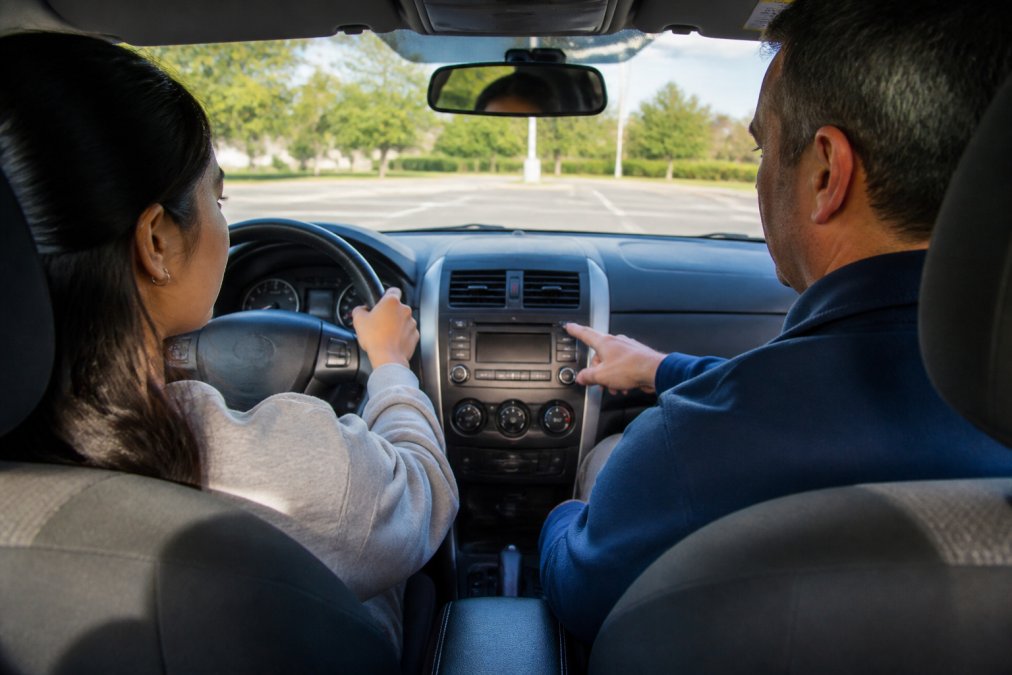
Preparation follows four sequential steps: learn the rules, drill the maneuvers, inspect the vehicle, then run a full simulation. Skipping any step leaves a gap the examiner will notice.
Step 1: Master U.S. Traffic Laws and Road Signs
Start with the written driver’s manual for your state, then study road signs until recognition is instant. Right-of-way rules, school zone speeds, and turn signal requirements come up constantly on the practical test. The NHTSA driving safety resources explain the national standards behind many state rules.
Step 2: Practice Test Maneuvers Until They Feel Automatic
Parallel parking, three-point turns, lane changes, and controlled stops are the maneuvers examiners score most closely. Practice each until you can perform it without narrating your own steps. Check your blind spot every single time you change lanes, even when the road is empty.
Step 3: Complete a Vehicle Inspection Checklist
Before the examiner gets in, confirm:
- Brake lights, headlights, and turn signals all function
- Tires are properly inflated with visible tread
- Windshield and mirrors are clean and unobstructed
- Registration and insurance cards are in the vehicle
- Horn and wipers work
A failed inspection ends the test before it starts. This is the single most avoidable failure.
Step 4: Run a Full Test Simulation
Drive the actual test route if you can, or a close approximation, with someone scoring you like an examiner. Simulate the full sequence: inspection, parking, intersection turns, and the return to the DMV. Anxiety drops sharply once the route feels familiar.
Practice your test route at the same time of day as your appointment. Traffic patterns, school zone activity, and pedestrian volume change dramatically between morning and afternoon, and the examiner scores you against real conditions.
Common Road Test Mistakes to Avoid
The most common road test mistakes to avoid are rolling stops, missed blind-spot checks, and failing to signal before maneuvers. Each is an automatic point deduction, and enough of them fail the test outright.
Watch for these specific errors:
- Rolling through stop signs. Come to a complete stop, count to two, then proceed.
- Forgetting the turn signal. Signal before every lane change, turn, and pull-out.
- Driving too slowly out of caution. Excess caution reads as uncertainty and can fail you.
- Gripping the wheel rigidly. Examiners notice tension; it signals you’re not in control.
- Ignoring the rearview mirror. Check it every few seconds, not just when turning.
Never argue with the examiner about a scored error. It cannot change the result and it damages the professional impression you’re building. Accept the feedback, finish the route, and debrief afterward.
Driving Test Tips for Nervous Drivers
Nervous drivers perform worse not because they lack skill, but because anxiety hijacks the working memory they need for smooth decisions. The fix is preparation that makes the test feel routine rather than novel.
Try these approaches:
- Practice the exact route. Familiarity removes the unknown, which is what anxiety feeds on.
- Breathe deliberately before you start. Four slow breaths in the parking lot lower your heart rate.
- Narrate your actions silently. “Signal, mirror, blind spot, move” keeps you methodical.
- Arrive early. Rushing to the appointment spikes anxiety before you’ve even started.
- Reframe the examiner. They’re checking competence, not hunting for flaws.
If anxiety has kept you from driving at all, structured instruction helps more than solo practice. White Plains Driving Center specializes in calm, patient instruction for nervous drivers, and our DMV-certified instructors build confidence at your own pace.
Cultural Driving Differences International Students Should Expect
Driving norms differ sharply between countries, and the gap trips up experienced drivers from abroad. Students from countries with aggressive lane discipline or informal right-of-way customs often need to unlearn habits the DMV penalizes. Adapting to these local expectations becomes even more critical when seasonal hazards emerge, requiring a mastery of winter driving tips to ensure safety on unfamiliar roads.
Key differences to expect:
- Strict right-of-way rules. In the U.S., right-of-way is codified, not negotiated. Yield where the law says yield.
- Signal use is mandatory, not optional. Many countries treat signals as a courtesy; here they’re required.
- School zones are strictly enforced. Reduced speeds apply during posted hours, no exceptions.
- Pedestrians have priority. At crosswalks, you stop. You don’t edge forward.
- Speed limits are ceilings. Driving well under the limit can be scored as a hazard.
The NHTSA pedestrian safety guidance outlines the crosswalk rules examiners watch for most closely.
Driving School vs. Self-Practice: Which Gets You Test-Ready?
Professional instruction can be highly beneficial for international students, as an instructor can correct habits a friend or family member might not catch. Self-practice is often more flexible and can be lower cost, but it typically lacks structured feedback on the exact maneuvers the examiner scores.
| Approach | Strength | Weakness | Best For |
|---|---|---|---|
| Driving school | Expert feedback, test-route familiarity | Higher cost | Nervous drivers, first-timers |
| Self-practice | Flexible, low cost | No expert correction | Confident drivers with licensed supervision |
| Combined | Feedback plus volume | Requires scheduling | Most international students |
A common mistake is logging hours without correcting errors. Ten hours of practice with bad habits is worse than five hours with an instructor who fixes them. White Plains Driving Center has served Westchester drivers since 1978, and our packages include road test support so you’re prepared for exactly what the examiner checks.
Insurance and Vehicle Registration for Non-Residents
You cannot take the road test in an unregistered or uninsured vehicle, and non-residents often discover this too late. The test vehicle must carry valid registration and liability insurance, regardless of who owns it. This is a common hurdle that can cancel your appointment at the counter.
Why Insurance Is Harder Without a U.S. Credit History
Most states let insurers use a credit-based insurance score when setting rates. If you have no U.S. credit file, you may be quoted a higher premium, asked for a larger down payment, or declined by mainstream carriers altogether. This is not a reflection of your driving record, it is a function of how U.S. insurers price risk.
Practical workarounds that students commonly use:
- Get a U.S. credit file started early. A secured credit card or a student bank account with a credit-building feature gives insurers something to score within a few months.
- Ask about non-credit-based scoring. Some carriers offer programs that evaluate driving history and prior insurance instead of credit. Ask directly; it is rarely advertised.
- Use an international driving history letter. If your home insurer can provide a claims-free letter in English, some carriers will accept it as evidence of prior coverage.
- Consider a non-owner policy. If you do not own a car but will borrow one for the test, a non-owner liability policy covers you as a driver and satisfies many state minimums.
Borrowing a Car for the Test
If you are borrowing a vehicle, confirm in writing that its policy covers you as a permissive driver. Many policies exclude non-household drivers, and some exclude drivers under a certain age or with a foreign license. A phone call to the insurer before test day is worth more than a guess at the counter.
The vehicle also needs current registration and a valid inspection sticker where the state requires one. If the owner’s registration is expired, the examiner will not proceed, no matter how well you drive.
Buying and Registering a Vehicle
If you are buying a car, sequence matters:
- Secure insurance first. You generally cannot register a vehicle without proof of coverage.
- Title and register the vehicle with the state motor vehicle agency. Bring your passport, immigration documents, and proof of address.
- Get plates and an inspection if your state requires one.
- Only then book your road test.
If your address changes, a common situation for students moving between dorms, sublets, and apartments, update it with both the insurer and the motor vehicle agency. A mismatch between the address on your documents and your actual residence can stall the process.
Do not let your insurance lapse between booking and test day. Even a short gap can void coverage and force you to reschedule. Set a calendar reminder for the renewal date the day you take out the policy.
Sort out insurance and registration the same week you book your test. Treat it as a prerequisite, not an afterthought, and you will avoid the most common last-minute cancellation.
Frequently Asked Questions
Can international students get a driver’s license in the U.S.?
Yes. International students can apply for a driver’s license in most states, including New York, as long as they meet the DMV’s identification and residency requirements. You will typically need a valid passport, visa, I-94, and proof of local address. The process starts with a written test for your learner’s permit, followed by a road test. Many international students complete road test preparation through a driving school to adjust to U.S. traffic laws and road signs before test day.
What documents do international students need for a DMV road test?
For the DMV road test requirements for non-citizens, bring your learner’s permit, a completed 5-hour pre-licensing course certificate (if required by your state), proof of vehicle registration and insurance, and a vehicle that passes a basic safety inspection. Your accompanying driver must hold a valid license. Check your state DMV website for the exact list, because requirements vary and missing paperwork can cancel your appointment.
How can I overcome driving anxiety before my road test?
Driving test tips for nervous drivers start with familiarity: practice the same routes and maneuvers until they feel routine. Schedule a mock road test with an instructor so the real exam feels less new. Use slow breathing before you start the car, and remind yourself that examiners expect small corrections, not perfection. Booking your test at a quieter time of day can also reduce pressure. Nervousness is common, and structured practice is the most reliable way to reduce it.
Do I need a Social Security number to take a road test?
Not always. Many state DMVs allow international students and other non-citizens to apply for a learner’s permit and take a road test without a Social Security number, provided they bring alternative documentation such as a passport, visa, and I-94. Some states issue a letter or require a specific form explaining why you do not have an SSN. Confirm the current rules with your state licensing agency before you book your test appointment.