Table of Contents
- What to Expect on Your DMV Road Test
- How Long Is a Driving Test and How to Use That Time
- What to Bring to Your DMV Road Test
- Common Driving Test Mistakes to Avoid
- Test-Day Preparation: Mindset, Anxiety, and Routine
- Vehicle-Specific Preparation: EVs vs. Gas-Powered Cars
- What to Do If You Don’t Pass the First Time
- Conclusion
Last Updated: August 13, 2026
What to Expect on Your DMV Road Test
The DMV road test is a structured, behind-the-wheel evaluation designed to confirm that you can operate a vehicle safely and follow traffic laws. At White Plains Driving Center, we’ve guided thousands of students through this exact process since 1978, and the single biggest factor separating those who pass from those who don’t is knowing what’s coming before they sit down in that driver’s seat.
The test typically takes place on public roads near your local DMV office. An examiner rides in the passenger seat and scores your performance against a standardized checklist. You won’t be asked to do anything unusual. The maneuvers are predictable, the route is finite, and the criteria are published. The problem is that most first-time test-takers walk in without fully understanding how scoring works or which mistakes carry the most weight.
How the Examiner Scores You
The examiner uses a point-based deduction system. Every error costs points, and accumulating too many points below the passing score results in a failing grade. Minor errors, like a slightly wide turn, cost fewer points. Critical errors, such as running a red light, rolling through a stop sign, or failing to yield right-of-way at an intersection, can result in automatic disqualification regardless of how well you perform on everything else.
The examiner is not looking for perfection. They want to see that you are consistently safe, predictable, and aware of your surroundings. Checking blind spots before lane changes, signaling well in advance, and maintaining appropriate speed management throughout the route all signal to the examiner that you’ve absorbed defensive driving principles, not just the mechanics of steering control.
Key Maneuvers You Will Be Asked to Perform
Most road tests include a core set of maneuvers. Expect some combination of the following:
- Parallel parking between two designated markers or parked vehicles
- Three-point turn (also called a K-turn) to reverse direction on a narrow road
- Backing in a straight line for a set distance
- Lane changes with proper signaling and blind spot checks
- Navigating intersections, including uncontrolled ones where right-of-way judgment matters
- Emergency stop or quick stop when directed by the examiner
The specific maneuvers required vary by state and sometimes by DMV location. Reviewing the New York State DMV driver’s manual gives you the definitive list for your jurisdiction.
How Long Is a Driving Test and How to Use That Time
A driving test typically lasts between 15 and 30 minutes for the behind-the-wheel portion. The actual drive time is often closer to 15 to 20 minutes, with a few minutes before and after for the vehicle inspection and paperwork.
That’s a short window. Here’s the part most people underestimate: the first 60 to 90 seconds of the test carry disproportionate weight. Examiners form early impressions, and a confident, deliberate start, adjusting your mirrors, buckling your seatbelt, and checking surroundings before pulling out, signals competence before you’ve driven a single block.
Use those opening moments deliberately. Adjust the seat so you have full pedal travel and clear sightlines. Set your mirrors before the examiner even asks. These aren’t just safety steps; they’re visible proof that you approach driving with the right habits.
| Phase | Approximate Duration | What to Focus On |
|---|---|---|
| Pre-drive vehicle check | 2-5 minutes | Documents, mirrors, seat, seatbelt |
| Active driving route | 15-20 minutes | Signaling, speed, intersections, maneuvers |
| Parallel parking or K-turn | 3-5 minutes | Slow speed, full stops, spatial awareness |
| Post-test debrief | 2-3 minutes | Listen carefully to examiner feedback |
What to Bring to Your DMV Road Test
Showing up without the right documents is one of the most avoidable reasons people fail to even start their road test. The examiner won’t proceed without them.
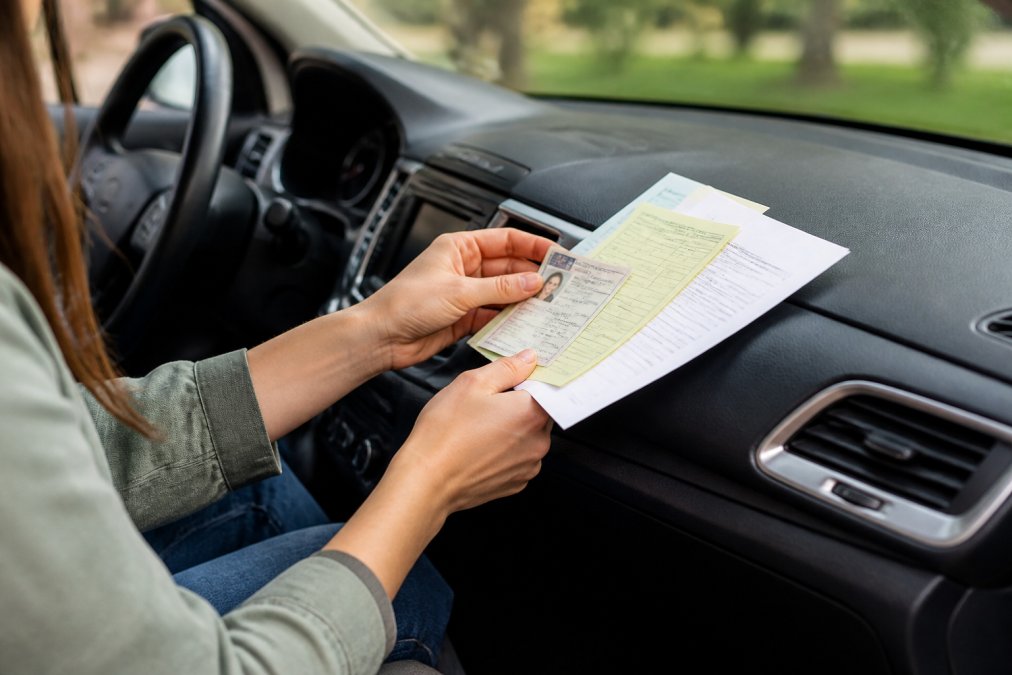
Here’s what you’ll need:
- Learner permit (valid and not expired)
- Vehicle registration for the car you’re using
- Proof of insurance for that vehicle
- Completed MV-285 form (the road test application, if required by your state)
- Proof of pre-licensing course completion (the 5-hour pre-licensing course certificate in New York)
The pre-licensing course certificate is a requirement in New York State before you can schedule your road test. According to New York State DMV road test requirements, you must present this certificate on test day or the appointment will be canceled.
Vehicle Requirements and Safety Checks
The vehicle you bring must pass a basic safety inspection before the test begins. The examiner will check several items before allowing you to proceed. A vehicle that fails this check means an automatic cancellation, even if you drove there perfectly.
Your car must have:
- Working brake lights, headlights, and turn signals
- Functioning horn
- Windshield free of obstructions and properly intact
- Working seatbelts for both driver and examiner
- No warning lights illuminated on the dashboard (check engine, brake, ABS)
- Valid registration plates
- Adequate tire condition (no visibly flat or severely worn tires)
If you’re borrowing a car for the test, check all of these items the day before, not the morning of. A dead brake light discovered in the DMV parking lot cannot be fixed on the spot, and you’ll lose your appointment fee.
Common Driving Test Mistakes to Avoid
Most road test failures come down to a handful of recurring errors. Knowing them in advance is half the battle.
Rolling stops at intersections. This is the most common disqualification trigger. A stop sign requires a full, complete stop where the vehicle reaches zero miles per hour. Many drivers slow dramatically but never fully stop. The examiner will catch it every time.
Failing to check blind spots before lane changes. Mirrors alone are not enough. A physical head turn to check the blind spot is required and expected. Skipping this step, even once on a lane change, costs points. Doing it consistently throughout the test demonstrates genuine hazard perception.
Incorrect lane positioning. Drifting toward the center line or riding the shoulder creates an unsafe impression. Maintain a consistent position within your lane throughout the route.
Speeding or driving too slowly. Both are problems. Driving 10 mph under the speed limit on an open road suggests a lack of confidence and can be scored as impeding traffic. Match the posted speed limit when conditions allow, and adjust appropriately in school zones or near pedestrians.
Poor signaling habits. Signal before you brake, not after. Signal with enough lead time that other drivers can react. Forgetting to signal a turn or lane change is a point deduction that’s entirely preventable.
Not yielding right-of-way. Intersection safety is one of the highest-weighted areas on the road test criteria. Know who goes first at four-way stops, and always yield to pedestrians in crosswalks.
Practice the exact route near your DMV location in the days before your test. Many DMV offices use predictable, nearby streets. Familiarity with the road layout removes one variable from an already high-pressure situation.
Test-Day Preparation: Mindset, Anxiety, and Routine
The technical skills get most of the attention, but mindset is what actually determines performance under pressure. Anxiety causes people to forget habits they’ve practiced hundreds of times. Managing it isn’t a soft concern; it’s a practical one.
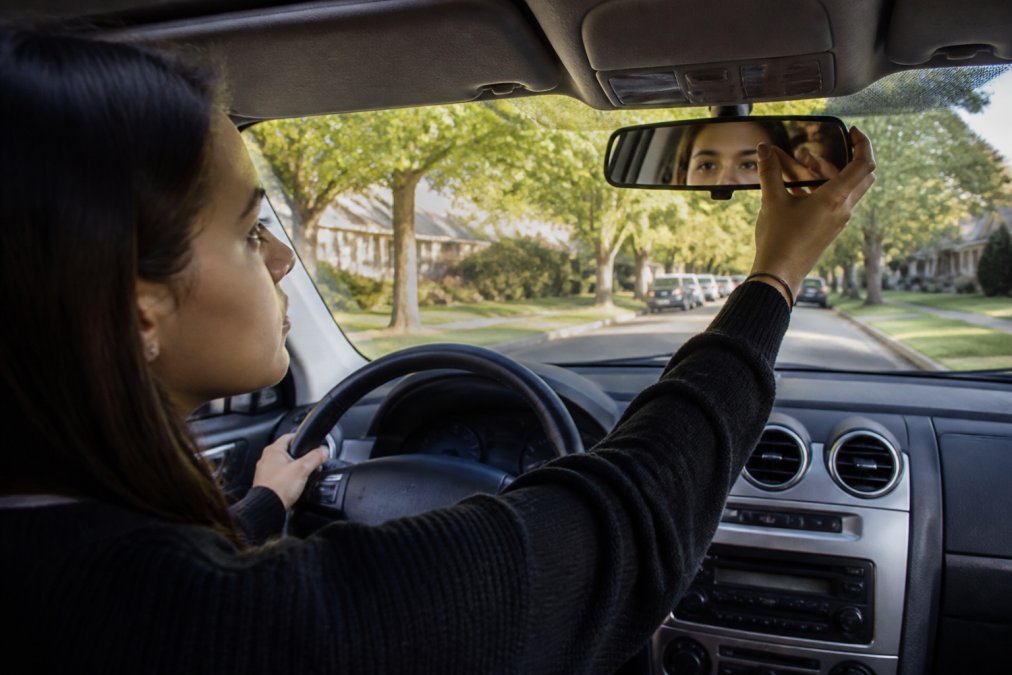
Build a test-day routine that starts the night before. Get adequate sleep. Eat a real meal before your appointment. Arrive 15 minutes early so you’re not rushing. Rushing triggers a stress response that narrows your attention exactly when you need it to be wide.
Anxiety Management Techniques That Actually Work
Anxiety before a DMV road test is nearly universal. The goal isn’t to eliminate it; it’s to keep it from hijacking your decision-making.
Controlled breathing works. Before you start the car, take three slow, deliberate breaths: inhale for four counts, hold for four, exhale for four. This is not a wellness cliché. It activates the parasympathetic nervous system and measurably reduces the physical symptoms of stress. According to American Psychological Association’s resources on stress management, controlled breathing is one of the most evidence-supported tools for acute anxiety reduction.
Narrate your actions mentally. As you drive, quietly think through what you’re doing: "Checking mirrors, signaling, checking blind spot, changing lanes." This keeps your attention on the task and crowds out anxious thoughts. It also reinforces the correct sequence of actions.
Reframe the examiner’s role. The examiner is not trying to fail you. They are required to pass you if you meet the standard. They want the test to go well. Treating them as an adversary creates unnecessary tension. Treat them as a neutral observer, because that’s exactly what they are.
One of our students put it simply: "Joey gave extremely clear instructions, was calm, cool, and collected throughout the process. A pleasant experience and we passed on the first test." That kind of calm, structured environment during lessons is exactly what prepares you to stay composed when it counts.
Vehicle-Specific Preparation: EVs vs. Gas-Powered Cars
Most road test guides ignore this entirely. It matters more than people expect.
Electric vehicles handle differently from traditional gas-powered cars in ways that can catch unprepared drivers off guard during a test. The most significant difference is regenerative braking. When you lift your foot off the accelerator in an EV, the car slows more aggressively than an internal combustion engine vehicle would. If you’re not expecting it, this can produce jerky, uneven deceleration that looks like poor braking distance control to an examiner.
If you’re testing in an EV:
- Practice smooth, gradual acceleration to avoid the instant-torque surge at low speeds
- Get familiar with one-pedal driving and how it affects your stopping distances
- Adjust the regenerative braking setting to its lowest level for the test if your vehicle allows it, to make braking feel more conventional
If you’re testing in a gas-powered car:
- Understand the specific vehicle’s braking sensitivity before test day; every car feels different
- Practice in the actual test vehicle, not a different car, for at least two sessions before the appointment
- Check that the vehicle’s mirrors are adjusted for your height and seating position, not the previous driver’s
The driving handbook in most states was written before EVs became common. The fundamental rules of road safety haven’t changed, but the mechanical feel of the car absolutely has. Preparation specific to your vehicle type is not optional; it’s a real competitive advantage on test day.
What to Do If You Don’t Pass the First Time
Failing the road test is not a verdict on your ability to drive. It is information about what needs more work. Treat it that way.
Most states require a waiting period before you can reschedule, typically a week or more. Use that time deliberately. Ask the examiner, before you leave the testing area, to clarify which specific items caused point deductions. Examiners are required to document their scoring, and that feedback is genuinely useful. Don’t leave without understanding exactly what went wrong.
Then address those specific gaps with targeted practice. If you failed on parallel parking, practice parallel parking every day until it’s automatic. If you were marked down for rolling stops, focus every practice session on full, complete stops at every sign. Generic re-practice rarely fixes specific weaknesses.
Post-failure recovery steps, in order:
- Request the examiner’s written score sheet before leaving
- Identify the top two or three deduction categories
- Schedule a lesson focused exclusively on those areas
- Practice in the same vehicle you’ll use for the retest
- Schedule your retest once you can demonstrate consistent improvement, not just once the waiting period ends
Failing once does not predict failing twice. Many drivers who struggle on their first attempt pass comfortably on their second after targeted practice. The data you get from a failed test is more valuable than a generic practice session.
According to NHTSA’s resources on driver licensing and road safety, driver education and structured practice remain the most reliable predictors of long-term road safety outcomes. A structured approach to retesting, focused on the examiner’s actual feedback, puts you in the strongest possible position.
Passing your DMV road test comes down to preparation, not luck. Nervous drivers, adults returning to the road after years away, and international students adapting to driving regulations here all face the same challenge: converting knowledge into confident, consistent performance under pressure. White Plains Driving Center has been helping drivers do exactly that since 1978, with DMV-certified instructors, flexible scheduling, and road test support built into every package. Book now and get the calm, structured preparation that turns test-day anxiety into a passing score.
Frequently Asked Questions
How long is a typical DMV road test?
Most DMV road tests last between 15 and 30 minutes behind the wheel, though the full appointment can run longer when you factor in paperwork, vehicle inspection, and waiting time. The examiner uses that short window to observe your ability to handle basic maneuvers, obey traffic signs, manage intersections safely, and demonstrate consistent speed management. Arriving early and having all your documents ready keeps the non-driving portion as short as possible.
What documents do I need to bring to my road test?
You typically need your valid learner permit, proof of insurance for the vehicle you are testing in, current vehicle registration, and any required pre-licensing course certificate (such as the NY State 5-hour pre-licensing class). Requirements vary by state, so confirm the exact list with your local DMV before your appointment. Missing even one document will result in a canceled test, so prepare a checklist the night before.
What is the most common mistake on a road test?
Rolling stops at stop signs are consistently the top reason examiners mark deductions. Many test-takers slow down but never come to a complete stop, which counts as a failure in most states. Other frequent errors include not checking blind spots before lane changes, forgetting to signal, and poor speed management in school or residential zones. Practicing these specific actions during your behind-the-wheel training sessions significantly reduces the risk of repeating them on test day.
How can I manage anxiety before and during the road test?
Controlled breathing is one of the most practical tools available. Try inhaling for four counts, holding for four, and exhaling for four before you start the car. Familiarizing yourself with the test route beforehand, if permitted, also reduces uncertainty. Scheduling a practice lesson in the same vehicle you plan to use on test day helps your body feel at ease with the controls. Experienced, calm instructors who give clear, steady guidance during lessons can also reduce the anxiety that builds up before the actual test.
What happens if I fail my DMV road test?
Failing the road test does not cancel your learner permit. In most states, you can reschedule after a short waiting period, often one to two weeks. Ask the examiner to explain every deduction before you leave the testing site. That feedback pinpoints exactly which maneuvers or traffic law applications need more practice. A targeted lesson or two focused on those specific areas, rather than general driving, is the fastest path to passing on your next attempt.
Does it matter whether I take the test in an electric or gas-powered car?
The road test criteria are identical regardless of the vehicle type, but the driving experience differs in ways worth preparing for. Electric vehicles accelerate faster from a stop, which can affect speed management in residential zones. They also have no engine noise, making it harder to judge speed by sound alone. If you plan to test in an EV, practice braking distances and smooth acceleration specifically, since the feel is noticeably different from a gas-powered car and the examiner will still expect steady, controlled driving.
This article was written using GrandRanker