Table of Contents
- Understanding Driving Anxiety and Its Root Causes
- Identifying Your Specific Triggers and Fear Patterns
- Professional Driving Lessons for Nervous Adults
- How to Practice Driving With Anxiety: A Structured Approach
- Managing Fear of Driving on Highways
- Cognitive Behavioral Therapy and Grounding Techniques
- Building Confidence Through Gradual Exposure
- Conclusion
Last Updated: August 17, 2026
Understanding Driving Anxiety and Its Root Causes
Driving anxiety is more than just nervousness behind the wheel, it’s a real psychological condition that affects many adults, particularly those returning to driving after a long break or learning for the first time. At White Plains Driving Center, we work with anxious drivers regularly and understand that this fear can stem from multiple sources: past accidents, witnessing traumatic driving incidents, panic disorder, or simply lacking confidence in your abilities on the road.
The physical symptoms are unmistakable. Your hands grip the steering wheel tightly, your breathing becomes shallow, your heart races, and you may experience hyperventilation or a sense of losing control. These aren’t character flaws, they’re your nervous system’s fight-or-flight response activating in a situation your brain perceives as dangerous, even when the actual risk is low.
Understanding what triggers your specific anxiety is the first step toward managing it. Some people fear highways; others panic in heavy traffic or at night. A few experience generalized anxiety that activates in almost any driving situation. The root cause matters because your treatment approach will differ based on whether you’re dealing with amaxophobia (a specific phobia of driving), post-accident trauma, or generalized anxiety disorder that happens to manifest while driving.
The good news is that driving anxiety is treatable. Thousands of adults have moved past this fear using structured approaches combining behavioral techniques, gradual exposure, and professional support. Your nervous system can be retrained to recognize that driving is safe, even if your current emotional state suggests otherwise.
Identifying Your Specific Triggers and Fear Patterns
Before you can address driving anxiety, you need to pinpoint exactly what situations trigger your fear response. Is it merging onto highways? Driving in rain or snow? Being in heavy traffic? Driving alone versus with a passenger? Specific times of day?
Start by keeping a simple log over the next week. Note when anxiety appears, rate its intensity on a scale of 1-10, and record what you were doing, the road type, weather, time of day, whether you were alone, and what thoughts ran through your head. This isn’t busywork; it’s diagnostic data that reveals patterns.
Common triggers include:
- Highway driving: The speed, merging, and distance from exits create a sense of being trapped
- Heavy traffic: Feeling boxed in with unpredictable driver behavior around you
- Driving alone: Absence of a reassuring passenger amplifies self-doubt
- Night driving: Reduced visibility and fewer reference points increase disorientation
- Specific road types: Narrow roads, bridges, or mountain passes trigger avoidance behavior
- Weather conditions: Rain, snow, or fog reduce perceived control
- Post-accident situations: Driving past the accident location or similar scenarios
- Time pressure: Rushing to appointments increases stress and hyperventilation risk
Once you’ve identified your primary triggers, you can design exposure practice specifically targeting them. This targeted approach is far more effective than generic driving practice. Many adults waste months driving on roads that don’t challenge them, then panic when they finally encounter their real trigger. You’ll make faster progress by addressing what actually frightens you.
Professional Driving Lessons for Nervous Adults
Professional instruction changes everything for nervous drivers. A trained instructor understands how anxiety manifests behind the wheel and knows how to build your confidence without pushing you into panic. This is fundamentally different from asking a friend or family member to help, emotional relationships complicate the learning process, and untrained helpers often inadvertently reinforce anxiety.
When selecting an instructor, look for someone with specific experience working with anxious adults. Ask directly: "Have you worked with nervous drivers? What’s your approach?" The right instructor will emphasize that your pace is the priority, not their schedule or their preferred route.
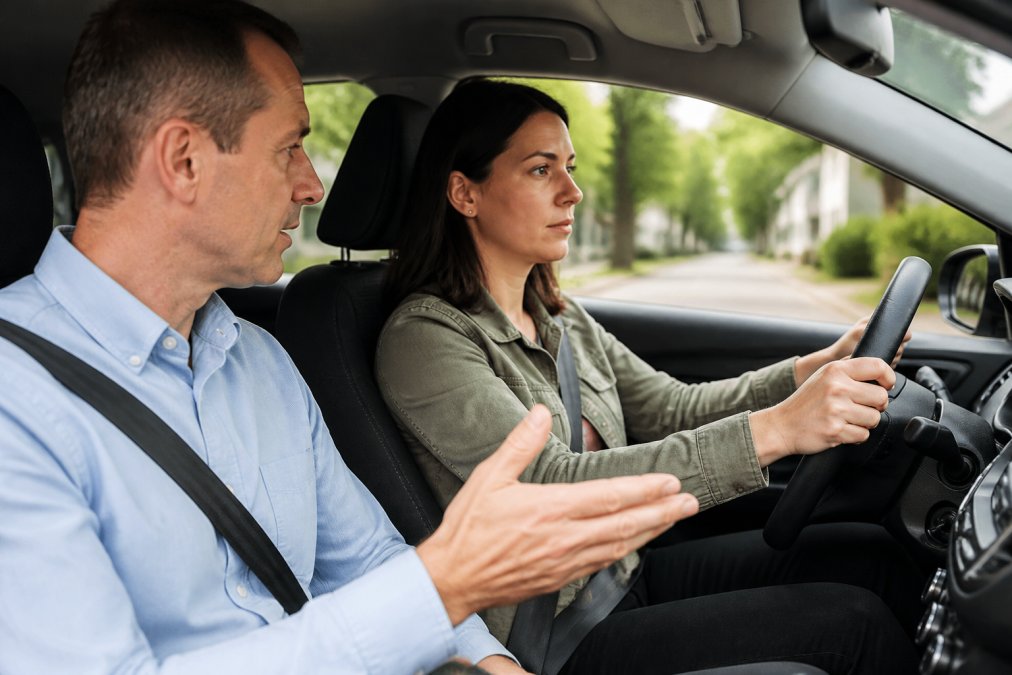
A good instructor will start in low-stress environments, empty parking lots, quiet residential streets, before progressing to busier roads. They’ll explain what you’re doing and why, narrate what other drivers are doing so you feel less surprised, and normalize the mistakes you’ll make. They’ll also recognize when you’re genuinely reaching your limit versus when you’re just uncomfortable but safe.
White Plains Driving Center specializes in working with nervous drivers, including adults returning to the road after years away and international drivers adjusting to U.S. driving norms. DMV-certified instructors here understand that building confidence is as important as teaching technique. They work with your schedule and your anxiety level, not against them.
Professional lessons typically progress through phases: basic vehicle control in safe environments, gradually introducing busier roads, then targeting your specific trigger situations. This structured progression prevents the common mistake of jumping into situations you’re not ready for, which backfires by reinforcing your fear.
How to Practice Driving With Anxiety: A Structured Approach
Haphazard practice reinforces anxiety. Structured practice rewires your nervous system. The difference is enormous.
Your practice strategy should follow this framework:
Phase 1: Comfort Zone (Weeks 1-2)
Drive only on roads where you feel genuinely safe, quiet residential streets, empty parking lots, or low-traffic areas. Your goal here isn’t to challenge yourself; it’s to prove to your nervous system that you can operate a vehicle without panic. Practice basic skills: smooth acceleration, braking, turning, parking. Aim for 2-3 practice sessions per week, 20-30 minutes each. Shorter sessions prevent fatigue and keep anxiety manageable.
Phase 2: Gradual Expansion (Weeks 3-6)
Slowly introduce slightly more challenging environments. Add busier residential streets, then main roads with moderate traffic. Still avoid your primary trigger situations. Your nervous system is beginning to recognize that driving doesn’t automatically equal danger. Continue 2-3 sessions weekly, extending to 30-45 minutes as comfort grows.
Phase 3: Trigger Introduction (Weeks 7+)
Now deliberately practice in situations that trigger your anxiety, but in controlled doses. If highway driving terrifies you, drive on a highway during off-peak hours first. If heavy traffic is your trigger, practice in moderately busy traffic before attempting rush hour. Exposure therapy works because repeated, safe exposure to a trigger gradually desensitizes your fear response, but only if you’re actually staying in the situation long enough for your anxiety to peak and then naturally decline. Leaving the moment you feel afraid teaches your brain that the situation is genuinely dangerous. Staying and discovering you’re fine teaches your brain the opposite.
Keep a practice log noting the date, route, duration, anxiety level before and after, and what you noticed. Seeing progress documented builds confidence and motivation.
Managing Fear of Driving on Highways
Highway driving triggers anxiety in many adults because highways feel fundamentally different: higher speeds, less control over surrounding traffic, limited exit options, and a sense of being committed to the road for extended distances. If highway driving is your primary fear, this section directly addresses your concern.
Start by driving on highways during off-peak hours: mid-morning on a weekday, not rush hour or weekend traffic. Choose a route you’ll repeat, so familiarity reduces novelty-induced anxiety. Drive for just 15-20 minutes on your first attempt, not a cross-state journey. The goal is to prove to yourself that you can merge, maintain speed, and exit safely.
Focus on these specific skills:
- Merging: Practice in light traffic first. Signal early, check your mirrors and blind spot, accelerate smoothly to match highway speed, and merge decisively. Hesitation causes accidents; confidence does not. Once you’ve merged successfully a few times, your brain recognizes the pattern.
- Maintaining lane position: Highways feel chaotic partly because you’re surrounded by other vehicles. Practice keeping your lane, maintaining consistent speed, and not fixating on other drivers. Your job is your lane and your speed, nothing else.
- Exiting: Know your exit in advance. Take a highway exit during light traffic so you experience the deceleration and turn without pressure. Familiarity removes the unknown.
- Breathing: Highway anxiety often triggers hyperventilation. Practice deep breathing: inhale for 4 counts, hold for 4, exhale for 6. The extended exhale activates your parasympathetic nervous system, counteracting panic. Do this before you merge and anytime anxiety spikes.
A common mistake is avoiding highways entirely until you feel "ready." You’ll never feel ready without exposure. Instead, commit to one 20-minute highway drive per week for four weeks. By week four, highways will feel dramatically less threatening because your nervous system has accumulated evidence that you’re safe.
Cognitive Behavioral Therapy and Grounding Techniques
Cognitive behavioral therapy (CBT) directly addresses the thought patterns fueling your driving anxiety. The mechanism is straightforward: anxious thoughts trigger physical anxiety symptoms, which confirm the anxious thoughts, creating a feedback loop. CBT breaks this cycle by teaching you to identify and challenge catastrophic thinking.
Your anxious brain likely runs worst-case scenarios: "I’ll have a panic attack and lose control." "Other drivers will judge me." "I’ll cause an accident." These thoughts feel true because anxiety is physically intense, but they’re predictions, not facts. CBT teaches you to recognize these thoughts, evaluate their actual likelihood, and replace them with realistic assessments.
When you notice an anxious thought while driving, pause and ask: "What evidence do I have that this will happen? What evidence suggests it won’t? What’s the actual probability?" This isn’t positive thinking, it’s realistic thinking. The actual probability that you’ll lose control and crash is extremely low, even though anxiety makes it feel high.
Grounding techniques anchor you to the present moment, interrupting the anxiety spiral. When you feel panic building while driving:
- 5-4-3-2-1 technique: Identify 5 things you see, 4 you can touch, 3 you hear, 2 you smell, 1 you taste. This forces your brain to focus on immediate sensory reality rather than catastrophic predictions.
- Box breathing: Inhale for 4 counts, hold for 4, exhale for 4, hold for 4. Repeat 4-5 times. This regulates your nervous system through controlled breathing.
- Progressive muscle relaxation: Tense each muscle group for 5 seconds, then release. Start with your feet, move upward. This converts anxious energy into physical action you control.
These techniques work because panic requires your attention. By deliberately shifting your attention to sensory experience or breathing patterns, you’re redirecting your mental resources away from catastrophic thinking.
If your anxiety is severe or these techniques aren’t sufficient, consider working with a mental health professional trained in CBT for anxiety disorders. A therapist can provide personalized strategies and help you identify the specific thought patterns driving your fear.
Building Confidence Through Gradual Exposure
Confidence isn’t a feeling that precedes action, it’s a result of action. You don’t become confident by thinking positively; you become confident by repeatedly doing something successfully. Gradual exposure is the proven mechanism for building this confidence.
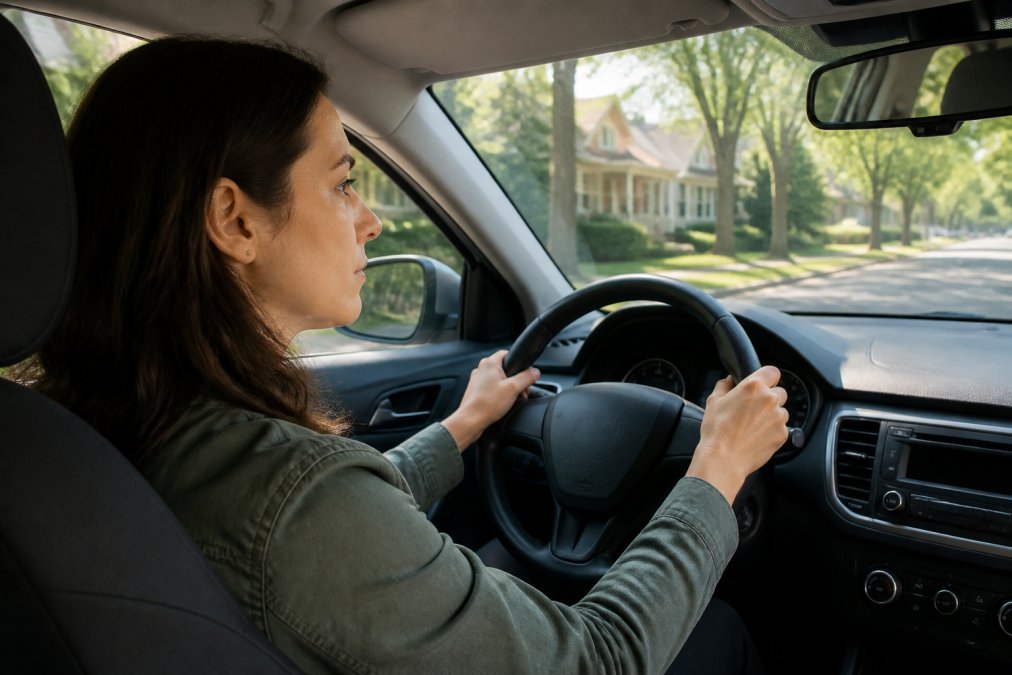
The principle is simple: expose yourself to increasingly challenging driving situations in a structured sequence, allowing your nervous system to adapt at each level before progressing. This is called desensitization, and it works because your brain can’t simultaneously feel safe and terrified. With repeated safe exposure, your brain gradually recalibrates what "safe" means.
Your exposure hierarchy might look like this:
- Driving in an empty parking lot (weeks 1-2)
- Driving on quiet residential streets (weeks 3-4)
- Driving on busier residential streets (weeks 5-6)
- Driving on main roads with moderate traffic (weeks 7-8)
- Driving during light rush hour (weeks 9-10)
- Driving in heavier traffic or on highways (weeks 11+)
Each step should feel slightly uncomfortable but manageable, not terrifying. If a step triggers severe panic, you’ve progressed too quickly. Drop back one level and spend more time there before advancing again.
Document your progress. After each drive, note your anxiety level before and after on a 1-10 scale. You’ll see a clear pattern: anxiety spikes initially, then gradually decreases as your nervous system recognizes safety. This visible progress is incredibly motivating.
The timeline varies by person. Some move through this hierarchy in 8-10 weeks; others need 4-6 months. The speed doesn’t matter, consistent progress does. Sporadic practice is ineffective because your nervous system needs regular exposure to consolidate the learning. Aim for at least two practice drives per week, ideally three.
Many adults find that professional instruction accelerates this process. An instructor can guide you through each exposure level, provide real-time feedback, and help you recognize when anxiety is manageable versus when you’ve genuinely overextended yourself. White Plains Driving Center offers structured lesson packages specifically designed for nervous adults, combining professional instruction with your independent practice between lessons.
The confidence you build through gradual exposure transfers to all driving situations. As your nervous system learns that driving is safe, your baseline anxiety decreases. Situations that previously triggered panic become manageable. Your capacity expands.
Conclusion
Overcoming driving anxiety as an adult is entirely possible. The path forward combines understanding your specific triggers, structured exposure practice, professional instruction when needed, and concrete coping techniques like breathing exercises and cognitive reframing. Your nervous system can be retrained, it simply requires consistent, patient practice.
If you’re in the Westchester area and ready to work with instructors experienced in building confidence for nervous drivers, White Plains Driving Center offers DMV-certified instruction with flexible scheduling designed around your comfort level. Our team has helped hundreds of anxious adults move from fear to confidence through patient, structured lessons and comprehensive road test preparation. The difference between struggling alone and having professional support is significant. Get started with a lesson tailored to your anxiety level and specific driving goals.
Frequently Asked Questions
Why am I suddenly afraid to drive as an adult?
Adult driving anxiety often stems from a specific trigger such as a past accident, a near-miss, or prolonged time away from driving. Amaxophobia can also develop from generalized anxiety or panic disorder. Some adults experience fear after witnessing a serious traffic incident or hearing frightening stories. The longer you avoid driving, the more the fear can intensify. Understanding your specific trigger is the first step toward addressing it with targeted coping strategies.
Can professional driving lessons for nervous adults actually help reduce my anxiety?
Yes. Professional driving lessons specifically designed for nervous adults work by building confidence in a controlled, supportive environment. A trained instructor provides clear guidance, remains calm, and allows you to progress at your own pace. This structured approach reduces the unpredictability that often fuels anxiety. Many adults find that consistent practice with a patient professional, combined with breathing and grounding techniques, significantly reduces their fear response and improves their ability to drive independently.
What is the most effective way to practice driving with anxiety without making it worse?
Start small and use gradual exposure. Practice on quiet residential streets during low-traffic times, then slowly introduce busier roads, highway merges, and challenging conditions. Use breathing exercises before and during practice to regulate your nervous system. Bring a trusted passenger for support. Keep a practice log to track your progress and identify patterns in your triggers. If panic symptoms emerge, pull over safely, use grounding techniques, and take a break. Consistency matters more than duration, short, regular practice sessions build confidence faster than sporadic long drives.
Is fear of driving on highways different from general driving anxiety, and how do I address it?
Highway driving anxiety is often a specific phobia triggered by high speeds, merging, limited exits, and heavy traffic. It is distinct from general driving anxiety and may require targeted desensitization. Start by driving on highways during off-peak hours at moderate speeds. Practice merging in low-traffic conditions. Use visualization to mentally rehearse highway scenarios before attempting them. Defensive driving techniques and awareness of lane positioning reduce the sense of loss of control. Many adults find that combining gradual highway exposure with professional instruction accelerates their confidence on faster roads.
This article was written using GrandRanker