Table of Contents
- What Happens During the NY Road Test for Beginners
- What to Bring to Your NY Road Test
- Driving Test Maneuvers NY Examiners Evaluate
- Automatic Fails on NY Road Test
- How to Prepare for DMV Road Test
- Road Test Scoring System and Point Deductions
- Frequently Asked Questions
Last Updated: August 31, 2026
What Happens During the NY Road Test for Beginners
The NY road test for beginners is a practical driving evaluation assessing your ability to operate a vehicle safely and follow traffic laws. During this approximately 20-minute examination, a DMV examiner observes your driving behavior, vehicle control, and decision-making in real-world traffic conditions (dmv.ny.gov). The examiner wants you to succeed and is looking for safe, competent driving, not perfection.
The test begins when you approach your vehicle in the parking lot. The examiner will ask you to perform a pre-trip inspection, checking your lights, mirrors, and wipers. Then you’ll drive a predetermined route through residential streets, busier roads, and sometimes highways, encountering maneuvers like parallel parking, three-point turns, lane changes, and various traffic situations. The examiner takes notes on a scoring sheet, marking points deducted for specific mistakes.
The examiner is watching your PROCESS, not just your outcome. Checking mirrors before lane changes, announcing your intentions through smooth steering, and communicating awareness of your surroundings matter more than executing a perfect maneuver.
What to Bring to Your NY Road Test
Arriving prepared with the correct documents is non-negotiable. Missing required paperwork will result in an automatic cancellation of your appointment.
Required Documents:
- Your learner permit (must be current)
- Proof of vehicle registration
- Proof of vehicle insurance (the vehicle must be insured in your name or you must be listed as a driver)
- Your Social Security number or ITIN
- A valid photo ID (passport, state ID, or other government-issued identification)
The vehicle registration and insurance documents can be physical copies or digital versions on your phone. Arrive 10-15 minutes early to locate the testing site, use the restroom, and settle your nerves.
If your vehicle registration or insurance is expired, the examiner will not allow you to test. Check these documents one week before your appointment.
Driving Test Maneuvers NY Examiners Evaluate
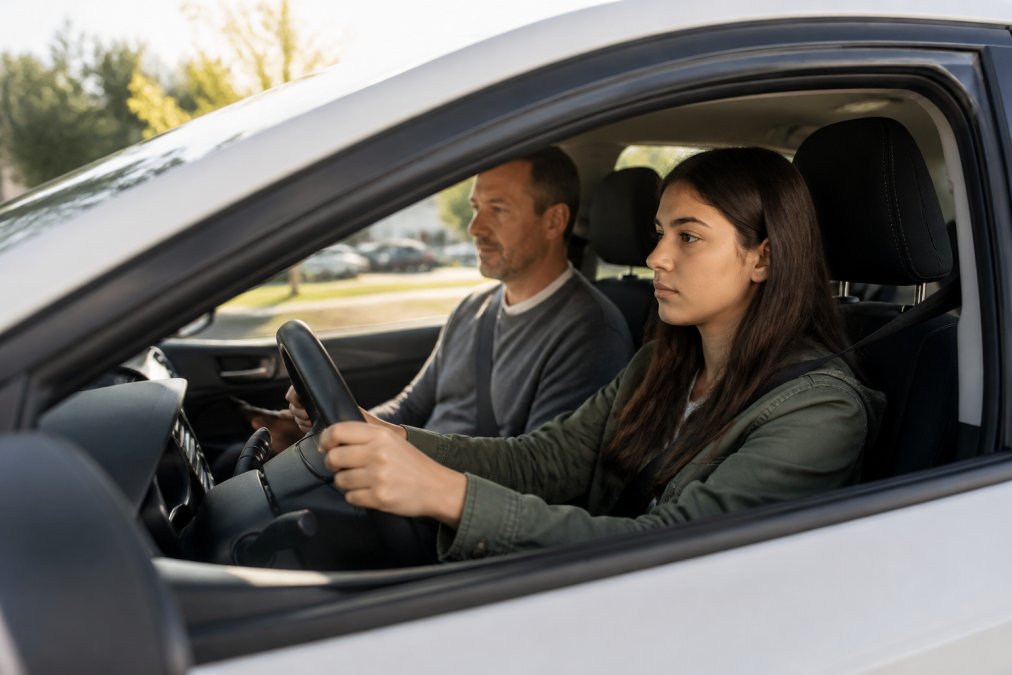
The examiner assesses your ability to execute specific maneuvers safely and smoothly. These test real-world driving skills you’ll need every time you’re behind the wheel.
Parallel Parking
Parallel parking is the maneuver most test-takers worry about. The examiner will direct you to a marked parking space between two vehicles (or cones) that’s about 5 feet longer than your car (dmv.ny.gov). Pull alongside the front vehicle, leaving about 2 feet of space. Reverse while turning your steering wheel fully toward the curb. When your car is at a 45-degree angle, straighten the wheel and continue reversing. Once your rear is mostly in the space, turn the wheel away from the curb and pull forward to center the vehicle.
Common mistakes include hitting the curb, crossing the lines, or taking too many attempts. Practice this maneuver at least 10 times before your test. White Plains Driving Center instructors can help you develop the muscle memory so it feels automatic on test day.
Three-Point Turn and K-Turn
The three-point turn tests your ability to reverse direction on a narrow street. You’ll drive forward, turn the steering wheel sharply, reverse while turning the opposite direction, then drive forward again to complete the maneuver. Check your mirrors and blind spots throughout. The maneuver should take 20-30 seconds and feel controlled.
Lane Changes and Blind Spot Checks
Lane changes happen frequently during the road test. The examiner watches for a specific sequence: signal, check mirrors, check blind spot (by turning your head), then smoothly change lanes. Skipping any of these steps costs points. Signal first, wait a moment for other drivers to see your intention, then execute the change.
The examiner is evaluating your HABITS, not just your technical ability. Checking mirrors before every maneuver, signaling early, and looking over your shoulder before lane changes are the habits that separate confident drivers from nervous ones.
Automatic Fails on NY Road Test
Certain mistakes result in an immediate fail, no matter how well you’ve driven otherwise.
Critical Automatic Fails:
- Hitting another vehicle or object
- Running a red light or stop sign
- Failing to yield right of way when required
- Driving on the wrong side of the road
- Excessive speeding or driving too slowly for conditions
- Failing to obey the examiner’s instructions
- Using your phone while driving
One automatic fail that surprises test-takers: driving too slowly. If you’re going 15 mph in a 25 mph zone because you’re nervous, the examiner may fail you for not maintaining appropriate speed control. Safe driving means matching your speed to conditions and posted limits.
Hitting a curb during parallel parking is NOT an automatic fail, but hitting another vehicle or driving off the road IS. The distinction matters.
How to Prepare for DMV Road Test
Preparation is the antidote to anxiety. The more hours you spend behind the wheel with a calm, skilled instructor, the more automatic your good habits become.
Pre-Trip Vehicle Inspection
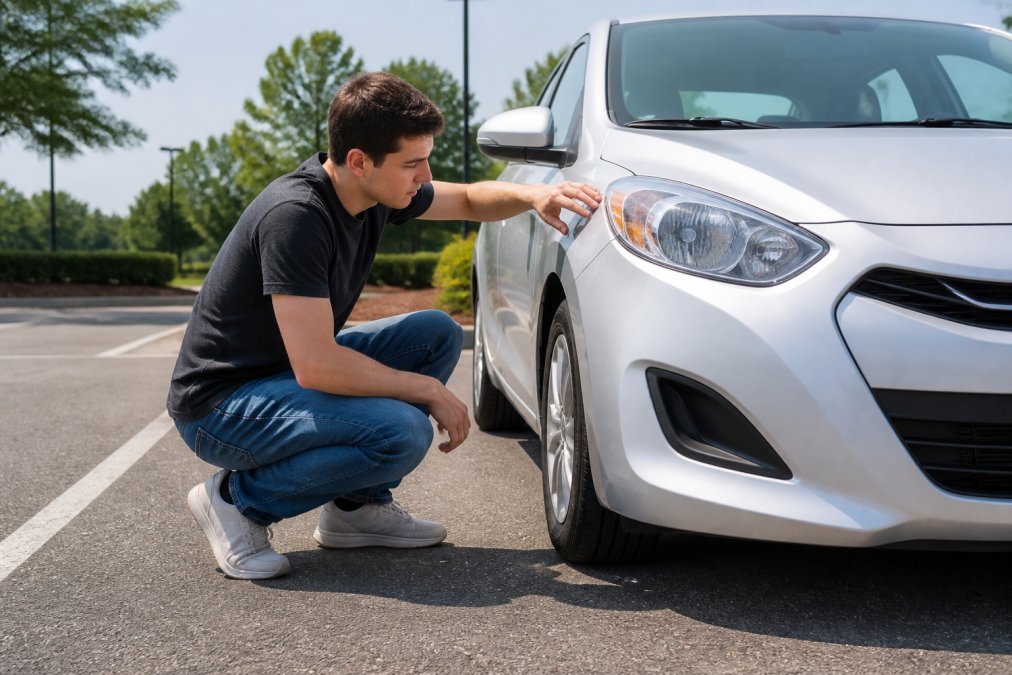
Before every drive, including your road test, perform a basic vehicle inspection. The examiner will ask you to demonstrate that your vehicle is safe to drive.
Inspection Checklist:
- Check all four tires for proper inflation and visible damage
- Turn on the ignition and test all lights: headlights, brake lights, turn signals, hazard lights
- Adjust all mirrors: rearview and side mirrors should give you clear visibility
- Check your windshield wipers and washer fluid
- Ensure your seatbelt functions and is comfortable
- Verify the vehicle doors lock and unlock properly
- Check that your horn works
This inspection takes about two minutes. Perform it before every practice drive.
Managing Anxiety and Building Confidence
Nervousness is normal. The difference between test-takers who pass and those who fail often comes down to how they manage anxiety rather than raw driving skill.
Schedule regular practice drives with a qualified instructor. Two one-hour lessons per week for six weeks is more effective than five hours in a single week. Ask your instructor to simulate test conditions and drive the actual route you’ll take on test day if possible.
The night before your test, review but don’t cram. Get adequate sleep and eat a normal breakfast. Arrive at the testing location 15 minutes early. Take three deep breaths before the examiner gets in the vehicle. Remember that the examiner wants you to pass. If you make a minor mistake, stay calm and continue driving safely. One small error doesn’t determine your outcome.
Practice the test route multiple times with your instructor before the actual test day. Familiarity with the road removes one source of stress and allows you to focus on executing maneuvers rather than navigating unfamiliar streets.
Road Test Scoring System and Point Deductions
The DMV uses a point-based scoring system. You start with a perfect score and lose points for mistakes.
Scoring Basics:
- Passing score: 70 points out of 100 (dmv.ny.gov)
- Critical errors (automatic fails): Deduct all remaining points
- Major errors: Deduct 10-15 points each
- Minor errors: Deduct 5 points each
Common Point Deductions:
- Improper mirror checks (5 points per instance)
- Failure to signal (5-10 points)
- Improper lane changes (10 points)
- Hitting curb during parking (5 points)
- Incorrect speed for conditions (5-10 points)
- Improper stopping distance (5 points)
- Not checking blind spot (5 points)
- Hesitation or jerky steering (5 points)
Many small mistakes can still result in a pass, but one critical error means an automatic fail. Most test-takers who fail do so because of a critical error, not because they accumulated too many minor deductions.
Preparing for your NY road test requires clear understanding of what the examiner evaluates, regular practice with a skilled instructor, and anxiety management techniques that keep you calm under pressure. White Plains Driving Center has worked with nervous beginners for nearly 50 years, helping them develop the confidence and competence to pass. When you combine professional instruction with consistent practice, the test becomes not something to fear, but a milestone you’re genuinely ready to achieve. Book Now with White Plains Driving Center and let our DMV-certified instructors guide you through every step of your road test preparation.
Frequently Asked Questions
Q: What are automatic fails on a NY road test?
A: Automatic fails on the NY road test include failing to stop at a red light or stop sign, hitting a curb during parallel parking, failing to yield the right of way, and unsafe lane changes without proper observation of blind spots. Reckless driving behavior, such as excessive speeding or ignoring traffic signals, will also result in immediate disqualification. Pre-test preparation with a certified instructor helps you avoid these critical errors.
Q: What documents do I need to bring to my NY road test?
A: Bring your learner permit, valid photo identification, vehicle registration, and proof of insurance. Your vehicle’s inspection sticker must be current. The examiner will verify these documents before the test begins. Without proper documentation, the DMV will not allow you to take the test, so double-check everything before your appointment.
Q: How do I schedule my NY road test appointment?
A: Schedule your road test through the NY DMV website or by visiting a local DMV office. You’ll need your learner permit number and a valid email address. Appointments fill quickly, so book as far in advance as possible. If you’re working with a driving school like White Plains Driving Center, instructors can guide you through the scheduling process and help ensure you’re fully prepared before your test date.
Q: What’s the best way to manage anxiety before my road test?
A: Practice regularly with a calm, patient instructor who understands nervous drivers. Familiarize yourself with the test route and common maneuvers like parallel parking and three-point turns. Get adequate sleep the night before and arrive early to your appointment. Breathing exercises and positive self-talk reduce anxiety. Many beginners find that working with an experienced instructor who specializes in building confidence makes a significant difference in passing on the first attempt.
This article was written using GrandRanker