Table of Contents
- Why Adult Learners Face Different Challenges Than Teens
- What DMV Certification Actually Means for a Driving Instructor
- DMV Certified Instructor vs Private Tutor: Key Differences
- How to Choose a Driving School for Adults
- Driving Lessons for Adults: What to Expect in a Quality Program
- The Cost of Adult Driving Lessons: What You’re Paying For
- Conclusion
- Frequently Asked Questions
Last Updated: September 16, 2026
Why Adult Learners Face Different Challenges Than Teens
Adults learning to drive bring years of life experience, established habits, and often a healthy dose of anxiety to the driver’s seat. That combination makes the learning process fundamentally different from teaching a teenager. Effective instruction requires instructors to tailor their approach to these unique psychological needs by grounding their methodology in adult learning principles.
Teens absorb instruction with few preconceptions. Adults arrive with years of watching other people drive, sometimes from countries with entirely different traffic norms, and they know exactly what can go wrong on the road.
The biggest hurdle isn’t skill. It’s nerves.
Many adult learners worry about being judged, making mistakes in front of an instructor, or failing a road test they’ve built up in their head. A DMV certified instructor trained to work with adults understands this. At White Plains Driving Center, we’ve taught nervous beginners, returning drivers, and international students since 1978, and the pattern is consistent: confidence comes from calm, structured repetition, not pressure.
That’s why the question of whether a DMV certified instructor is better for adult learners has a clear answer. For most adults, the answer is yes.
What DMV Certification Actually Means for a Driving Instructor
“DMV certified” is one of the most misunderstood phrases in driver education, because there is no single national certification. Each state’s DMV (or its equivalent licensing agency) sets its own rules for who may teach behind-the-wheel instruction and issue completion certificates. What counts as “certified” in one state may not transfer to another.
In practice, certification usually means the instructor has cleared several gates:
- A state-approved instructor training course. Many states require a set number of classroom hours covering instructional methods, traffic law, and behind-the-wheel teaching technique before an instructor can be licensed.
- A written and/or practical exam. Instructors typically must pass a knowledge test on traffic law and, in many states, a demonstration of their own driving and teaching ability.
- A criminal background check, often including fingerprinting, since instructors work alone in a vehicle with minors and adults.
- A clean driving record with a valid license in good standing, sometimes with a minimum number of years of licensed driving.
- Employment or sponsorship by a licensed driving school. In most states, an individual cannot be a “certified instructor” independently, the certification attaches to the school, and the instructor operates under that school’s license.
That last point matters for adult learners.
Why “DMV Certified” Varies by State
Because certification is state-administered, the phrase carries different weight depending on where you live. Some states require extensive pre-service training and continuing education; others require only a background check and a clean record. Some states issue a formal instructor license with a number you can look up; others simply require the school to maintain records on file.
How to Verify an Instructor’s Credentials
Verification is straightforward and takes about ten minutes:
- Ask for the school’s license number and confirm it with your state’s licensing agency (most publish a searchable list of approved schools).
- Ask whether the instructor is authorized to teach adults, not just teens, some programs are structured around the graduated licensing system for minors.
- Confirm the school can issue the completion certificate your state requires before the road test.
- Ask what happens if your assigned instructor is unavailable, is a substitute equally credentialed, or do you lose the lesson?
State driver licensing agency directory
A friend or family member who teaches you to drive is not a certified instructor, no matter how many years they’ve been driving. Their lessons don’t count toward state-required instruction hours, they can’t issue a completion certificate, and they carry no professional liability coverage if something goes wrong during a lesson. The savings are real; so is the risk.
What Certification Does Not Guarantee
Certification confirms that an instructor met a regulatory floor, it does not confirm they are good at teaching adults. Two instructors can hold identical credentials and produce very different experiences. That’s why the next step after verifying certification is evaluating teaching style, which is covered in the sections below.
DMV Certified Instructor vs Private Tutor: Key Differences
A DMV certified instructor is better for adult learners in almost every case, because certification guarantees training standards, legal accountability, and recognized credentials. A private tutor offers flexibility and lower cost, but no formal oversight.
Here’s how the two compare:
| Factor | DMV Certified Instructor | Private Tutor |
|---|---|---|
| State-approved training | Yes | No |
| Background check | Required | Not required |
| Completion certificate | Can issue | Cannot issue |
| Teaching method | Standardized curriculum | Personal, unregulated |
| Road test prep | Structured, examiner-focused | Informal |
| Cost | Higher, but predictable | Lower, but inconsistent |
| Insurance and liability | Covered | Often unclear |
How to Choose a Driving School for Adults
Choosing a driving school for adults comes down to verifying credentials, checking how lessons are structured, and confirming the school works with adult learners specifically.
- Confirm the school is DMV-certified and can issue completion certificates
- Ask whether instructors specialize in adult or anxious learners
- Check that scheduling works around a full-time job or school
- Ask about road test support: is the test included or extra?
- Request a breakdown of what each lesson covers
- Look for reviews mentioning adult or international students
- Confirm the school offers the 5-hour pre-licensing course if you need it
Ask specifically how the school handles nervous drivers. A good answer describes pacing, calm instruction, and a plan for the first lesson. A vague answer is a red flag.
Driving Lessons for Adults: What to Expect in a Quality Program
A quality adult program starts with an assessment, builds foundational skills in low-traffic areas, then gradually introduces hazard recognition, highway driving, and road test conditions.
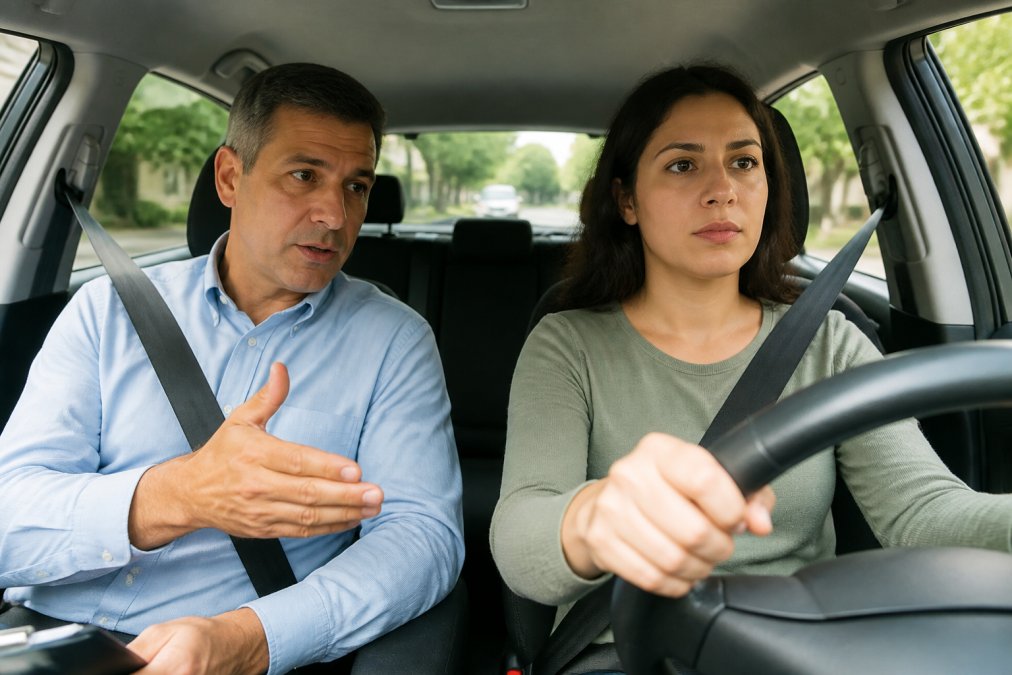
What separates a good program from an average one:
- Skill assessment at the start, so lessons target real gaps
- Confidence building built into every session, not saved for the end
- Defensive driving and hazard recognition taught as core skills
- Road test preparation that mirrors what the examiner actually checks
- Supervised practice with feedback after each lesson
The Cost of Adult Driving Lessons: What You’re Paying For
Most competitors list requirements and stop. Almost none run the actual math on whether a certified instructor is worth the money for an adult learner, so here’s the framework.
What Adult Lessons Typically Cost
Behind-the-wheel instruction is usually priced one of three ways:
- Per hour, with rates varying widely by region and by whether the school provides the vehicle.
- Per package, typically bundling a set number of lessons, sometimes with the road test and car use included.
- Per course, combining classroom or online pre-licensing instruction with a set number of behind-the-wheel hours.
Rates are higher in dense metro areas and lower in rural markets, and they’re higher at schools that provide dual-control vehicles, insurance, and road-test support. A school that quotes an unusually low hourly rate is often unbundling the road test, the pre-licensing course, or the vehicle for the exam, each of which reappears as a separate line item later.
The Real Comparison: Certified Instructor vs. Free Instruction
The tempting alternative for adults is to skip paid lessons entirely and have a licensed friend or relative teach them. The hourly cost is zero. The total cost usually isn’t.
Here’s what the free option actually costs you:
- Time. A friend teaches on their schedule, not yours. Lessons get postponed, shortened, or cancelled, and the calendar stretches from weeks into months.
- Bad habits transferred. Experienced drivers have usually drifted from the standard they were originally taught. Those habits get passed along and then have to be unlearned before the road test.
- No completion certificate. If your state requires documented instruction or a pre-licensing course before the road test, free lessons don’t satisfy it, you’ll still pay for that separately.
- No dual-control vehicle. You can’t safely practice emergency maneuvers in a car without a passenger brake, which limits what you can actually learn.
- No road test support. You’ll need to arrange a vehicle that meets examiner requirements and passes inspection on test day.
- Relationship strain. Being corrected by a spouse, parent, or friend carries emotional weight that a professional lesson doesn’t.
What You’re Actually Paying For
When you pay a certified school, the line items behind the rate include:
- Instructor time with a trained, background-checked professional
- A structured curriculum aligned with state standards
- Use of a dual-control vehicle for lessons and often for the road test itself
- Completion certificates and pre-licensing course documentation
- Insurance and liability coverage during instruction
- Administrative support for scheduling, rescheduling, and test-day logistics
Run the total-cost comparison, not the hourly comparison. Free instruction from a friend looks inexpensive until you add the extra months of practice, the pre-licensing course you still have to buy, and the road test you may have to retake.
Conclusion
Every adult learner faces the same core challenge: building confidence while meeting the state’s requirements for a license. A DMV certified instructor shortens that path by combining structured instruction, legal credentials, and patient teaching designed for how adults actually learn.
Frequently Asked Questions
What are the benefits of choosing a DMV certified instructor?
A DMV certified instructor has passed state-mandated background checks, completed required training hours, and meets specific instructional standards. They can issue official completion certificates needed for your license and are up to date on current traffic laws and road test requirements. This ensures your lessons align with what the examiner expects.
Do adult learners need professional driving lessons?
Not always, but most benefit significantly. Adults often carry years of ingrained habits or anxiety that a certified instructor can identify and correct. Professional lessons provide structured, objective feedback and help you avoid practicing mistakes. If you are preparing for a road test or returning after a long break, instruction is especially valuable.
How much do adult driving lessons cost?
The cost of adult driving lessons varies by region, instructor credentials, and package size. Many schools offer multi-lesson packages that reduce the per-hour rate. Contact local schools directly for quotes tailored to your needs.
How do I choose a driving school for adults?
Look for DMV certification, check instructor backgrounds, read recent reviews, and ask about lesson customization. A good school will offer a clear curriculum, flexible scheduling, and a comfortable learning environment. Visit or call to discuss your specific concerns, such as anxiety or international driving experience, before committing.