Table of Contents
- Why Nervous Adults Choose Professional Driving Lessons
- How Many Driving Lessons Does an Adult Beginner Need
- Driving Anxiety Tips for Adults: Practical Strategies
- Road Test Preparation for Adults: What to Expect
- The 5-Hour Pre-Licensing Course and Your Path Forward
- Behind-the-Wheel Instruction: What Happens in Your First Lesson
- Flexible Scheduling That Works for Your Life
- Frequently Asked Questions
Last Updated: September 19, 2026
Why Nervous Adults Choose Professional Driving Lessons
Driving lessons nervous adults need address a real barrier: anxiety behind the wheel is legitimate, whether you’re returning after years away, learning as an adult, or struggling with road anxiety. Professional instruction exists because many adults face genuine obstacles to confident driving.
A patient, DMV-licensed instructor makes a significant difference. They understand how to build confidence gradually, recognize panic responses, and teach you to manage them while driving.
The right instructor creates an environment where mistakes are learning opportunities, not failures. Your instructor controls the pace, routes, and difficulty level, you’re never forced into situations you’re not ready for.
Structured, patient instruction builds safer habits from the start.
How Many Driving Lessons Does an Adult Beginner Need
The number of hours of professional instruction an adult beginner needs before being ready for a road test varies significantly based on your starting point and learning pace.
First-time drivers typically need more hours; returning drivers may need fewer. International drivers adapting to U.S. traffic laws often need additional lessons.
The real answer depends on several factors:
- Your comfort level. Some adults progress faster emotionally; others need more time to build confidence even if they’re grasping the mechanics quickly.
- Your learning style. Do you need frequent repetition, or do you pick things up quickly and just need practice?
- Your schedule. Spacing lessons out over weeks allows time to process and practice between sessions. Cramming them into days is less effective.
- Your road test readiness. Knowing what the examiner looks for changes your preparation timeline significantly.
Rather than a fixed number, instruction continues until you’re genuinely ready, the goal is competence and confidence, not an arbitrary hour count.
Spacing lessons out over weeks allows time to process and practice between sessions. Consistency in lessons helps you progress.
Driving Anxiety Tips for Adults: Practical Strategies
Driving anxiety requires specific strategies to manage physical and mental responses, not repetition alone.
Understanding the Neurobiology of Driving Anxiety
Anxiety triggers a fight-or-flight response: elevated heart rate, shallow breathing, tunnel vision, and muscle tension. This is a real physiological state, not a character flaw.
This response impairs the skills you need: peripheral vision narrows, decision-making slows, and fine motor control deteriorates. Understanding what’s happening in your body helps you interrupt the cycle.
Your nervous system can be retrained: repeated safe driving experiences combined with anxiety-management techniques gradually reprogram your brain to recognize driving as manageable.
Identifying Your Specific Anxiety Triggers
Identifying your specific triggers is the first step to addressing them. Some panic on highways, others at intersections; some fear parallel parking, others heavy traffic.
Common triggers for nervous adult drivers include:
- Highway merging and high-speed driving, The combination of speed, close proximity to other vehicles, and limited reaction time activates threat responses.
- Intersections and decision-making under time pressure, Deciding whether to go or stop, especially at four-way stops or left turns across traffic, creates decision paralysis.
- Parallel parking and tight spaces, The fear of hitting another vehicle or curb, combined with the need for precise control, triggers perfectionism anxiety.
- Heavy traffic and unpredictable drivers, Feeling surrounded by vehicles you can’t control creates a sense of helplessness.
- Night driving and reduced visibility, Limited visual information increases uncertainty and threat perception.
- Driving alone, The absence of a co-pilot or instructor removes the safety net, amplifying anxiety.
Share your specific anxiety triggers with your instructor before your first lesson. A skilled instructor will address them gradually through supported exposure, not avoidance.
Evidence-Based Techniques for Managing Panic While Driving
Box breathing: Before each lesson, spend two minutes on box breathing (in for four counts, hold for four, exhale for four, hold for four, repeat five times) in the parking lot before driving. This activates your parasympathetic nervous system and reduces fight-or-flight response.
Cognitive reframing: Replace catastrophic thoughts with evidence-based alternatives. Instead of “I’m going to crash,” say “I’ve practiced this turn successfully.” Instead of “Everyone is judging me,” say “Other drivers are focused on their own driving.”
Narrowed focus: Focus on one specific skill per lesson, “execute smooth lane changes” or “approach a four-way stop confidently”, rather than vague improvement. This reduces mental overwhelm.
Visualization: Spend five minutes the night before a lesson mentally rehearsing the route, seeing yourself executing turns smoothly and managing trigger situations. This primes your nervous system for success.
Graduated exposure: Your instructor controls pace and difficulty. Progression moves from empty parking lots to quiet streets, then busier streets, light traffic, and moderate traffic. At each stage, you build competence before the next challenge.
Selecting Patient, DMV-Licensed Instructors
Your instructor is critical. A patient, experienced instructor specializing in nervous drivers understands anxiety as a physiological response they can help you manage.
Ask prospective instructors: “How do you work with anxious drivers?” Listen for specifics about anxiety triggers and gradual progression.
A good instructor will never yell or rush you, communicates clearly, adjusts immediately if you’re overwhelmed, validates your anxiety without reinforcing catastrophic thinking, celebrates small wins, and is DMV-licensed.
If an instructor makes you feel judged, rushed, or more anxious, that’s not the right fit. Trust your instinct. The relationship between you and your instructor directly affects your learning speed and your long-term confidence.
Road Test Preparation for Adults: What to Expect
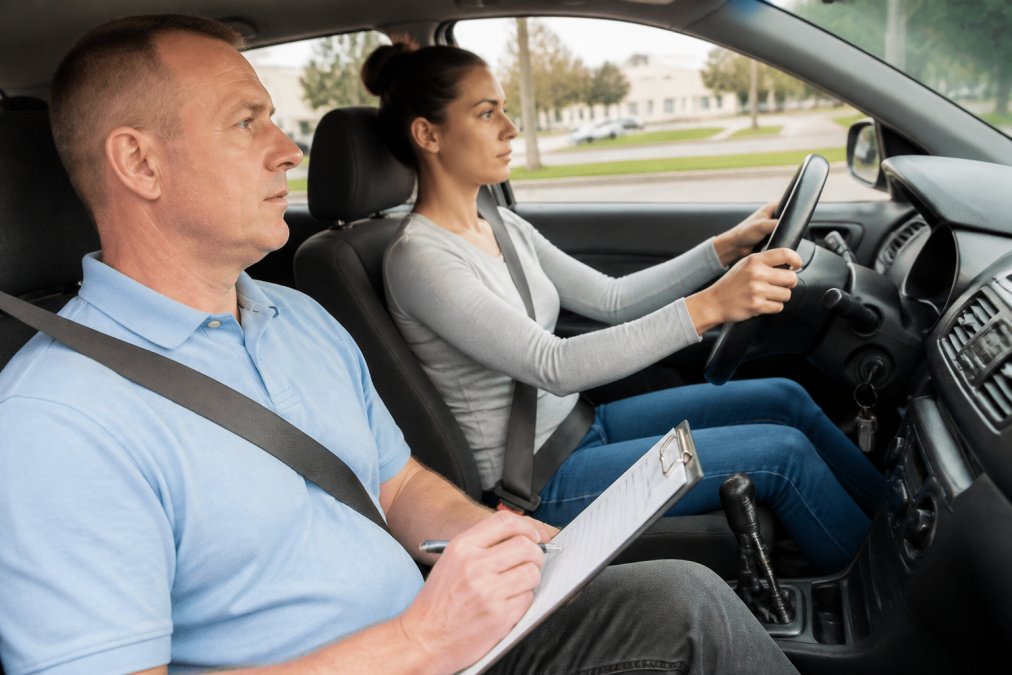
The New York State road test is standardized, but many nervous drivers don’t know exactly what the examiner is looking for. That uncertainty adds anxiety. Knowing the specifics removes that unknown.
The test includes basic vehicle controls, safe traffic movement, turns, lane changes, parking, and traffic sign response. The examiner prioritizes safe decision-making and awareness of other road users.
Many test failures result from test anxiety and not knowing what examiners prioritize. Examiners care more about safe decisions than perfection; a slightly rough turn is fine if safe, but hesitation when you should proceed is a problem.
Practice on the actual test route if possible. Knowing the roads and intersections removes one layer of anxiety.
The 5-Hour Pre-Licensing Course and Your Path Forward
New York State requires all first-time applicants to complete a 5-hour pre-licensing course covering traffic laws and state-specific rules. It’s not optional and required before taking the written permit test. After passing the permit test, you can begin behind-the-wheel lessons. The pre-licensing course and professional lessons work together to prepare you thoroughly.
Behind-the-Wheel Instruction: What Happens in Your First Lesson
Your first lesson sets the tone for everything that follows. A good instructor uses this time to assess your current skills, understand your anxiety level, and establish trust.
Private vs. Group Lessons: Which Format Works for Nervous Adults?
Before your first lesson, you need to decide: private one-on-one instruction or group lessons? This choice directly affects your learning speed, comfort level, and cost.
Private lessons are standard for nervous adults. The instructor adjusts pace, route, and difficulty in real time based on your anxiety level. They tailor lessons to your specific triggers and learning style. While private lessons may have a different cost structure, nervous drivers often benefit from the customized environment.
Group lessons are cheaper but generally not ideal for nervous adults. The instructor manages multiple students at different levels, limiting individual attention. Social pressure and group pacing can amplify anxiety and slow progress. Group lessons work better for confident learners who need practice, not for nervous drivers.
Recommendation: Start with private lessons. The personalized, low-pressure environment justifies the higher cost because you’ll progress faster and build genuine confidence.
What Happens in Your First Private Lesson
Your first lesson focuses on assessment and trust-building. You’ll start in a safe environment like an empty parking lot. Your instructor will explain vehicle controls, the dual-brake system, and ask about your driving history, anxiety triggers, and goals. This information tailors your instruction, if you fear highway driving, you won’t jump to the interstate in lesson two.
Expect to spend most of your first lesson doing very basic things: starting the car, gentle acceleration, smooth braking, basic steering.
You might practice:
- Starting and stopping in a parking lot
- Gentle turns at low speed
- Smooth acceleration and braking
- Basic steering control
- Getting a feel for the vehicle’s size and responsiveness
The Role of the Dual-Brake System
One feature that makes nervous drivers feel safer is the dual-brake system in training vehicles. The instructor has a brake pedal on their side of the car. If you freeze or make a dangerous mistake, the instructor can brake immediately, preventing an accident.
Flexible Scheduling That Works for Your Life
One barrier nervous adults face is finding time for lessons. If you’re working full-time, managing family responsibilities, or juggling school, rigid scheduling doesn’t work.
Frequently Asked Questions
How do I know your instructors won’t make my driving anxiety worse?
Our DMV-certified instructors specialize in working with nervous drivers and understand that patience and clear communication reduce driving anxiety. We use a gradual exposure approach, starting with quiet streets before progressing to busier roads and highways. Every instructor is trained to create a calm, supportive environment. Real students have told us that Joey and our team gave extremely clear instructions while staying cool and collected throughout the process, helping them pass their road test on the first attempt.
How many driving lessons does an adult beginner typically need?
The number of hours of behind-the-wheel instruction an adult beginner needs, combined with the 5-hour pre-licensing course, depends on your prior experience, comfort level, and how quickly you master vehicle control and defensive driving skills. Nervous drivers often benefit from additional lessons focused on high-anxiety scenarios like highway driving, parallel parking, and intersection safety. We assess your skills during your first lesson and recommend a personalized package that fits your pace.
Can you actually work around my full-time job and family schedule?
Yes. We offer flexible scheduling specifically designed for working professionals and busy parents. Lessons can be arranged early mornings, evenings, and weekends to fit your calendar. Contact us to discuss your availability, and we’ll find lesson times that don’t conflict with work or family commitments. Many of our students balance full-time jobs and children while preparing for their road test.
What does road test preparation for adults include?
Our road test preparation covers all areas the examiner evaluates: vehicle control, defensive driving, parallel parking, intersection safety, and proper signaling. We teach you exactly what the examiner is looking for and build your confidence through repeated exposure to test-like scenarios. We also cover the 5-hour pre-licensing course requirement and ensure you understand New York State DMV rules before you take the test.