Table of Contents
- What Is an Intensive Driving Course?
- Pros and Cons of Intensive Driving Courses for Beginners
- How Many Driving Lessons Do You Need to Pass the Road Test?
- What to Expect During an Intensive Driving Course
- Intensive Driving Lessons Cost: Pricing Breakdown
- Nervous Driver Training Programs: Is Accelerated Learning Right for Anxiety?
- Is an Intensive Driving Course Right for You?
- Frequently Asked Questions
Last Updated: September 24, 2026
What Is an Intensive Driving Course?
An intensive driving course is a structured, accelerated learning program where intensive driving courses beginners complete multiple driving lessons over a short, concentrated period, typically 5 to 10 days. Rather than spreading lessons across weeks or months, intensive driving courses compress the curriculum into daily multi-hour blocks. This approach allows learners to build muscle memory, reinforce skills, and prepare for the practical driving exam in a condensed timeframe.
The format works like this: instead of one 1-hour lesson per week, you might take three to four hours of instruction daily for five consecutive days. This high-frequency, immersive structure keeps driving concepts fresh in your mind and reduces the time gap between lessons where skills can fade.
Intensive driving courses beginners are designed for learners who want to pass their road test quickly, have limited availability for ongoing weekly lessons, or prefer to complete their training in one focused push. At White Plains Driving Center, we work with nervous drivers, international students, and busy professionals who benefit from this concentrated approach, especially when combined with our DMV-certified instruction and flexible scheduling.
The core advantage is momentum. When you’re driving every day for a week, the skills compound. Your brain doesn’t have seven days to forget what you learned on day one.
Pros and Cons of Intensive Driving Courses for Beginners
Strengths of intensive driving courses:
Intensive driving courses excel at building confidence quickly. Daily practice creates consistent reinforcement, you’re applying what you learned yesterday in today’s lesson, creating a natural progression. The compressed timeline also appeals to learners who prefer to tackle a challenge head-on rather than stretch it across months.
For anxious drivers, the focused environment can actually reduce overall stress. Instead of dreading weekly lessons scattered across your calendar, you commit to an intense week and finish. Many nervous beginners report that the routine and structure of daily lessons, combined with calm instruction, helps them push through anxiety faster than sporadic weekly sessions.
You’re also less likely to need refresher lessons after passing, the skills stick because they’re practiced densely.
Limitations to consider:
Intensive courses demand significant daily time commitment. If you work full-time or have family obligations, carving out three to four hours daily for five days straight may not be realistic. Fatigue is also a real factor, your brain and body tire from intensive driving practice, which can affect learning quality on days four and five.
The accelerated pace doesn’t suit every learning style. Some beginners need more time to process new skills and build confidence between lessons. Pushing too hard, too fast can backfire for learners with high anxiety or those returning to driving after many years away.
There’s also no guarantee that passing an intensive course means you’re a safe, independent driver. The goal is passing the road test, not necessarily becoming a confident, long-term driver. Some learners complete intensive courses, pass their exam, then struggle with real-world driving decisions when the instructor isn’t there.
| Aspect | Intensive Courses | Weekly Lessons |
|---|---|---|
| Time Commitment | 3-4 hours daily, 5-10 days | 1 hour weekly, flexible schedule |
| Cost Per Hour | Often lower | Often higher |
| Learning Pace | Fast, compressed | Gradual, spread out |
| Best For | Motivated learners, tight schedules | Anxious drivers, busy professionals |
| Skill Retention | High (dense practice) | Variable (depends on practice between lessons) |
How Many Driving Lessons Do You Need to Pass the Road Test?
The number of lessons required depends on your starting point, learning speed, and prior driving experience. Most beginners need between 30 to 50 hours of professional instruction combined with additional practice driving to feel genuinely ready for the road test.
However, this is a rough estimate. A nervous driver with no prior experience might need 60+ hours, while someone with some driving background could pass after 35 hours. The key variable is not the number of lessons but your proficiency level when you sit for the exam.
Intensive driving courses typically condense this into 5 to 10 days of daily lessons. If you take four hours daily for seven days, you’ve completed 28 hours of instruction, which is substantial progress but may not be the full amount you need. Many learners combine an intensive course with additional weekly lessons or independent practice to reach the readiness threshold.
The practical driving exam tests specific competencies: smooth acceleration and braking, proper lane positioning, hazard perception, mirror checks, and calm decision-making under pressure. You need enough repetition to execute these skills automatically, without conscious thought. That typically requires 30-50 hours, though intensive learners sometimes reach readiness faster because the daily repetition accelerates skill consolidation.
What to Expect During an Intensive Driving Course
An intensive driving course follows a structured daily rhythm. You’ll arrive at your scheduled time, meet your DMV-certified instructor, and spend the first 15-20 minutes reviewing the previous day’s lessons and setting objectives for the day’s session. Most instructors start with quieter streets to warm up, then progress to busier roads, highways, or challenging maneuvers.
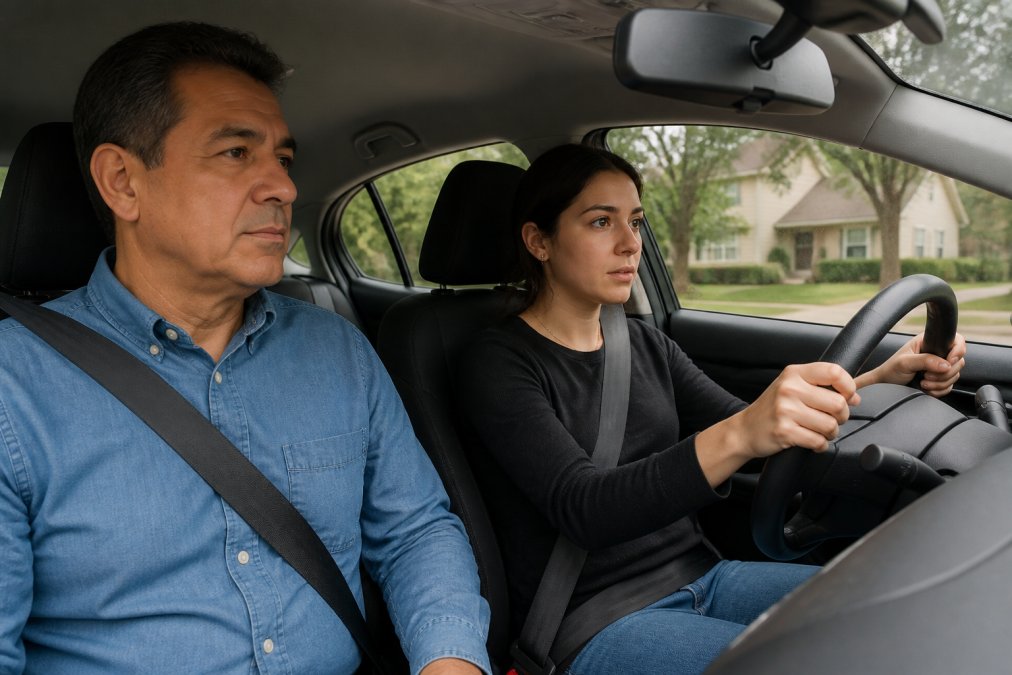
Daily lessons typically follow this pattern: warm-up driving on familiar routes, introduction of new skills or road types, practice of challenging maneuvers (parallel parking, three-point turns, merging), and a cool-down period with feedback. Instructors track your progress in a lesson log and adjust the next day’s plan based on what you struggled with.
By day three or four, fatigue sets in. Your mind and body tire from concentration. Good instructors recognize this and may shorten lessons slightly or focus on confidence-building rather than introducing new challenges. The final days often include mock road tests, simulating the actual exam conditions so you know what to expect.
Expect honest feedback, not cheerleading. A professional instructor will tell you when you’re not ready, when you need more practice on a specific skill, and when you’re progressing well. Nervous drivers often appreciate this directness because it removes ambiguity about readiness.
The emotional arc of an intensive course typically looks like this: days one and two bring excitement and novelty; days three and four bring frustration and fatigue; days five through seven bring either breakthrough confidence or realistic acknowledgment that you need more time. Neither outcome is failure, it’s data about your readiness.
Intensive Driving Lessons Cost: Pricing Breakdown
Intensive driving course pricing varies based on duration, location, instructor experience, and included services. Most intensive courses range in total cost depending on the number of days and hours included, though exact pricing depends on the driving school you select. White Plains Driving Center offers flexible packages tailored to your starting point and goals, so the total investment depends on your individual needs.
When evaluating cost, consider what’s included. Some programs bundle pre-licensing classroom hours (required by state law), road test support, and mock exams into the package price. Others charge separately for these services. A program that appears cheaper upfront might cost more when you add required components.
Pricing also depends on whether you’re starting from scratch or supplementing existing lessons. If you’ve already completed your pre-licensing classroom requirement and have some driving experience, you might need fewer intensive days than a complete beginner. White Plains Driving Center offers flexible packages tailored to your starting point and goals, so the total investment depends on your individual needs.
Compare total cost, not just hourly rate. Ask about cancellation policies, refund terms, and what happens if you don’t pass the road test on your first attempt, some schools offer retake support, others don’t.
Before committing, ask the driving school directly about their pricing, what’s included, and whether they offer payment plans. Transparent pricing upfront prevents surprises later.
Nervous Driver Training Programs: Is Accelerated Learning Right for Anxiety?
Intensive courses can work well for anxious drivers, but only under specific conditions. The key is matching the pace to your anxiety level and ensuring your instructor specializes in calm, patient instruction rather than high-pressure teaching.
For some nervous learners, intensive courses actually reduce overall anxiety. The daily routine creates predictability.
Is an Intensive Driving Course Right for You?
You have a clear deadline. If you need your license within two weeks for a job, school, or relocation, intensive courses align with your timeline.
Frequently Asked Questions
Is it worth doing an intensive driving course as a beginner?
Intensive driving courses work well for beginners who can handle compressed learning and have the time available. They accelerate skill development through frequent, focused practice, which builds muscle memory faster than weekly lessons. However, they require mental stamina and may not suit anxious drivers who need a slower pace. Success depends on your learning style, schedule, and comfort level with accelerated instruction.
How many driving lessons do you need as a beginner to pass the road test?
Most beginners need 40-60 hours of behind-the-wheel instruction combined with theory test preparation. Intensive courses compress this into 1-2 weeks of daily driving, while traditional weekly lessons spread it over 3-6 months. The exact number varies based on your natural ability, prior driving experience, and how well you retain skills. Many instructors recommend at least 6-10 hours of practice before attempting the practical driving exam.
Are intensive driving courses more expensive than regular lessons?
Intensive driving lessons typically cost more upfront because you’re paying for concentrated instruction over a short period. However, the total cost-effectiveness depends on the school and package. Contact your local driving school directly for current pricing and package comparisons, as costs vary significantly by provider and region.
Do intensive courses prepare you for the DMV road test?
Yes, quality intensive driving courses include specific preparation for the practical driving exam. They teach hazard perception, maneuver execution, and test-day procedures that examiners evaluate. However, preparation quality depends on the instructor’s experience and curriculum focus. Ensure your course includes mock test practice and feedback on common test mistakes before committing to an intensive program.
Can nervous drivers handle intensive driving courses?
Nervous drivers can succeed with intensive courses, but only if the instructor specializes in anxiety-focused training and the pace feels manageable. Compressed schedules can increase stress for some learners, while others find that frequent, consistent practice builds confidence faster. Look for nervous driver training programs that emphasize calm instruction, gradual skill progression, and psychological support rather than speed alone.