Table of Contents
- Gather Your Documents and Essentials Before Your First Lesson
- Understand the Highway Code and Basic Vehicle Controls
- What to Expect on Your First Driving Lesson
- How Long Is a Typical Driving Lesson and What to Plan For
- Tips for Nervous Adult Drivers to Build Confidence
- Prepare Physically and Mentally for Success
- The Day Before and Day Of Your First Lesson
- Frequently Asked Questions
Last Updated: October 1, 2026
Gather Your Documents and Essentials Before Your First Lesson
To prepare first driving lesson successfully, you need the right paperwork and gear in place. You’ll want to bring everything your instructor needs to verify your identity and track your progress. Missing documents can delay your lesson or create unnecessary stress.
Required Documents to Bring
Your learner’s permit is the most critical document. You cannot legally sit behind the wheel without it. Bring the actual card, not a photocopy.
You’ll also need a valid form of identification. A passport or state ID works well. Your instructor will verify who you are before starting.
Many driving schools track lessons in a logbook. Ask your instructor whether they provide one or if you need to bring your own. This record proves you’ve completed your required hours of instruction.
Here’s what to bring to your first lesson:
- Learner’s permit (required)
- Valid ID or passport
- Logbook (if required by your school)
- Insurance card (some instructors ask for it)
- Phone (for emergency contact)
- Any medical documents if you have a condition affecting driving
What to Wear and Pack
Wear comfortable clothes that let you move freely. Avoid baggy pants or long skirts that could get caught on pedals. You need full control of the clutch, brake, and accelerator.
Footwear matters more than most people think. Wear flat shoes with good grip. Flip-flops, sandals, or high heels are dangerous because they slip off pedals or restrict ankle movement. Sneakers or flat shoes give you the control you need.
Bring a light jacket or sweater. You might get cold sitting still in the vehicle, especially if it’s early morning or late afternoon.
Pack these items:
- Comfortable, flexible clothing
- Flat shoes with good grip
- Light jacket or sweater
- Water bottle (stay hydrated)
- Tissues or small towel (for nervous sweating)
- Notepad and pen (to write down feedback)
Understand the Highway Code and Basic Vehicle Controls
Before you sit in the driver’s seat, you need to know the rules of the road. The Highway Code covers traffic signs, road markings, and driving laws. Your instructor will test your knowledge during the lesson.
Understanding basic vehicle controls removes surprises. Knowing where the ignition is, how the gear shift works, and what each pedal does builds confidence before you start driving.
Review Traffic Signs and Road Markings
Traffic signs tell you what to do. Red signs mean stop or prohibition. Yellow signs warn of hazards ahead. Green signs show directions or allowed actions.
Road markings guide your path. White lines separate lanes. Yellow lines mark no-parking zones. Solid lines mean don’t cross. Dashed lines mean you can cross if it’s safe.
Study these common signs before your lesson:
- Stop sign (red octagon) = come to complete stop
- Yield sign (red triangle) = let other traffic go first
- Speed limit sign (white rectangle) = maximum safe speed
- One-way sign (white arrow) = direction you must go
- Pedestrian crossing sign (yellow diamond) = watch for people crossing
Familiarize Yourself with the Cockpit Drill
The cockpit drill is your pre-drive checklist. It takes about two minutes. Doing it every time builds safe habits.
The acronym DSSSM helps you remember:
- Doors: Check that all doors are closed and locked
- Seat: Adjust for your height and reach
- Seat belt: Put it on and check it’s snug
- Side mirrors: Adjust both to see behind and beside you
- Mirrors: Adjust the rearview mirror to see straight back
Your instructor will walk you through this. Practice it slowly the first time. Speed comes later.
What to Expect on Your First Driving Lesson
Knowing what to expect when you prepare first driving lesson reduces anxiety. Your instructor has a plan. They’ll start with basics and build up gradually.
The Opening Discussion with Your Instructor
Your instructor will ask about your driving experience and any concerns. Be honest. If you’re nervous about highways or heavy traffic, say so. They’ll tailor the lesson to your needs.
They’ll explain what you’ll do that day. Most first lessons focus on vehicle controls and gentle practice in quiet areas. You won’t hit busy roads on day one.
Your instructor will also cover their teaching style. Our DMV-certified instructors prioritize calm, clear instruction. They understand that nervous drivers need patience and encouragement, not pressure.
Vehicle Familiarization and Seat Adjustment
Before moving, your instructor will help you adjust everything. Proper ergonomics matter. Your seat should be close enough to reach the pedals fully. Your back should touch the seat.
Adjust the rearview mirror so you see the full rear window. Adjust both side mirrors so you can see the sides of your vehicle and the road behind. Proper mirror positioning eliminates blind spots.
Your instructor will show you where the ignition is, how to start the engine, and how to turn it off. They’ll explain the gear shift. Manual transmissions need clutch control. Automatic transmissions are simpler, just shift from Park to Drive.
Your First Time Behind the Wheel
Your hands go on the steering wheel at 9 and 3 o’clock positions. This gives you control and lets you turn smoothly. Keep your shoulders relaxed.
Your instructor will guide you through starting the engine. You’ll feel vibration. That’s normal. The engine is running.
Your first movement might be rolling forward slowly in a parking lot or quiet street. You’ll practice smooth acceleration and gentle braking. Your instructor will talk you through each step.
Most nervous drivers are surprised by how manageable it feels. The car responds to your inputs. You have more control than you expect.
How Long Is a Typical Driving Lesson and What to Plan For
A standard driving lesson runs 60 minutes. Some instructors offer 90-minute sessions for more practice. One hour is enough time to cover vehicle controls, basic steering, and simple maneuvers.
During your first lesson, expect to spend the first 15-20 minutes on the cockpit drill and vehicle familiarization. The remaining 40-45 minutes goes to actual driving practice. Your instructor might spend the last few minutes giving feedback and answering questions.
Plan to arrive 10 minutes early.
Tips for Nervous Adult Drivers to Build Confidence
Anxiety about driving is common. Many adults feel nervous before their first lesson. The good news is that confidence builds with practice.
Manage Anxiety Before and During Your Lesson
Deep breathing calms your nervous system (How Breath-Control Can Change Your Life). Before your lesson, take five slow breaths. Breathe in for four counts, hold for four, exhale for four. This activates your body’s relaxation response.
Here’s what helps manage driving anxiety:
- Deep breathing exercises before and during the lesson
- Positive self-talk and realistic expectations
- Good sleep the night before
- Avoiding caffeine on lesson day
- Focusing on one task at a time
- Reminding yourself that mistakes are part of learning
Communicate with Your Instructor About Your Concerns
Tell your instructor about specific fears. Are you worried about hills? Heavy traffic? Parallel parking? Name it. They can design the lesson to address your concerns.
Prepare Physically and Mentally for Success
Your body and mind both need preparation. Physical comfort helps you focus. Mental readiness prevents panic.
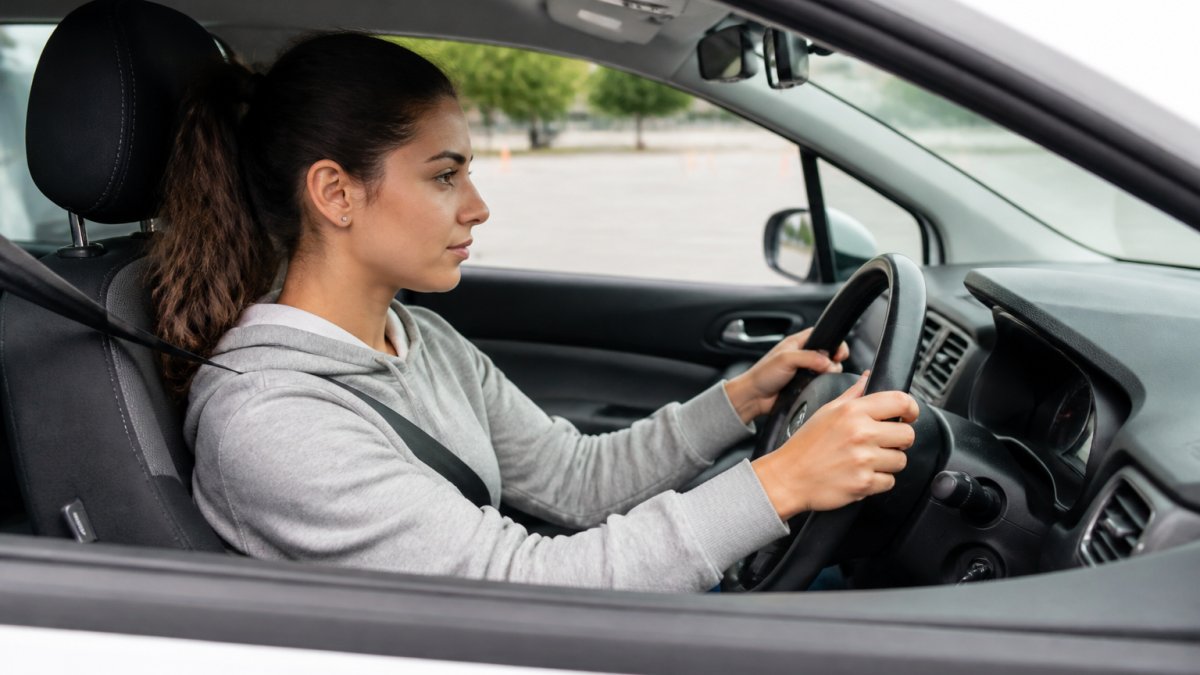
Ergonomics and Comfort Behind the Wheel
Proper posture reduces fatigue and improves control. Sit upright with your back against the seat. Your arms should have a slight bend when holding the wheel.
Mental Preparation and Realistic Expectations
Your first lesson won’t make you a confident driver. That takes time. Set realistic goals. On day one, just aim to start the car, move forward smoothly, and stop safely.
The Day Before and Day Of Your First Lesson
The hours before your lesson set the tone. Small preparation steps reduce stress.
Final Checklist and Logistics
The day before, gather all your documents. Put them in a folder so you don’t forget anything. Check the weather and plan your route to the lesson location.
Here’s your pre-lesson checklist:
- Gather learner’s permit and ID
- Check weather and plan route
- Confirm lesson time and location
- Lay out comfortable clothes and flat shoes
- Review cockpit drill steps
- Get good sleep
- Eat a light breakfast
- Avoid caffeine
Arrive Early and Set a Calm Tone
Plan to arrive 10 minutes early. Early arrival eliminates rush stress. You can settle in, use the restroom, and take a few deep breaths.
Frequently Asked Questions
Do I need a learner’s permit before my first driving lesson?
Yes. You must have a valid learner’s permit issued by your state’s DMV before beginning professional driving lessons. The permit proves you’ve passed the written knowledge test on traffic laws and the Highway Code. When you arrive for your first lesson, bring your learner’s permit along with a valid form of identification. Your instructor will verify these documents before you start driving.
What should I wear to my first driving lesson?
Wear comfortable, practical clothing that allows free movement. Closed-toe shoes with good grip and thin soles are essential, avoid flip-flops, heavy boots, or thick-soled shoes that reduce pedal feel. Dress for the weather, but avoid overly bulky jackets that restrict arm movement. Comfortable pants or skirts work well. Your goal is to focus on driving, not on adjusting your clothing.
How can I manage driving anxiety before my first lesson?
Start by acknowledging that nervousness is normal for beginners. Practice deep breathing exercises the night before and the morning of your lesson. Get adequate sleep and avoid caffeine, which can amplify anxiety. Arrive 10-15 minutes early to familiarize yourself with the vehicle and meet your instructor in a relaxed setting. Tell your instructor about your anxiety, experienced DMV-certified instructors are trained to work with nervous drivers and will adjust their pace accordingly.
What documents do I need to bring to my first driving lesson?
Bring your learner’s permit and a valid form of government-issued identification (such as a passport or state ID). Your driving school will provide a list of required documents when you book your lesson.