Table of Contents
- Is Learning to Drive as an Adult Actually Difficult?
- How Long Does It Take to Learn to Drive
- What to Expect During Your First Driving Lesson for Adults
- Driving Lessons for Nervous Adults: Building Confidence Behind the Wheel
- Adult Beginner Driving Tips to Accelerate Your Progress
- Preparing for Your Learner Permit and Road Test
- Choosing the Right Instructor and Measuring Your Progress
- Common Mistakes Adult Learners Make, and How to Avoid Them
- Frequently Asked Questions
Last Updated: October 12, 2026
Is Learning to Drive as an Adult Actually Difficult?
When you learn driving as an adult, it’s challenging, but not impossible. The real difficulty isn’t the mechanics of driving, it’s managing anxiety and building confidence when you’re older. Adults often feel self-conscious about starting late.
The truth is, learning to drive as an adult depends on your mindset more than your age. Your brain can absolutely learn new motor skills. What changes is your awareness of risk and your emotional response to it.
Many adult learners ask: will I be the only one? No. Thousands of adults get their licenses every year. Some return to driving after decades away. Others never learned in the first place.
The timeline matters too. Adults typically need a significant amount of practice to drive safely. That’s spread across weeks or months, depending on your schedule and learning pace. We’ll break down what to expect and how to move through it confidently.
How Long Does It Take to Learn to Drive
How long it takes to learn driving as an adult varies widely. Most adults need a significant amount of supervised practice before they’re ready for a road test. Some finish in 8 weeks. Others take 6 months. Your pace depends on how often you practice and how quickly your confidence builds.
The breakdown typically looks like this:
- Weeks 1-2: Basic vehicle controls and parking lot practice (10-15 hours)
- Weeks 3-6: Local road driving and traffic navigation (20-30 hours)
- Weeks 7-10: Highway driving and complex scenarios (15-25 hours)
- Final weeks: Test preparation and confidence building (5-10 hours)
Consistency matters more than speed. Practicing twice a week for three months beats cramming 40 hours in two weeks. Your brain needs time between lessons to process what you learned. Muscle memory builds gradually. Confidence grows through repetition.
If you’re working full-time or juggling family responsibilities, plan for 3-4 months minimum. If you can practice 3-4 times per week, you might finish in 8-10 weeks. International drivers adapting to U.S. traffic laws often need extra time, maybe 60-80 hours instead of 50.
Track your hours. Keep a simple log of each practice session and what you worked on. You’ll see real progress week to week, which builds confidence faster than you’d expect.
What to Expect During Your First Driving Lesson for Adults
Your first driving lesson for adults will feel awkward. That’s normal. You’ll meet your instructor, discuss your goals, and likely spend 20-30 minutes just getting comfortable in the car.
A typical first lesson looks like this:
- Meet and talk (5-10 minutes): Discuss your experience, fears, and what you want to accomplish
- Adjust the seat and mirrors (5 minutes): Get physically comfortable
- Learn the controls (10-15 minutes): Steering wheel, pedals, gears, turn signals, wipers
- Start the engine (5 minutes): Feel the car respond to your inputs
- Drive in an empty lot (15-20 minutes): Get a feel for steering and basic acceleration
- Debrief (5-10 minutes): Discuss what went well and what to practice next
Don’t expect to drive on real roads in your first lesson. You’re building muscle memory and comfort. The goal is to feel less foreign in the driver’s seat.
What surprises most adult learners: how much you have to think about. Younger drivers often drive on autopilot. You’ll consciously process every decision. This is actually an advantage. You’re building safe habits from the start.
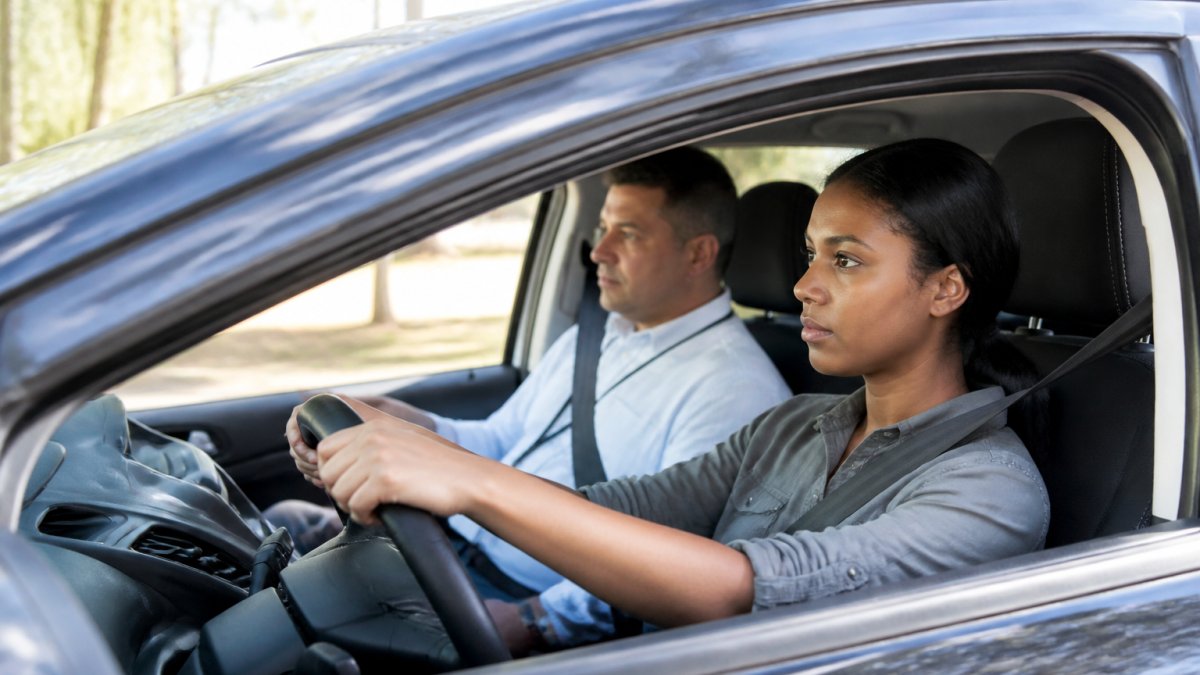
Driving Lessons for Nervous Adults: Building Confidence Behind the Wheel
Nervous adults can learn to drive. Anxiety is real, but it’s manageable. The key is finding an instructor who understands that nervousness isn’t weakness, it’s caution. At White Plains Driving Center, we work with nervous drivers every week. Patience and clear instruction make the difference.
Your nervousness will peak early. The first few lessons feel overwhelming. Too many things to remember. Too much traffic. Too many ways to mess up. As you progress, your brain processes the basics, and anxiety can drop noticeably. Many nervous drivers feel genuinely confident with consistent practice.
Here’s what helps:
- Start in quiet areas: Empty parking lots, residential streets with light traffic
- Build gradually: Master each skill before moving to busier roads
- Practice the same route: Repetition kills anxiety faster than variety
- Use positive self-talk: Replace “I’ll crash” with “I’ve done this before”
- Take breaks: A 10-minute break every 30 minutes keeps your brain fresh
Common Anxiety Triggers and How to Address Them
Highway driving. This tops the list. Highways feel fast and chaotic. Your solution: practice on highways with your instructor first. See how the car handles at speed. Learn merge techniques.
Parallel parking. Everyone dreads this. The good news: it’s a skill, not magic. With practice, your hands know where to turn the wheel. Your eyes learn to judge distance.
Busy intersections. Too many cars, too many decisions. Address this by practicing the same intersection repeatedly. You’ll learn the light timing, the traffic patterns, the safest lines through it.
Other drivers honking or gesturing. This shakes nervous drivers badly. Remember: other drivers are focused on their own journey. A honk isn’t personal. It’s feedback. Acknowledge it, adjust, and move on.
Making mistakes during the test. This fear is huge. But here’s reality: examiners expect mistakes from new drivers. They’re looking for safe recovery, not perfection.
Avoid practicing only when you feel calm. You need to practice when you’re slightly anxious. That’s where confidence actually builds. Comfort doesn’t teach you anything new.
Adult Beginner Driving Tips to Accelerate Your Progress
Adult learners have advantages younger drivers don’t. You have discipline. You understand consequences. You’re willing to ask questions. Use these strengths.
Tip 1: Practice the same route repeatedly. Your brain learns through pattern recognition. Drive the same neighborhood 5-6 times before moving to a new area.
Tip 2: Set one focus per lesson. Don’t try to master everything at once. One lesson focuses on smooth braking. The next focuses on lane positioning.
Tip 3: Record yourself. Have someone film you driving from outside the car.
Tip 4: Drive in different conditions. Rainy weather, evening driving, different neighborhoods. Variety builds adaptability. You’ll feel ready for anything on test day.
Tip 6: Practice breathing. Nervous? Breathe slowly. In for four counts, hold for four, out for four. This genuinely calms your nervous system. Do it before every practice session.
Preparing for Your Learner Permit and Road Test
Getting your learner permit is your first milestone. Most states require a written test covering traffic laws and road signs. You’ll study the driver’s manual. Most adult learners need dedicated study time to pass.
Here’s how to prepare:
- Get the official manual: Your state’s DMV provides it free online
- Read it twice: First read for understanding, second read to memorize details
- Take practice tests: Most states offer free online practice exams
- Focus on weak areas: If you miss questions about right-of-way, drill those scenarios
- Take the real test when you’re scoring 85%+ on practice tests
The written test is straightforward. You need to know speed limits, what different signs mean, and basic traffic rules. It’s learnable.
The road test comes later, after you’ve logged your practice hours. In most states, you need to demonstrate:
- Vehicle control: Smooth steering, appropriate speed, proper lane positioning
- Safety awareness: Checking mirrors, signaling, scanning for hazards
- Traffic law knowledge: Following signs, yielding appropriately, understanding right-of-way
- Parking skills: Parallel parking and angle parking
The examiner is not trying to fail you. They want to see that you can operate a vehicle safely. If you’ve practiced consistently with a calm instructor, you’re ready.
The road test measures whether you’re safe to drive unsupervised. If you’ve practiced consistently and your instructor says you’re ready, you probably are.
Choosing the Right Instructor and Measuring Your Progress
Your instructor shapes your entire learning experience. A patient, clear instructor accelerates progress. A harsh or impatient one can damage your confidence.
What to look for in an instructor:
- Calm demeanor: They don’t yell or criticize harshly
- Clear explanations: They explain the “why” behind each technique
- Flexibility: They adjust to your pace and learning style
- Experience with nervous drivers: They’ve worked with anxious learners before
- DMV certification: They meet legal requirements for your state
At White Plains Driving Center, our DMV-certified instructors specialize in nervous and adult drivers. We’ve served the Westchester area since 1978.
How to measure progress:
Track these milestones week by week:
| Milestone | Week | What It Means |
|---|---|---|
| Comfortable with basic controls | 1-2 | You’re not thinking about steering, it’s becoming automatic |
| Can drive local roads smoothly | 3-4 | Traffic and intersections feel manageable |
| Highway driving feels less scary | 5-6 | Speed and merging are becoming routine |
| Can parallel park consistently | 6-8 | A major confidence builder, you’re getting skilled |
| Feel ready for road test | 8-12 | Your instructor agrees you’re prepared |
Progress isn’t always linear. Some weeks you’ll feel stuck. That’s normal. Your brain is consolidating learning. Push through it.
Common Mistakes Adult Learners Make, and How to Avoid Them
Mistake 1: Practicing too infrequently. One lesson every two weeks won’t work. Your brain forgets between sessions. Aim for at least twice weekly.
Mistake 2: Skipping the written test prep. Some adults think they can pass on common sense alone. You can’t.
Mistake 3: Rushing to the road test. Feeling impatient? Resist it. Taking the test before you’re ready means failing and paying again.
Mistake 4: Comparing yourself to younger drivers. They learned at 16. You’re learning now. Different timeline, different challenges.
Mistake 5: Not asking questions. If you don’t understand something, ask.
Mistake 6: Practicing only with your instructor. Lessons are guidance. Practice between lessons is where learning happens.
Mistake 7: Ignoring your anxiety. Pretending you’re not nervous doesn’t work. Acknowledge it. Name it. Then drive anyway.
Learning to drive as an adult is absolutely achievable. Thousands do it every year. Yes, it’s challenging. Yes, it requires patience and practice.
Frequently Asked Questions
How long does it usually take to learn to drive as an adult?
Most adult learners need a significant amount of supervised driving practice combined with formal lessons before they feel ready for a road test. However, the timeline varies based on your starting point, how often you practice, and your learning pace. Some adults progress faster; others benefit from additional practice time. Consistent weekly lessons and regular supervised practice accelerate the process more than sporadic instruction.
Is it harder to learn to drive as an adult than as a teenager?
Learning to drive as an adult presents different challenges than learning as a teenager, but not necessarily harder ones. Adults often have stronger decision-making skills and patience, which help. However, adult learners may carry more anxiety, have less flexible schedules, and face higher stakes (family or work responsibilities). The key difference is that adults typically need reassurance and a calm, methodical teaching approach, which professional instructors specializing in adult learners provide.
Can you learn to drive if you feel nervous or anxious about it?
Absolutely. Driving anxiety is common among adult learners and is entirely manageable with the right support. Choose an instructor experienced with nervous drivers who emphasizes a calm, patient approach. Start in low-traffic environments and gradually build confidence. Many adults successfully overcome driving anxiety through structured lessons, positive reinforcement, and controlled practice. Your instructor should never make you feel rushed or judged, that only increases anxiety.
What should I expect during my first driving lesson as an adult?
Your first lesson typically includes an introduction to vehicle controls (steering, braking, accelerating, turning), basic safety checks, and time in a parking lot or quiet street to get comfortable with the car’s feel. Your instructor will explain each control clearly and let you practice at your own pace. Expect to spend most of the first lesson stationary or moving very slowly. The goal is familiarity, not speed. A good instructor will ask about your concerns and tailor the lesson to your comfort level.
How do I know if an instructor is right for someone learning to drive as an adult?
Look for an instructor with specific experience teaching adult learners and a track record of working with nervous drivers. Ask about their approach to building confidence and whether they customize lessons to your pace. Check for professional certifications (DMV-certified instructors are required) and read reviews from adult students. A good fit means you feel heard, supported, and never pressured. During your first lesson, pay attention to how patient and clear they are, that sets the tone for your entire learning experience.