Table of Contents
- Auto School Alternatives for Beginners: Your Options Explained
- Professional Driving Schools vs. Other Paths
- Understanding Private Driving Lessons Cost and Value
- How to Prepare for the NYS Road Test Without a Traditional School
- Virtual and Online Learning Alternatives
- Choosing the Right Path for Your Situation
- Frequently Asked Questions
Last Updated: September 20, 2026
Auto School Alternatives for Beginners: Your Options Explained
When you’re learning to drive, auto school alternatives beginners should explore aren’t one-size-fits-all. Some beginners thrive with professional instruction, while others prefer private lessons or self-study combined with online resources. Understanding auto school alternatives beginners have access to helps you choose the approach that matches your learning style, budget, and timeline.
Auto school alternatives for beginners have expanded significantly. You can now combine traditional behind-the-wheel training with virtual learning modules, hire independent instructors, or prepare largely on your own with structured online courses. Each path has distinct advantages and trade-offs.
At White Plains Driving Center, we’ve worked with many learners, from nervous first-time drivers to international students adapting to U.S. roads. This guide walks you through your realistic options so you can make an informed decision about your own driving education.
Professional Driving Schools vs. Other Paths
A structured driving school provides curriculum, certified instructors, and accountability in one package. The alternative paths, private lessons, self-study, or hybrid approaches, offer flexibility and often lower upfront costs, but require more self-direction.
Professional schools excel at building confidence for nervous drivers. They follow a standardized curriculum aligned with DMV requirements and road test expectations. Instructors are certified, background-checked, and trained to handle anxious learners. The structured progression from basics to road test preparation removes guesswork.
Private lessons often lack the curriculum structure. You’re relying on one instructor’s teaching style and expertise. If that person doesn’t match your learning needs, switching instructors mid-training disrupts your progress.
Self-study through online courses and practice tests works for motivated, independent learners. You control your schedule entirely. The downside: you won’t get real-time feedback on your actual driving, and preparation gaps often emerge only during the road test itself.
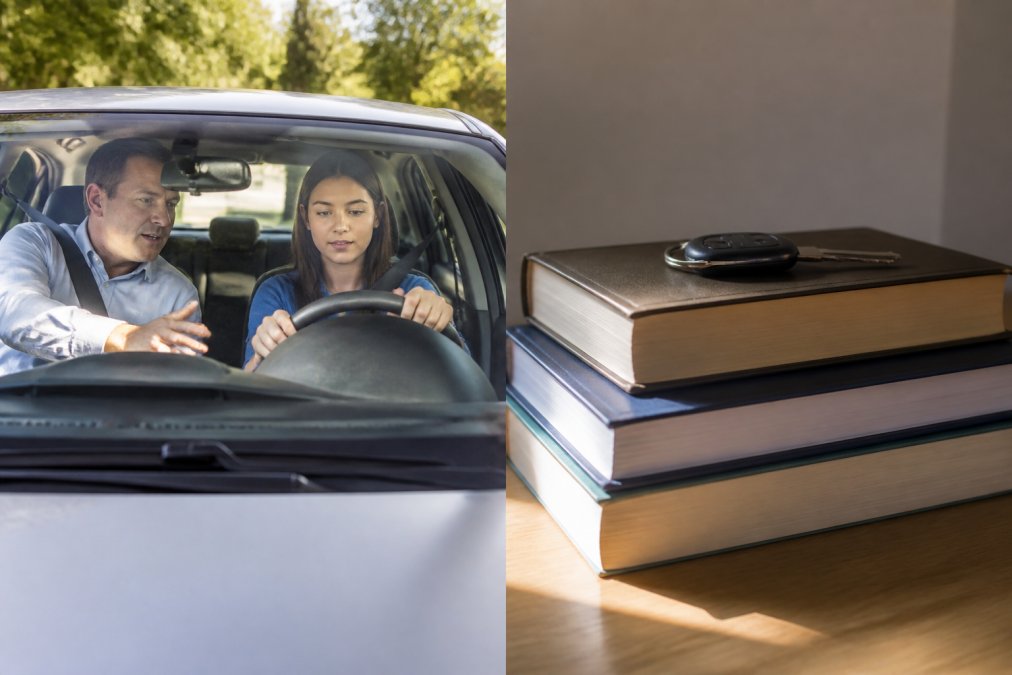
The hybrid approach, combining online theory with a few professional lessons, appeals to budget-conscious learners. You handle the classroom material independently, then book intensive behind-the-wheel sessions closer to your test date. This works if you’re disciplined about self-study and realistic about how much driving practice you actually need.
Understanding Private Driving Lessons Cost and Value
Private driving lessons vary in cost for independent instructors and established driving schools. Package deals often offer discounts. However, the headline hourly rate masks significant hidden costs that beginners rarely anticipate.
Hidden Costs and Fee Structures
Many independent instructors charge extra for road test preparation sessions. Some require a non-refundable deposit to hold lesson slots. Cancellation policies vary widely. A few charge fuel surcharges if you use their vehicle, or require you to provide your own car, which creates liability and insurance complications if an accident occurs during instruction.
Vehicle-related costs are often overlooked. If the instructor provides the car, confirm whether it’s insured for student drivers and whether you’re liable for minor damage. If you must use your own vehicle, verify that your insurance covers instruction (many personal policies don’t). Some instructors require you to pay for their gas; others include it. Ask upfront.
How to Vet Independent Instructors
Unlike driving schools, independent instructors aren’t always listed in a centralized directory. You’ll find them through word-of-mouth, Google reviews, or local Facebook groups. Before booking, verify three things:
-
Instructor Certification: Ask for proof of a valid driver’s license and any instructor certification. While not all states require formal instructor licensing for private lessons, certified instructors (those with DMV-approved training credentials) are more reliable. Request references from recent students.
-
Insurance and Liability: Confirm the instructor carries liability insurance if they provide the vehicle. Ask for proof. If you use your own car, request written confirmation that you’re not liable for the instructor’s injuries in an accident.
-
Teaching Track Record: Ask how many students they’ve taught, how many passed their road test on the first attempt, and whether they specialize in any particular area (nervous drivers, international students, etc.).
When Private Lessons Make Sense
Private lessons are most valuable if you already have 30+ hours of supervised practice and need targeted help with specific skills: parallel parking, highway merging, or managing test anxiety. They’re less ideal for complete beginners who need structured progression from basics through road test readiness. A beginner relying solely on private lessons often discovers gaps only during the road test itself, resulting in a failed attempt and additional lesson costs.
The trade-off: private lessons offer flexibility and lower per-hour cost, but you lose the administrative support, curriculum structure, and quality consistency that driving schools provide. You’re also responsible for tracking your own progress and identifying what you still need to practice.
How to Prepare for the NYS Road Test Without a Traditional School
The New York State road test assesses specific skills: smooth acceleration and braking, proper steering, lane awareness, mirror checking, and response to traffic signs. You can prepare for these without enrolling in a formal school.
Start with the DMV’s official handbook and practice permit test. This covers traffic laws and road signs. Many online platforms offer practice tests aligned with NYS requirements. Spend two to three weeks on this material before scheduling any behind-the-wheel practice.
Next, practice driving in low-traffic environments first, quiet residential streets, parking lots, then gradually busier roads. This builds muscle memory for steering, gear shifts, and basic vehicle control. You need at least 50 hours of supervised practice; most learners benefit from 75 to 100 hours.
Road test examiners look for specific behaviors: smooth lane changes, proper mirror checks before turning, appropriate speed for conditions, and calm decision-making under pressure.
Virtual and Online Learning Alternatives
Online learning has transformed how beginners prepare for the road test, but understanding what can legally be done online versus what requires in-person instruction is critical. The confusion around this distinction is one of the biggest obstacles beginners face.
What NYS Requires Online: The 5-Hour Pre-Licensing Course
What Cannot Be Done Online: Behind-the-Wheel Instruction
Online Tools That Support (But Don’t Replace) Real Driving
-
Practice Permit Tests: Platforms like DMV.org and MasterLicenseTest offer unlimited practice tests aligned with NYS questions. These are free or low-cost ($5-$10) and help you pass the written permit test on your first attempt.
-
Road Rule Apps: Apps like DriveSafe.ly and Driving Essentials provide interactive lessons on specific rules (right-of-way, speed limits, parking regulations). These reinforce what you learn in the 5-hour course.
-
Driving Simulators: High-end simulators (used by professional driving schools) provide realistic feedback on steering, braking, and decision-making. Consumer-grade simulators (like those in video games) are less predictive of real driving performance but can build familiarity with controls and basic road scenarios. They’re useful for nervous drivers who want to practice in a low-pressure environment before getting behind the wheel.
-
Dashcam Review Sessions: Some instructors offer recorded-lesson reviews where you submit dashcam footage of your driving, and they provide written or video feedback. This is cheaper than in-person lessons ($20-$40 per session) but works best for drivers with some experience who need specific technique adjustments.
The Optimal Hybrid Model
Most beginners benefit from combining online and in-person instruction:
- Complete the 5-hour pre-licensing course online (1-2 days).
- Study road rules using practice tests and apps (2-3 weeks).
- Get 50-75 hours of supervised practice with a parent or friend (2-3 months).
- Book 4-6 professional in-person lessons focused on road test preparation and examiner expectations (2-4 weeks before your test).
Important Limitation: Online Cannot Assess Your Actual Readiness
Choosing the Right Path for Your Situation
Your choice depends on four factors: your learning style, available time, budget, and confidence level.
| Situation | Best Approach | Why |
|---|---|---|
| Nervous beginner | Professional driving school | Builds confidence; structured progression |
| Limited time | Intensive school package | Compressed timeline; focused instruction |
| Tight budget | Online theory + 4-6 lessons | Balances cost and professional guidance |
| Experienced but anxious | Targeted lessons | Addresses test anxiety; skips basics |
| International driver | Professional instruction | Bridges cultural/regulatory differences |
Frequently Asked Questions
What are the main auto school alternatives for beginners in New York?
Beginners can choose between professional driving schools, parent or family instruction, self-study combined with informal practice, online pre-licensing courses, and hybrid approaches. Professional schools offer structured curriculum and DMV-certified instruction. Parent instruction is free but requires patience and teaching ability. Self-study works only if combined with supervised practice. Online courses cover the 5-hour pre-licensing requirement but don’t replace behind-the-wheel training. Many beginners combine multiple methods for best results.
How much does private driving lessons cost compared to driving school packages?
Private driving lessons typically range from hourly rates to bundled packages, though exact pricing varies by instructor and location. Some schools offer transparent package pricing or discounted multi-lesson bundles, while others require direct inquiry. Costs depend on lesson duration, instructor experience, vehicle type, and whether road test preparation is included. Compare total cost of ownership, not just per-lesson rates, since packages often provide better value than individual bookings.
Is professional instruction really better than learning from a parent or family member?
Professional driving schools offer several advantages: DMV-certified instructors trained in defensive driving techniques, standardized curriculum, objective feedback without emotional conflict, exposure to varied road conditions, and road test-specific preparation. Parent instruction is free and convenient but may lack formal training, patience under stress, or knowledge of current DMV standards. Many nervous or anxious drivers benefit from a calm professional instructor. The best choice depends on your learning style, family dynamics, and available budget.
How do I prepare for the NYS road test if I’m not using a traditional driving school?
Complete the 5-hour pre-licensing course (available online or in-person), then practice behind-the-wheel skills with a licensed driver or instructor. Focus on maneuverability training like parallel parking, three-point turns, and lane changes. Study traffic laws and DMV testing requirements. Schedule practice on varied road types: residential streets, highways, and intersections. Consider a few professional lessons specifically for road test preparation to learn what examiners look for. Take practice tests and review common mistakes before your actual exam date.
Can I get my license without attending any formal driving school?
Yes, but with important conditions. You must complete the 5-hour pre-licensing course (state-approved, available online), then pass the permit test. After that, you need supervised behind-the-wheel practice with a licensed driver to build skills. Finally, you take the road test. While a formal school is not legally required, most beginners benefit from professional instruction for at least a few lessons to ensure they meet DMV standards and build confidence before the road test.