Table of Contents
- Prepare Your Vehicle and Yourself Before Highway Practice
- Start With the Best Time of Day for Highway Practice
- Master Highway Merging Tips for New Drivers
- Build Foundational Highway Driving Skills
- How to Overcome Driving Anxiety on Highways
- Handle Speed Control and Avoid Sudden Braking
- Navigate Exits and Complex Interchanges Safely
- Know What to Do in a Highway Emergency
- Frequently Asked Questions
Last Updated: September 27, 2026
How to practice highway driving for beginners takes courage. Many new drivers feel anxious about merging into traffic, maintaining speed, and navigating complex exits. The good news is that with the right preparation and practice strategy, you can build the confidence you need to drive safely on highways. This guide walks you through every step of the process, from vehicle checks to handling emergencies.
White Plains Driving Center has helped hundreds of nervous drivers master highway skills since 1978. Our DMV-certified instructors understand the specific challenges beginners face, and we’ve developed a structured approach that works.
Prepare Your Vehicle and Yourself Before Highway Practice
Before you hit the highway, spend time getting your vehicle ready. A well-maintained car is safer and more predictable to drive.
Check these items before your first highway practice session:
- Tire pressure and tread: Proper tires grip the road better during lane changes and merging
- Brakes: Test them in a parking lot to confirm they respond smoothly
- Mirrors: Adjust all three mirrors so you can see clearly without turning your head
- Windshield wipers and fluid: Clear visibility is essential on the highway
- Lights: Verify that headlights, brake lights, and turn signals all work
- Fuel tank: Start with a full tank so you’re not stressed about running low
Bring a trusted instructor or experienced driver with you on your first few highway sessions. Their calm presence and feedback will help you stay focused and build confidence faster.
Start With the Best Time of Day for Highway Practice
Timing your practice sessions makes a huge difference in your learning experience. Rush hour traffic is overwhelming for beginners. Heavy congestion, aggressive drivers, and constant lane changes create unnecessary stress.
Choose these times for your early highway practice:
- Mid-morning (10 a.m. to noon): Light traffic, good visibility, relaxed pace
- Mid-afternoon (2 p.m. to 4 p.m.): Fewer cars than rush hour, still daylight
- Weekday mornings: Generally quieter than weekends
- Avoid: Rush hours (7-9 a.m., 4-7 p.m.), late evening, and heavy rain or fog
Master Highway Merging Tips for New Drivers
Merging is where many new drivers feel the most anxiety. The key is understanding that merging onto a highway is a planned, controlled action, not a sudden panic.
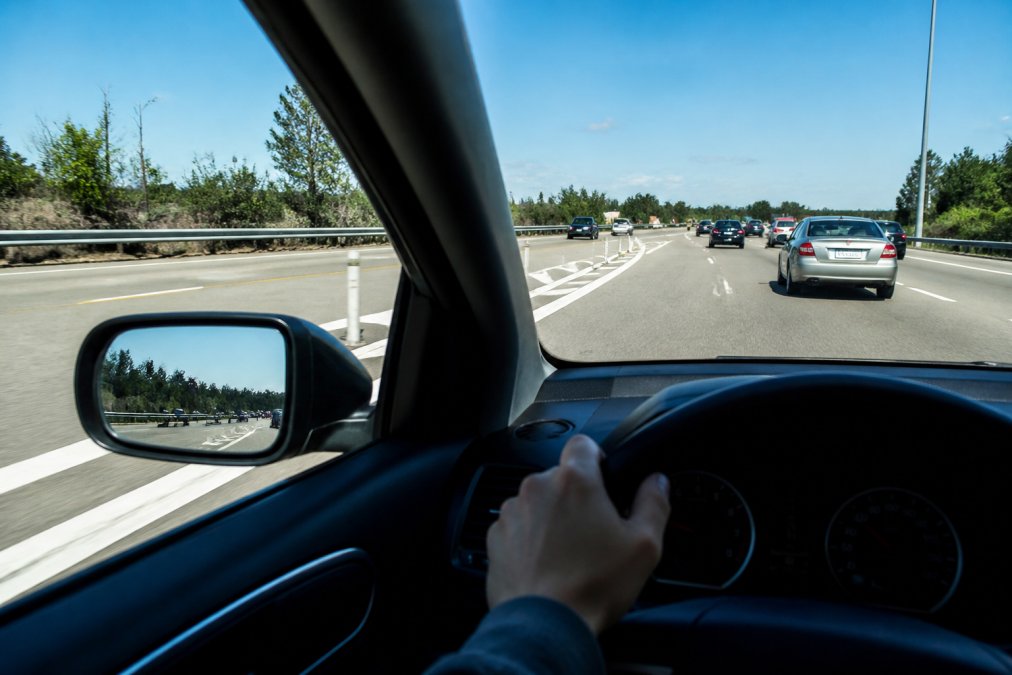
Here’s how to merge safely:
-
Enter the acceleration lane at or near the speed limit. Don’t creep onto the highway at 35 mph when traffic is moving at 65 mph. Match the flow of traffic as you merge.
-
Check your mirrors and blind spot. Look at your side-view mirror and rear-view mirror. Then turn your head slightly to check the blind spot (the area you can’t see in your mirrors). This takes two seconds and saves lives.
-
Signal before you move into traffic. Turn on your turn signal at least 3-5 seconds before you change lanes. This gives other drivers time to see your intention.
-
Merge smoothly into an open gap. Don’t wait for a huge space. A gap of 4-5 car lengths is safe. Accelerate smoothly into it. Avoid sudden jerky movements.
-
Once merged, maintain your lane position. Don’t immediately change lanes again. Stay in your lane for at least 30 seconds to stabilize and assess traffic around you.
Merging is a skill that improves with repetition. After 3-4 successful merges, most drivers feel noticeably more confident.
Build Foundational Highway Driving Skills
Highway driving demands different skills than local streets. Speed, spacing, and awareness all change dramatically.
Lane Discipline and Staying in Your Lane
Lane discipline means keeping your vehicle centered in your lane without drifting. On the highway, drifting even slightly can cause accidents at high speeds.
Use these techniques to maintain lane discipline:
- Look ahead, not down. Focus on the road 15-20 seconds ahead, not at the road directly in front of your bumper
- Use lane markings as guides. Keep the center of your car aligned with the center of your lane
- Avoid distractions. Don’t adjust the radio, eat, or check your phone while driving
- Hold the steering wheel firmly but not rigidly. A relaxed grip gives you better control than a white-knuckled grip
Maintaining Safe Following Distance
Following distance is the space between your car and the car ahead. On the highway, this space is your safety buffer.
Common mistakes:
- Tailgating (following too closely) reduces your reaction time
- Cutting following distance short to “teach” slow drivers a lesson puts you at risk
- Following too far back can invite aggressive drivers to cut in front of you
Using Turn Signals and Checking Blind Spots
Turn signals communicate your intentions to other drivers. Use them every single time you change lanes or exit, even if the road appears empty.
The proper sequence for lane changes:
- Check mirrors (rear-view and side-view)
- Turn on your signal
- Wait 3-5 seconds
- Turn your head to check your blind spot
- Smoothly steer into the new lane
How to Overcome Driving Anxiety on Highways
These strategies help manage highway anxiety:
- Practice progressive exposure. Start on quiet highways, then gradually practice on busier ones. Don’t jump straight into rush hour traffic
- Use positive self-talk. Remind yourself: “I’ve trained for this. I can handle this.”
- Focus on what you can control. You control your speed, your following distance, and your lane position. You don’t control other drivers
- Take breaks on long drives. Stop every 1.5 to 2 hours to rest and reset
If anxiety becomes severe (racing heart, difficulty breathing, panic), pull to the shoulder in a safe location and take a 10-minute break. Never push through panic while driving, it impairs judgment and increases accident risk.
Many drivers find that anxiety decreases significantly after 5-10 hours of highway practice. Your brain adapts. What feels overwhelming today becomes routine with repetition.
Handle Speed Control and Avoid Sudden Braking
Speed control on the highway is about matching traffic flow while staying within legal limits.
Avoid sudden braking by:
- Maintaining a safe following distance. This gives you time to brake gradually when needed
- Anticipating stops. If you see brake lights ahead, begin slowing down early
- Using cruise control on open stretches. Cruise control helps maintain steady speed and reduces fatigue
- Avoiding distractions. Checking your phone or adjusting the radio can cause you to brake suddenly when you look back at the road
Navigate Exits and Complex Interchanges Safely
Exits and interchanges are where many highway accidents happen. Drivers are moving fast, multiple lanes merge, and exits appear quickly.
Here’s how to navigate exits and interchanges safely:
- Identify your exit well in advance. Read signs from at least one mile away. Know whether your exit is on the left or right
- Move to the correct lane early. Don’t wait until the last moment to change lanes. Move to your exit lane at least one-half mile before the exit
- Signal your lane change. Give other drivers clear notice of your intention
- Slow down in the exit lane. Exit ramps are typically designed for 35-45 mph speeds, not highway speeds. Reduce speed before entering the ramp
- Follow the ramp to the end. Don’t try to cut across the ramp or merge back onto the highway
Know What to Do in a Highway Emergency
Emergencies happen. A flat tire, engine trouble, or accident can occur even when you’re driving carefully.
If your vehicle breaks down:
- Turn on your hazard lights immediately
- Safely steer to the shoulder or a safe location away from traffic
- Turn off the engine
- Stay in your vehicle with your seatbelt fastened
- Call for roadside assistance or the highway patrol
- Do not attempt to fix the vehicle yourself on the shoulder
If you have a flat tire:
- Do not slam on the brakes. Gradually slow down
- Steer toward the shoulder
- Once stopped, turn on hazard lights
- Stay in the vehicle unless it’s unsafe to do so
- Call for help rather than attempting to change the tire on the highway
If you witness an accident:
- Do not stop in traffic. Move to a safe location
- Call 911 and provide your location
- If it’s safe, turn on your hazard lights to warn other drivers
- Do not leave the scene if you’re involved in the accident
If another vehicle is driving aggressively toward you:
- Do not engage. Do not make eye contact or gestures
- Slow down and let the aggressive driver pass
- If you feel threatened, drive to a police station or busy public area
- Call 911 if the driver is following you
Frequently Asked Questions
What is the 3-second rule in highway driving?
The 3-second rule helps you maintain a safe following distance. Pick a fixed object ahead (a sign or mile marker), and when the vehicle in front passes it, start counting. You should reach that same object no sooner than 3 seconds later. This distance gives you enough time to brake safely if the car ahead stops suddenly. In bad weather or at night, increase this to 5-6 seconds.
How do I safely merge onto a highway as a beginner?
Use the acceleration lane to match the speed of traffic before merging. Check your mirrors and blind spots frequently. Signal your intention early, then gradually steer into the passing lane when you spot a gap. Avoid forcing your way in or braking suddenly. Smooth, confident movements are safer than hesitant ones. Practice on less-busy highways first to build your confidence with merging.
What should I practice before attempting highway driving?
Start by mastering local roads: smooth acceleration, consistent braking, lane changes, and turns. Practice using turn signals, checking mirrors regularly, and maintaining focus. Get comfortable with your vehicle’s handling at various speeds. Build confidence with defensive driving habits like scanning ahead and maintaining spatial awareness. Once you’re confident on regular roads, move to quieter highway sections during off-peak hours before tackling busy traffic.
How can I overcome fear of highway driving?
Start with short, low-traffic highway drives to build confidence gradually. Practice during daylight and less congested times. Focus on one skill at a time rather than everything at once. Use breathing techniques if anxiety rises. Remember that highway driving is predictable once you understand the flow. Many drivers feel nervous initially, that’s normal. Professional instruction from a certified instructor can significantly reduce anxiety by providing personalized feedback and a calm, supportive environment.