Table of Contents
- Understand NY Licensing Requirements for Adult Learners
- Get Your Learner’s Permit: The First Step
- Complete the NYS 5-Hour Pre-Licensing Course Requirements
- Schedule and Begin Your Driving Lessons
- Tips for Nervous Adult Drivers Starting Behind the Wheel
- Understanding the Cost of Driving Lessons in Westchester
- Prepare for Your Road Test and Class D License Exam
- Frequently Asked Questions
Last Updated: September 29, 2026
Understand NY Licensing Requirements for Adult Learners
Learning how to start driving lessons as an adult in NY requires obtaining a learner’s permit, passing a knowledge test and vision screening, completing a 5-hour pre-licensing course, and passing a road test to earn your Class D license.
Adult learners often bring life experience, better decision-making skills, and stronger motivation, though some feel anxious about starting from scratch or adjusting to U.S. driving rules.
The biggest time saver for adult learners is scheduling your DMV appointments early. Appointment slots fill quickly, especially in busy areas. Book your road test date as soon as you’re legally eligible, don’t wait until you feel “completely ready.”
Get Your Learner’s Permit: The First Step
Your learner’s permit authorizes you to practice driving with a licensed instructor or supervising driver. To get one, pass the DMV knowledge test (covering New York traffic laws, road signs, and safe driving practices) and vision screening at any DMV office.
Visit your local DMV office with proof of identity, residency, and your Social Security number. Take the vision test first, then the knowledge test on a computer.
Once you pass both tests, you’ll receive your learner’s permit immediately. You can drive only while supervised by a licensed driver at least 21 years old in the front passenger seat. Your permit is valid for five years.
A common mistake is assuming you can practice alone once you have your permit. New York law requires a supervising driver in the front seat at all times. Driving alone with a learner’s permit is illegal and can result in fines and permit suspension.
Complete the NYS 5-Hour Pre-Licensing Course Requirements
New York requires all first-time drivers to complete a 5-hour pre-licensing course covering rules of the road, defensive driving techniques, and hazard awareness. Available online or in-person, it typically takes one full day.
The MV-278 certificate you receive is proof of completion. Bring it to your road test appointment, without it, the DMV will not allow you to test.
Many driving schools include the pre-licensing course in their packages. At White Plains Driving Center, the 5-hour course is included in our comprehensive instruction programs.
Online options let you complete the course on your schedule, ideal for busy professionals and parents.
Schedule and Begin Your Driving Lessons
Once you have your learner’s permit, you’re ready to learn how to start driving lessons as an adult in NY with a certified driving instructor for behind-the-wheel training.
Flexible scheduling accommodates working professionals, students, and busy parents.
During your first lesson, your instructor assesses your comfort level and starts with basics like adjusting mirrors and practicing in quiet areas before moving to busier roads.
Your instructor guides you through supervised driving on progressively challenging roads: residential streets and parking lots first, then busier roads and highways where your road test will take place.
Practicing Between Lessons Without Owning a Vehicle
A major challenge for adult learners is that many don’t own a car, making practice between lessons difficult. However, several practical solutions exist:
Borrow a family member’s or friend’s vehicle. Arrange regular practice sessions with a supervising driver (at least 21 with a valid license). Even 30 minutes twice a week accelerates skill development far more than lessons alone.
Rent a vehicle for practice sessions. Companies like Enterprise, Hertz, and Budget offer daily and hourly rentals. Renting for 2-3 hour sessions per week is often cheaper than additional professional lessons. Confirm age requirements before booking.
Use a peer-to-peer car sharing service. Platforms like Turo offer hourly or daily rentals at lower rates than traditional companies. Verify the owner’s insurance covers learner’s permit drivers.
Practice in your driving school’s vehicle during extended lesson packages.
The key insight: practice frequency matters more than practice duration. Consistency creates muscle memory and confidence. If you can’t practice between lessons, increase your lesson frequency instead.
The biggest mistake adult learners make is waiting to feel “ready” before practicing. You won’t feel ready until you’ve driven multiple times. Start practicing immediately after your first lesson, even if it’s just in a parking lot or quiet neighborhood. The discomfort of early practice is temporary; the confidence you build is permanent.
Tips for Nervous Adult Drivers Starting Behind the Wheel
Anxiety about driving is common among adult learners. Professional instruction from a calm, patient instructor can transform anxiety into confidence.
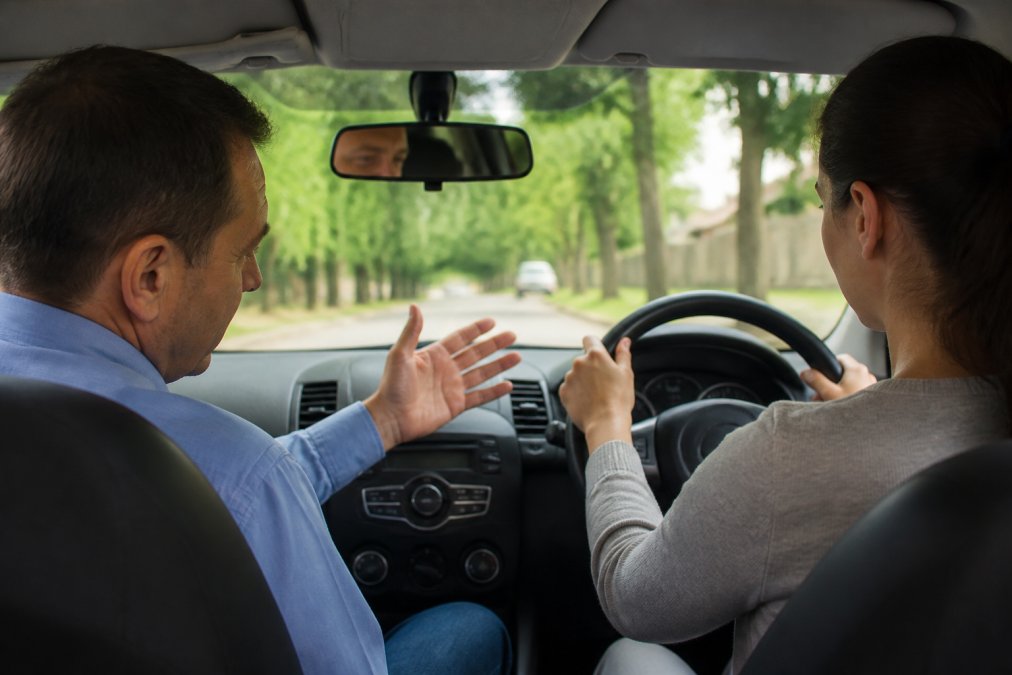
Managing Anxiety During Lessons
Breathing techniques stabilize your nervous system. Before starting, take slow, deep breaths: inhale for 4 counts, hold for 4, exhale for 4. If you feel panicked while driving, pull over safely and collect yourself.
Communicate openly with your instructor about specific fears. A good instructor will adjust the lesson pace to your comfort level. If an instructor makes you feel rushed or judged, find someone else. Some instructors specialize in anxious drivers, ask about this when choosing a school.
Start with low-pressure environments. Your first lessons should be in quiet neighborhoods, empty parking lots, or light-traffic areas where mistakes feel less consequential. Building success in these safe spaces creates a foundation of confidence. Once you’ve mastered basic vehicle control, gradually increase the difficulty. This progression is intentional, not a reflection of your ability.
Practice between lessons in familiar areas with a supportive supervising driver. A family member or friend who won’t criticize helps normalize the experience. The more you drive in low-stress situations, the more automatic vehicle control becomes, freeing up mental energy to focus on road awareness and decision-making. Familiarity breeds confidence.
Realistic Timeline: What to Expect From Permit to License
Understanding the typical progression helps anxious learners set realistic expectations and avoid discouragement:
Weeks 1-2 (Permit acquisition and pre-licensing course): Complete your knowledge test, vision screening, and 5-hour pre-licensing course.
Weeks 3-6 (Early lessons, basic vehicle control): Your first 3-5 lessons focus on fundamentals: mirror adjustment, steering, acceleration, braking, and basic turning in quiet areas. You’ll feel clumsy and uncertain, this is normal.
Weeks 7-12 (Intermediate lessons, busier roads): Lessons 6-15 introduce busier streets, traffic lights, stop signs, and moderate traffic. You’ll practice lane changes, merging, and navigating intersections.
Weeks 13-16 (Advanced lessons, road test preparation): Final lessons (16-20) focus on the specific roads and maneuvers your road test will include. You’ll practice parallel parking, three-point turns, and highway driving if applicable.
Week 16-20 (Road test): Schedule your road test once you and your instructor agree you’re ready.
Total timeline: From permit to license typically takes 4-5 months for adult learners who practice consistently (2-3 times per week) and have no prior driving experience. Adults with prior experience often complete the process in 2-3 months. The timeline extends if you practice less frequently or if you need extra time on specific skills like parallel parking.
Anxiety often peaks before the road test, not during it. The test itself is usually less stressful than you expect because the examiner is neutral and the route is predictable. Knowing this in advance helps, you’re not being judged; you’re being evaluated on whether you meet a safety standard. Thousands of nervous adult learners pass every year.
Understanding the Cost of Driving Lessons in Westchester
For specific pricing from White Plains Driving Center, visit our website or contact us directly, pricing depends on which package best fits your needs and timeline.
When comparing driving schools, look beyond the sticker price. Consider what’s included: the 5-hour pre-licensing course, number of behind-the-wheel hours, road test preparation, and instructor qualifications. A school that includes comprehensive road test prep and uses DMV-certified instructors may reduce the chance of needing retakes.
Many driving schools offer package deals that bundle lessons with the pre-licensing course. Ask about flexible payment plans if cost is a concern.
Budget for potential retakes if you don’t pass your road test on the first attempt. Investing in quality instruction upfront reduces the likelihood of expensive retakes.
Prepare for Your Road Test and Class D License Exam
Your road test is the final hurdle before earning your Class D license. The test lasts about 15-20 minutes and includes basic vehicle control tasks, navigation, and decision-making in real traffic. The examiner evaluates your ability to follow traffic laws, respond to hazards, and operate the vehicle safely.
Common road test tasks include parallel parking, three-point turns, lane changes, stopping at traffic lights, and navigating intersections. The specific route varies by testing location, but examiners always test fundamental skills. Your driving instructor will practice these exact maneuvers with you during lessons so you know what to expect.
Preparation is the best anxiety reducer. Practice the specific skills tested: parallel parking, merging, and responding to unexpected situations. Know the traffic laws cold.
Frequently Asked Questions
What documents do I need to apply for a learner’s permit in New York?
You’ll need proof of identity (passport, birth certificate, or state ID), proof of your Social Security number, and proof of residency (utility bill, lease, or bank statement). Bring these documents to your local DMV office along with your completed application. If you’re an international student or resident, bring your visa documentation and I-94 arrival/departure record. The DMV-approved application process ensures you have everything ready for your permit.
How long does the 5-hour pre-licensing course take to complete?
The NYS 5-hour pre-licensing course is typically completed in one sitting, though some providers break it into shorter sessions. You’ll receive an MV-278 certificate of completion after finishing, which you must present at the DMV when you take your knowledge test. The course covers traffic laws, road safety, and defensive driving fundamentals required by the state. Many adult learners complete it online for convenience before scheduling their behind-the-wheel training.
Is 20 lessons enough to pass the road test?
The number of lessons needed varies by individual. Your background, comfort level, and how frequently you practice between lessons all affect readiness. A DMV-certified instructor can assess your progress and recommend how many additional lessons you need before attempting your Class D license exam.
Can I practice driving between lessons to build confidence faster?
Yes, practicing between lessons is one of the best ways to accelerate your progress. With your learner permit, you can practice on public roads with a licensed driver (21 or older) in the passenger seat. Consistent practice builds muscle memory and driving confidence. Consider renting a vehicle for practice sessions if you don’t have access to a car, or use a family member’s vehicle. Regular supervised driving combined with professional behind-the-wheel training from a DMV-approved instructor significantly improves your readiness for the road test.