Table of Contents
- Getting Your Permit: The First Step to Learning to Drive
- How Long to Learn to Drive and What Affects Your Timeline
- Behind-the-Wheel Instruction: Building Vehicle Control and Confidence
- Adult Driving Lessons: Tailored Instruction for Returning Drivers
- Defensive Driving Techniques Every New Driver Must Master
- Driving Test Preparation: What Examiners Actually Look For
- Managing Driving Anxiety: Calm, Patient Instruction for Nervous Drivers
- Your Licensing Journey: From Permit to Full License
- Frequently Asked Questions
Last Updated: September 22, 2026
Getting Your Permit: The First Step to Learning to Drive
Before you can learn to drive on public roads, you need to get your learner’s permit. This is your legal authorization to practice driving under supervision. Most states require you to pass a written test about traffic laws and road signs before you receive this permit.
The process starts with a visit to your local Department of Motor Vehicles (DMV). You’ll need to bring proof of identity, residency, and your Social Security number. Then you’ll take a written exam covering traffic rules, right-of-way, and safe driving practices.
Many nervous drivers find the written test intimidating, but it’s straightforward once you understand what examiners actually test. The exam focuses on practical knowledge you’ll use every day on the road.
After you pass the written test, you’ll receive your learner’s permit. This document allows you to drive only with a licensed adult in the vehicle. The permit typically lasts several months, giving you time to build confidence before taking your road test.
Study the DMV handbook thoroughly before your written exam. Focus on right-of-way rules and traffic sign meanings, these appear on nearly every test. Most test failures happen because drivers skip this step.
How Long to Learn to Drive and What Affects Your Timeline
Learning to drive takes different amounts of time for different people. Some students need 20-30 hours of instruction. Others need 50 or more. The variation depends on several factors that are worth understanding.
Your starting point matters most. If you’ve never sat behind the wheel, you’ll need more practice than someone returning to driving after a few years away. Adult learners often progress faster because they bring life experience and patience to the learning process.
Frequency of practice affects your timeline significantly. Students who practice twice per week learn faster than those who practice once per month. Your brain needs regular repetition to build muscle memory and confidence behind the wheel.
The type of driving environment matters too. Learning in quiet residential areas takes less time than learning in heavy traffic or on highways. As you gain confidence, you’ll gradually face more complex driving situations.
Most students benefit from 30-50 hours of total practice time, spread across 2-3 months. This includes both formal instruction and supervised practice with a licensed adult.
Quality instruction accelerates your progress. A patient, experienced instructor identifies your specific weaknesses and addresses them directly. This targeted approach saves you time compared to random practice.
Behind-the-Wheel Instruction: Building Vehicle Control and Confidence
Behind-the-wheel instruction is where real learning happens. You sit in the driver’s seat, hands on the wheel, making actual driving decisions. An experienced instructor sits beside you, providing guidance and feedback.
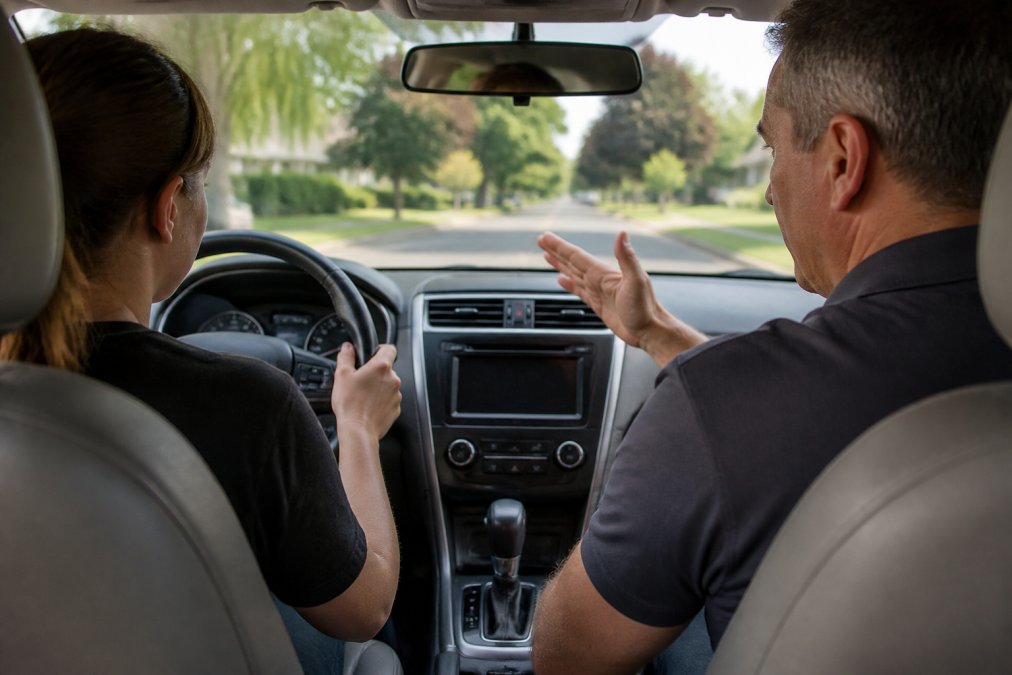
The first lessons focus on basic vehicle control. You’ll learn how to adjust mirrors properly, find the correct seating position, and understand how the pedals respond. These fundamentals seem simple but they’re essential for safe driving.
Mirror adjustment and lane positioning are foundational skills. Your mirrors need to eliminate blind spots. Your lane position keeps you centered and safe. Get these right early, and everything else becomes easier.
Then you’ll practice starting, stopping, and steering in parking lots and quiet neighborhoods. You’ll learn how the car responds to your inputs. You’ll develop a feel for the vehicle’s size and how it moves through space.
A common mistake is rushing this phase. Nervous drivers especially want to skip ahead to highway driving. But mastery of basic control builds the confidence you need for complex situations later. Our instructors know this, we never push you faster than you’re ready.
As you improve, your instructor introduces more challenging driving situations. You’ll practice in busier neighborhoods, then on main roads, then on highways. Each step builds on the previous one.
Never skip the basics to feel like you’re progressing faster. A driver who masters parking lots and residential streets will handle highways confidently. A driver who rushes to highways without this foundation will struggle and become more anxious.
Adult Driving Lessons: Tailored Instruction for Returning Drivers
Adult learners have unique needs. Many haven’t driven in years. Some are learning for the first time. Others are adapting to driving in a new country with different rules and customs.
Adult students typically learn faster than teenagers. You bring maturity, patience, and real-world problem-solving skills to the task. You understand why safety matters. You’re motivated by practical goals, not just passing a test.
The challenge for adult learners is often anxiety. If you had a bad driving experience years ago, or if you’re nervous about your abilities, that anxiety can hold you back. Patient instruction that respects your concerns makes all the difference.
International drivers face additional complexity. Traffic patterns differ between countries. Road signs look different. Driving customs vary. What’s safe in Brazil or India might be dangerous here, and vice versa. Instructors who understand these differences help you adapt faster.
Our instructors have worked with students from many countries. We know the common confusion points and address them directly.
Adult learners benefit from structured lessons that build specific skills. Rather than random practice, you work on one skill at a time: defensive driving on one lesson, intersection safety on the next, highway merging after that. This focused approach accelerates your progress.
Defensive Driving Techniques Every New Driver Must Master
Defensive driving means anticipating problems before they happen. You’re not just reacting to what’s in front of you, you’re thinking ahead and preparing for dangers you haven’t encountered yet.
The foundation of defensive driving is awareness. You scan the road constantly, looking at mirrors, checking blind spots, and observing other drivers’ behavior. You notice patterns. A car drifting between lanes might have an impaired driver. A car braking suddenly might be turning. You prepare for these possibilities.
Braking distance is critical knowledge. At 30 miles per hour, your car needs about 65 feet to stop completely. At 60 miles per hour, that distance nearly triples. Knowing these numbers helps you maintain safe following distance and avoid rear-end collisions.
Hazard perception is the ability to spot dangers quickly. You learn to recognize situations that commonly lead to accidents: intersections with poor visibility, pedestrians near the road, weather that reduces traction. Experienced drivers spot these hazards immediately and adjust their driving. Developing this heightened awareness of your surroundings is equally vital when you learn motorcycle riding, where the margin for error is significantly smaller.
Right-of-way rules prevent collisions at intersections. You learn who has the legal right to proceed first. You learn when to yield even if you technically have the right of way, because defensive driving means assuming other drivers might not follow the rules.
Defensive maneuvers give you escape routes when problems develop. You learn smooth steering corrections, emergency braking techniques, and how to avoid obstacles. These skills might save your life someday.
The best defensive drivers assume every other driver might make a mistake. Drive as if no one sees you. Expect the unexpected. This mindset prevents most accidents before they happen.
Driving Test Preparation: What Examiners Actually Look For
Your road test determines whether you get your license. Understanding what examiners actually evaluate helps you prepare effectively.
Examiners don’t test your maximum abilities. They test whether you can drive safely in normal conditions. They want to see that you follow traffic laws, maintain vehicle control, and make safe decisions.
Mirror Adjustment and Lane Positioning
Before you even start driving, the examiner watches how you prepare. You adjust your mirrors to eliminate blind spots. You position your seat so you can reach the pedals comfortably. You fasten your seatbelt. These pre-drive checks show you take safety seriously.
Lane positioning matters throughout the test.
Parallel Parking and Intersection Safety
Parallel parking intimidates many drivers, but examiners understand this. They’re not looking for perfection. They want to see that you can maneuver safely and make adjustments as needed. Most drivers need several attempts, that’s fine. What matters is smooth steering and awareness of your surroundings.
Common Road Test Mistakes to Avoid
Failing to signal is the most common reason for test failure. Examiners need to know your intentions. Signal every turn and lane change, even on empty roads. Signal early so other drivers have time to react.
Managing Driving Anxiety: Calm, Patient Instruction for Nervous Drivers
Driving anxiety is real and common. Your nervous system is responding to a situation that feels dangerous. This response is natural, but it can interfere with learning and safe driving.
Your Licensing Journey: From Permit to Full License
Getting your full license is the final step in your learning to drive process. You’ve practiced with your permit, built your skills, and prepared for your road test. Now you take the test and earn your license.
Frequently Asked Questions
How long does it usually take to learn to drive?
Most people need 40-60 hours of behind-the-wheel instruction plus 50-100 hours of supervised practice to become a competent driver. However, timeline varies based on age, prior experience, learning pace, and how frequently you practice. Adult learners often progress faster due to maturity and focus, while nervous drivers may benefit from additional practice time to build confidence.
What are the requirements for adult driving lessons?
Adults typically need a valid learner’s permit before taking professional behind-the-wheel instruction. Most states require completion of a 5-hour pre-licensing classroom course, which covers traffic laws and safety. You’ll also need to pass a written knowledge test and vision screening to obtain your permit, then complete supervised driving hours before scheduling your road test with the DMV.
How do I prepare for my road test after learning to drive?
Focus on the specific maneuvers examiners assess: mirror adjustment, lane positioning, parallel parking, and intersection safety. Practice hazard perception by identifying potential risks early. Master right-of-way rules and traffic sign recognition. Take a full practice road test with a certified instructor who knows what examiners look for. Arrive early, follow all examiner instructions precisely, and stay calm, examiners expect some nervousness.
What is the best way to overcome driving anxiety?
Work with a patient, certified instructor who specializes in anxious drivers and creates a calm learning environment. Start with low-traffic areas and gradually progress to busier roads. Practice breathing techniques and positive self-talk before and during drives. Break skills into small, manageable steps rather than attempting complex maneuvers too quickly. Consistent, supervised practice builds confidence naturally over time.