Table of Contents
- NY DMV Road Test Requirements and Prerequisites
- Essential NY DMV Road Test Tips for Success
- Common Road Test Mistakes in NY to Avoid
- Automatic Fail Scenarios on the Road Test
- Key Maneuvers Examiners Evaluate
- How to Schedule Your Road Test and Prepare
- Frequently Asked Questions
Last Updated: August 25, 2026
According to New York State DMV official resources, over 200,000 learner’s permit holders attempt their road test annually, with first-time pass rates around 50%. That gap reveals something critical: preparation matters far more than raw driving ability. At White Plains Driving Center, we’ve spent nearly 50 years watching nervous beginners transform into confident drivers. The difference between those who pass on their first try and those who don’t comes down to specific, actionable preparation.
This guide covers the exact NY DMV road test tips that move the needle: what examiners actually watch for, vehicle inspection details most people miss, maneuvers that trip up beginners, and the mental preparation that keeps anxiety from sabotaging you.
NY DMV Road Test Requirements and Prerequisites
Before booking your test, you must hold a valid learner’s permit for at least six months, though this may be waived if you’ve completed an approved driver education course. Your permit must be valid on test day.
New York requires proof of a pre-licensing course. If you’re under 18, you must complete a five-hour DMV-approved course covering traffic laws, defensive driving, and hazard recognition (dmv.ny.gov). You’ll also need substantial supervised driving experience before attempting the test, highway driving, residential streets, intersections, and varied traffic conditions, not just parking lot practice.
Documents You Must Bring
Bring originals, not copies. Your learner’s permit must be valid and signed in pen. Bring your pre-licensing course certificate, vehicle registration, and current insurance card. You’ll also need valid identification (passport, birth certificate, or state ID) and your Social Security number or ITIN to complete the licensing process.
Vehicle Inspection Checklist
The examiner will conduct a brief safety inspection before the test. Any vehicle that fails means your test is canceled.
Check all lights: headlights, brake lights, turn signals, and hazard lights must be functional. Test windshield wipers and ensure the windshield is clean. All three mirrors (rearview and both sides) must be secure and adjustable. Seatbelts must click firmly and retract smoothly. Your horn must work. Brakes must be responsive with no grinding or soft pedal feel.
The vehicle’s frame must be in safe condition, no significant rust, missing bumpers, or broken windows. Tires must have adequate tread; use the penny test: insert a penny with Lincoln’s head upside down. If you see the top of his head, your tread is too shallow.
Essential NY DMV Road Test Tips for Success
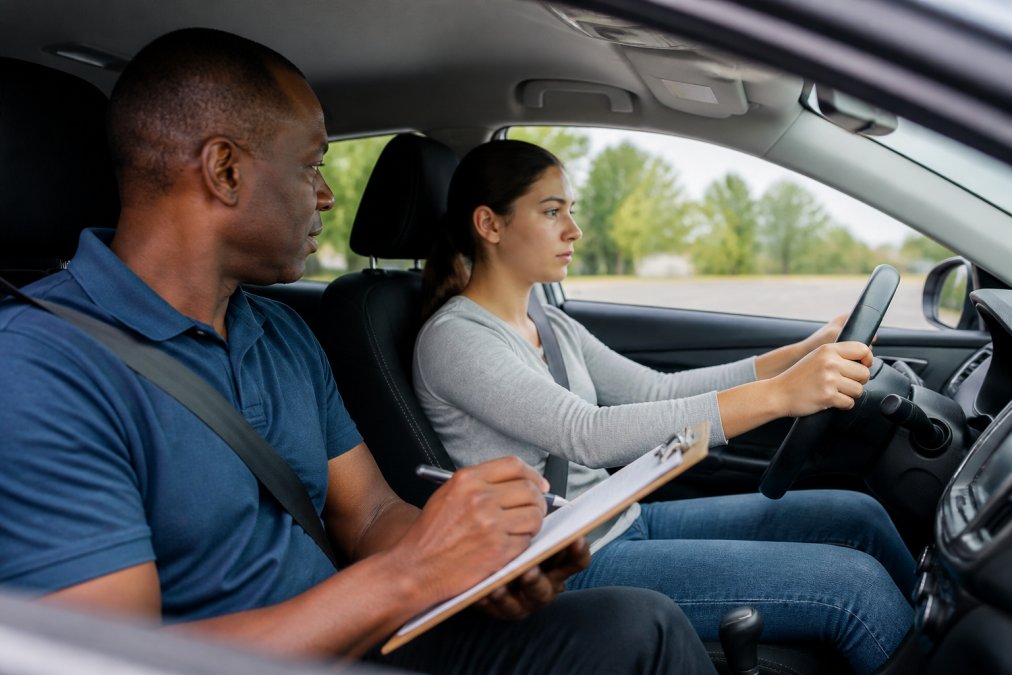
Examiners watch three core things: smooth vehicle control, appropriate speed management, and proper response to traffic signs and signals. Jerky steering, sudden braking, or hesitation signal lack of confidence or understanding. Nervousness is normal; incompetence is a fail.
The test typically lasts 15-20 minutes on urban and residential streets with intersections, turns, lane changes, and parking. You’ll follow the examiner’s directions while obeying traffic laws. If the examiner tells you to turn left but a left turn is illegal, you don’t turn, you explain why and ask for clarification. This demonstrates judgment.
Pre-Test Preparation and Mental Readiness
Anxiety kills more road tests than lack of skill. Arrive at least 15 minutes early. Use the drive to the test center as a warm-up, not a stress test. Drive normally and focus on smooth inputs.
Before exiting your car, sit for a moment and take three deep breaths. This activates your parasympathetic nervous system, steadying your hands and sharpening your decision-making. When you meet your examiner, maintain eye contact and speak clearly. A simple “Good morning, I’m ready to show you what I can do” sets a confident tone.
Before starting the vehicle, adjust your seat and mirrors deliberately. Adjust the seat so you can reach the pedals comfortably. Adjust all three mirrors for clear visibility. Fasten your seatbelt. This ritual ensures physical comfort and gives your nervous system time to settle.
During the Test: What Examiners Watch For
Come to a complete stop at every intersection, not a rolling stop. Pause before proceeding to check for cross traffic.
Use your turning signal at least 100 feet before turning. Check your blind spots before changing lanes or turning by turning your head visibly so the examiner sees it. Maintain consistent speed within the posted limit; driving significantly under the limit signals uncertainty and can be unsafe.
Treat stop signs like red lights: complete stop, check for cross traffic, proceed when safe. If you miss a turn, don’t panic. Tell the examiner and ask for redirection. Missing a turn isn’t an automatic fail; panic and poor recovery are.
Common Road Test Mistakes in NY to Avoid
Failing to come to a complete stop is the number one reason for failure. A rolling stop is illegal and automatic grounds for failure. Train yourself to stop completely at every intersection.
Not checking blind spots before lane changes or turns is the second most common mistake. Turn your head visibly; the examiner needs to see it.
Driving too slowly signals nervousness. Drive at the posted limit unless conditions require slower speeds. Consistent speed demonstrates control and confidence.
Not using turning signals properly, use them early, at least 100 feet before the turn, not after you’ve started turning. Hesitation at green lights signals uncertainty; if the intersection is clear, proceed decisively. Improper parking is a common failure point; park within lines, leave adequate space, and don’t hit the curb.
Automatic Fail Scenarios on the Road Test
Hitting another vehicle or object is an automatic fail. Failing to obey traffic signals or signs results in immediate failure. Driving without a seatbelt (driver or passenger) is an automatic fail. Unsafe lane changes, cutting off other vehicles, or changing lanes without signaling result in automatic failure. Driving without valid insurance or registration is an automatic fail. Refusal to comply with examiner instructions is an automatic fail. Reckless or aggressive driving is an automatic fail.
Key Maneuvers Examiners Evaluate
Parallel Parking and Three-Point Turns
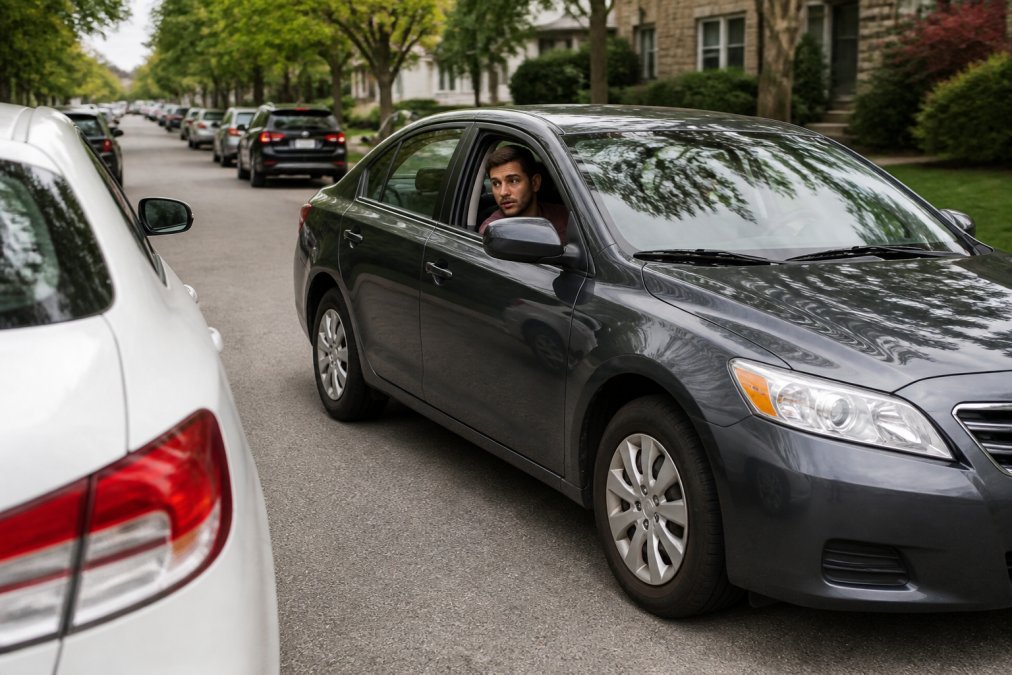
Pull up alongside the space, leaving about two feet between your vehicle and the parked car in front. Put the vehicle in reverse and turn the steering wheel fully to the right. Back up slowly until your vehicle is at approximately a 45-degree angle to the curb. Straighten the wheel and continue backing until mostly in the space. Turn the wheel fully to the left and pull forward slightly to center yourself.
Use smooth, deliberate inputs. Don’t jerk the steering wheel or accelerate suddenly. If you need to pull forward and try again, that’s fine. The examiner is looking for controlled, methodical execution.
For a three-point turn, pull to the side of the road, back up while turning the steering wheel fully in one direction, then shift to drive and turn the wheel in the opposite direction to complete the U-turn. Go slowly and look over your shoulder when backing. If you need to shift multiple times, that’s acceptable.
Lane Changes and Blind Spot Checks
Signal early, at least 100 feet before the lane change. Check your mirror, then turn your head and look over your shoulder. The examiner needs to see this head movement. Proceed smoothly with a gentle steering input. Maintain your speed and don’t swerve. The entire maneuver should take 5-10 seconds.
How to Schedule Your Road Test and Prepare
Visit the New York State DMV website to book your appointment online. Choose a test location near you and book at a time when you’re alert and focused. Morning appointments are often less stressful.
Use the weeks leading up to your test for focused practice: parallel parking, three-point turns, lane changes, and intersection navigation. Practice in different neighborhoods and traffic conditions. The week before your test, do a final vehicle inspection. Check all lights, wipers, mirrors, seatbelts, and tires. Confirm your appointment and get a good night’s sleep.
On test day, eat a light breakfast and hydrate. Avoid excessive caffeine. Arrive at least 15 minutes early with all required documents.
Preparing for your NY DMV road test tips isn’t about memorizing rules, it’s about building the habits and confidence that translate to safe, controlled driving. With deliberate practice, mental preparation, and a clear understanding of what examiners expect, you can walk into that test center knowing you’re ready.
White Plains Driving Center provides expert driving instruction for students of all levels, from beginners to advanced drivers, serving the Westchester area since 1978. With DMV-certified instructors and flexible scheduling, we specialize in building confidence for nervous drivers, adults, and international students alike. Our comprehensive packages include pre-licensing classes and road test support to ensure you are fully prepared to drive with confidence. Trust our experienced team to guide you through every step of your journey toward obtaining your license.
Book Now with White Plains Driving Center and get the test-specific preparation that moves you from anxious to confident.
Frequently Asked Questions
Q: What are the automatic fails on a NY DMV road test?
A: Automatic failures include failing to stop at a red light or stop sign, hitting another vehicle, driving on the wrong side of the road, and refusing to follow the examiner’s instructions. Unsafe actions like excessive speeding, reckless turns, or hitting a curb during maneuvers will also result in immediate failure. The examiner prioritizes safety above all else, so any behavior that endangers the vehicle, examiner, or public will end the test immediately.
Q: What documents do I need for my NY DMV road test?
A: You must bring your permit, a valid ID or passport, proof of vehicle registration, and proof of insurance. Some examiners may also request your vehicle inspection certificate. Missing any required documentation will prevent you from taking the test, so verify the complete list on the DMV website before your appointment. Keep originals in a folder so nothing gets misplaced on test day.
Q: How can I manage test anxiety during my NY DMV road test?
A: Psychological preparation is as important as driving skills. Practice deep breathing techniques before the test, arrive 15 minutes early to familiarize yourself with the testing location, and remember that the examiner expects nervousness from beginners. Get adequate sleep the night before, avoid caffeine overload, and focus on smooth, deliberate movements. Many test-takers report that their anxiety decreases once they begin driving because muscle memory takes over.
Q: What are the most common road test mistakes in NY?
A: Beginners often forget to check blind spots, fail to use turning signals consistently, brake too hard or too abruptly, and rush through maneuvers. Other frequent errors include not coming to a complete stop at intersections, poor steering control during turns, and hesitation when merging or changing lanes. Defensive driving habits like scanning ahead and maintaining smooth speed control will eliminate most of these mistakes.
Q: Do I need to bring my own car for the NY DMV road test?
A: Yes, you must provide your own vehicle for the test. The vehicle must be registered, insured, and pass a basic safety inspection. It should have functioning brakes, turn signals, wipers, and mirrors. Many driving schools offer vehicles for testing if you don’t have access to one, so check with your instructor about this option if needed.
Q: How should I prepare my vehicle before the NY DMV road test?
A: Perform a thorough vehicle inspection: check that all lights work (headlights, brake lights, turn signals), ensure mirrors are clean and properly adjusted, test windshield wipers, confirm the horn functions, and verify that brakes are responsive. Check tire pressure and tread depth, make sure the registration and insurance cards are in the vehicle, and clean the interior so the examiner has a clear view. A well-maintained vehicle demonstrates responsibility and reduces distractions during the test.
Q: What should I expect during my NY DMV road test appointment?
A: The examiner will review your documents, ask you to demonstrate basic vehicle controls (lights, wipers, horn), and then guide you through a 15-20 minute drive covering residential streets, intersections, and possibly highways. You’ll perform maneuvers like parallel parking, three-point turns, and lane changes. The examiner will remain silent most of the time unless giving directions. Stay calm, follow instructions precisely, and ask for clarification if you don’t understand a direction.
This article was written using GrandRanker