Table of Contents
- Private Lessons vs Group Classes: Key Differences at a Glance
- One-on-One Instruction: When Private Lessons Make Sense
- Group Classes: Structure, Cost, and Peer Learning
- How Many Driving Lessons for Beginners Do You Actually Need
- Nervous Driver Driving Instruction: Anxiety and Confidence Building
- Driving School Pre-Licensing Requirements and Road Test Prep
- Which Option Is Right for You
- Frequently Asked Questions
Last Updated: September 30, 2026
Private Lessons vs Group Classes: Key Differences at a Glance
The choice between private lessons and group classes shapes your learning experience. Private driving lessons offer one-on-one instruction tailored to your pace; group classes provide structured progression at lower cost. This guide breaks down how private lessons vs group classes differ, helping you decide which fits your schedule, learning style, and budget.
Private lessons cost more but adapt instantly; group classes cost less but move at a fixed pace. The right choice depends on your anxiety level, schedule, and learning speed.
| Aspect | Private Lessons | Group Classes |
|---|---|---|
| Cost | Higher per session | Lower overall cost |
| Pacing | Customized to you | Fixed schedule |
| Instructor focus | One-on-one attention | Shared across students |
| Flexibility | High scheduling options | Limited class times |
| Learning environment | Distraction-free | Peer interaction |
| Best for | Nervous drivers, busy schedules | Budget-conscious, structured learners |
One-on-One Instruction: When Private Lessons Make Sense
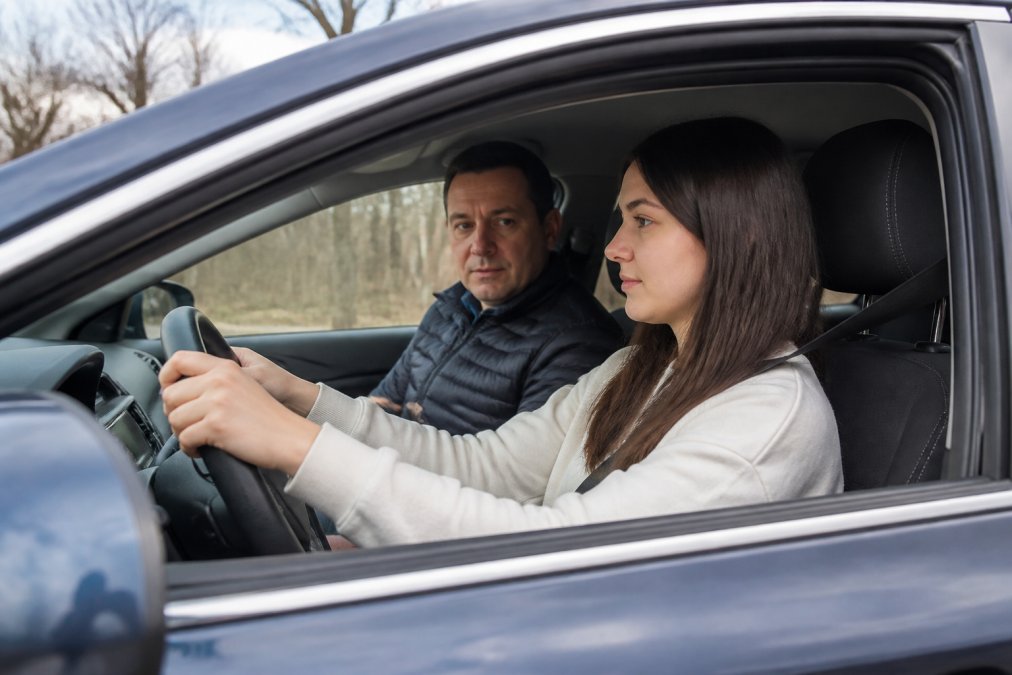
Private lessons give you your instructor’s full attention. The instructor adjusts the lesson in real time based on what you need that day, with no waiting for slower students or feeling rushed.
Personalized pacing and customized curriculum
Your instructor builds lessons around your gaps, not a fixed syllabus. If you struggle with highway merging, you spend extra time on it; if you’re confident in parking, you skip ahead. This customization matters most for nervous drivers who need time to build confidence before harder skills.
You can schedule lessons around your life, Sunday mornings if you work nights, or whenever you have free time. Group classes run on their schedule, not yours.
Request an instructor who specializes in nervous drivers if anxiety is your main concern. Ask directly about their approach to building confidence, how they handle mistakes, how they give feedback, whether they’ve worked with anxious learners before. The right personality match matters more than the credentials alone.
Distraction-free learning environment
You’re in a car with one instructor, no classmates, no pressure to perform in front of peers. For anxious learners, this calm environment is often the difference between progress and paralysis. You control the car’s environment and can practice routes you’ll drive regularly. Mistakes don’t become a class discussion; the instructor gives private feedback, which reduces shame and builds confidence faster.
Group Classes: Structure, Cost, and Peer Learning
Group classes run on a fixed schedule and move through a standardized curriculum over 6-10 weeks. This structure appeals to learners who want a clear roadmap and prefer group accountability.
Structured progression and comprehensive syllabus
Group classes follow a comprehensive syllabus covering everything for the road test. You know exactly what’s coming and how long it will take. Peer learning reduces anxiety, you see others struggle with the same skills. The downside: if you need extra time on one skill, the class moves on anyway. The pace is fixed.
Cost comparison and hidden expenses
Group classes cost less per hour because instructor time is split across students ($45-60 for 5-hour classroom, $59 per 45-minute behind-the-wheel session). Private lessons cost more per session but end when you’re ready. Hidden expenses exist in both: group classes may charge extra for textbooks, road test scheduling, or practice tests; private lessons may include or charge separately for these services.
Ask about what’s included in the quoted price before signing up. Some schools quote the per-hour rate but don’t mention that road test prep costs extra, or that the 5-hour pre-licensing class is separate from behind-the-wheel training. Get a total estimate for everything you need, not just the first component.
How Many Driving Lessons for Beginners Do You Actually Need
Every state requires a 5-hour pre-licensing classroom course. But “minimum” doesn’t mean “enough.” The real question is: how many hours until you’re genuinely ready?
Baseline hours by starting point and lesson type
Never driven before: Private lessons typically 12-16 hours (instructor focuses on your gaps at your pace). Group classes typically 15-20 hours (fixed curriculum regardless of mastery).
How to estimate your personal requirement
After your first lesson, ask your instructor for a realistic estimate based on your starting baseline, decision-making speed, anxiety level, and error recovery. An honest instructor will give a range (e.g., “14-16 hours”) and reassess after several sessions. If an instructor guarantees readiness in a fixed number of hours without knowing your baseline, that’s a warning sign.
Hidden costs beyond tuition
Beyond per-hour costs, budget for: extra practice hours (5-10 paid hours if you can’t practice with a licensed adult for free), road test re-test fees ($10-30 if you fail), and insurance implications (defensive driving discounts may apply). If using your own car for practice, factor in gas and wear.
Total cost comparison example:
When to stop taking lessons
You’re ready to test when you can consistently execute all required maneuvers smoothly, anticipate hazards 5-10 seconds ahead, follow traffic laws automatically, stay calm when unexpected things happen, and drive the test route without directions. If you can do these on your last three lessons, you’re ready. Don’t test until genuinely ready, a failed test costs money and erodes confidence.
Don’t let an instructor pressure you to test before you feel ready, and don’t let cost pressure you into testing too soon. A failed road test is more expensive (re-test fee + additional lessons) and more damaging to your confidence than taking 2-3 extra lessons before your first attempt.
Nervous Driver Driving Instruction: Anxiety and Confidence Building
Anxiety is the biggest factor many nervous drivers overlook. Different anxiety profiles respond differently to each learning environment, so understanding your specific pattern helps you choose the right fit.
How anxiety types map to learning environments
Social anxiety (fear of peer judgment) responds best to private lessons, no audience means you can practice without social evaluation threat. Performance anxiety (fear of mistakes) also favors private lessons; mistakes stay private, reducing shame. Generalized anxiety (worry about safety or control) can benefit from either setting depending on the instructor’s approach.
The neuroscience of learning under stress
Under stress, your amygdala (threat-detection) is more active than your prefrontal cortex (learning center), so you retain less and take longer to build automaticity. Private lessons reduce amygdala activation by eliminating social threat cues, making each hour neurologically more efficient. Group classes work for some anxious learners if the instructor actively manages the group dynamic, normalizing mistakes and creating psychological safety, but this requires instructor skill not all programs prioritize.
Concrete accommodation strategies
Ask your instructor about: graduated exposure (parking lots → residential → highways), mistake framing (diagnostic data vs. failure), predictability (advance notice of each session’s focus), feedback timing (after completion vs. immediately), and anxiety management tools (breathing techniques). If an instructor can’t articulate their approach to anxiety management, that’s a red flag.
Why anxiety matters for road test outcomes
Nervous drivers often fail their first road test not because they can’t drive, but because test-day anxiety triggers the same amygdala response that impaired learning during training. If you trained in a calm private environment, you have a better chance of staying calm during the test. If you trained in a higher-stress group setting, test anxiety may feel familiar and manageable, or it may compound.
Your anxiety profile (social, performance, or generalized) and your instructor’s anxiety management skills matter more than whether you choose private or group lessons. A private instructor without anxiety expertise may help less than a group instructor who explicitly teaches nervous drivers. Ask about their specific approach before committing.
Driving School Pre-Licensing Requirements and Road Test Prep
The NY State 5-hour pre-licensing classroom course is required before you can take the road test. This covers traffic laws, road signs, and safe driving practices. It’s non-negotiable.
Which Option Is Right for You
Choose private lessons if:
- You’re an anxious or nervous driver
- Your schedule is irregular or unpredictable
- You learn at a different pace than average (much faster or slower)
- You’re returning to driving after a long break
- You’re an international driver adapting to U.S. rules
- You want to minimize the number of road test attempts
Choose group classes if:
- You’re budget-conscious and can commit to fixed class times
- You thrive with structure and a clear syllabus
- You find peer support motivating
- You have a flexible schedule that matches the class calendar
- You’re confident enough that you don’t need extra hand-holding
Many learners use a hybrid approach: group classes for the required 5-hour pre-licensing course, then private lessons for behind-the-wheel training. This balances cost and personalization.
Frequently Asked Questions
How many driving lessons do beginners typically need before taking the road test?
New York State requires a minimum of 5 classroom hours for the pre-licensing course. Private instruction often requires fewer total lessons because personalized pacing accelerates skill acquisition, while group classes may require more hours spread over a longer timeline.
Is private driving instruction better for nervous drivers?
Private lessons offer significant advantages for anxious drivers: one-on-one instruction means no peer pressure or distractions, your instructor can adjust speed and route complexity to your comfort level, and you receive individualized feedback without judgment. A calm, experienced instructor creates a safe learning environment where you control the pace. Group classes expose nervous drivers to classroom dynamics and shared vehicle time, which some find helpful for building confidence through peer support, while others find it stressful. Your temperament determines which works best.
What are the main cost differences between private lessons and group classes?
Group classes typically offer lower per-hour rates because costs are shared among multiple students, though you may need more total lessons to reach road-test readiness. Private lessons cost more per session but often require fewer total hours due to personalized instruction and no downtime. Hidden costs in both options include the state-mandated 5-hour pre-licensing course (required regardless of choice), road test scheduling fees, and vehicle registration for the road test itself. Compare total investment, not just hourly rate, when budgeting for your license.
What does the New York State pre-licensing requirement include?
New York State requires all first-time applicants to complete a 5-hour classroom course covering traffic laws, defensive driving, and licensing regulations before taking the road test. This course is mandatory and separate from behind-the-wheel instruction. Both private driving schools and group class providers typically offer this pre-licensing course as part of their packages. After completing it, you receive a certificate of completion required to schedule your road test with the DMV.