Table of Contents
- Professional Driving Instruction vs. Learning With Parents: Key Differences
- Cost Comparison: Professional vs. Parent-Taught
- DMV-Certified Driving Instructors: What You Get
- Pre-Licensing Course Requirements and Compliance
- Road Test Preparation Tips: Professional vs. Parental Guidance
- Safety, Stress, and the Parent-Child Dynamic
- Hybrid Learning: Combining Professional Instruction With Parental Support
- Which Approach Is Right for You?
- Frequently Asked Questions
Last Updated: September 28, 2026
Professional Driving Instruction vs. Learning With Parents: Key Differences
Choosing how your teen learns to drive is one of the most consequential decisions you’ll make as a parent. The choice between professional driving instruction and teaching them yourself shapes not only their technical skills but also your relationship, your stress levels, and ultimately how confident they feel behind the wheel.
This guide breaks down the real differences between professional driving instruction and parent-taught learning. The decision isn’t about which path is universally “better”, it’s about which fits your family’s needs, your patience threshold, and your teen’s learning style.
Professional driving instruction costs more but removes emotion from the equation. Parent-taught driving keeps costs down but tests family relationships and requires you to know the state’s curriculum requirements. Both can produce safe, confident drivers, the question is which works for you.
Cost Comparison: Professional vs. Parent-Taught
Professional driving schools cost more than parent-taught instruction, but insurance premium reductions often narrow the gap.
Parent-taught programs offer the lowest upfront cost, with state-approved curriculum available for a one-time fee. You supply the vehicle and your time.
Professional instruction packages vary depending on behind-the-wheel hours and classroom instruction included.
Insurance companies offer measurable discounts for professional driving instruction: typically 5-15% on premiums for young drivers. On an annual premium, that’s potential savings per year, offsetting some upfront costs over time.
Some insurers offer additional discounts for passing the road test on the first attempt, which professional instruction increases the likelihood of.
Parent-taught drivers typically don’t qualify for insurance discounts unless they complete a separate defensive driving course.
Parent-taught saves money upfront but requires your time, patience, and knowledge of defensive driving and road test requirements. Professional instruction costs more initially but includes structured curriculum, objective assessment, and instructor expertise, with potential for insurance discounts.
| Approach | Upfront Cost | Time Commitment | Instructor Expertise | Insurance Discount Eligible | True 3-Year Cost* |
|---|---|---|---|---|---|
| Parent-Taught | Low ($60-100) | High (30-40 hours) | Your knowledge only | No | $60-100 |
| Professional | Higher ($250-500+) | Low (you schedule) | DMV-certified, trained | Yes (5-15% annual) | $100-350 (after discounts) |
*Actual savings vary by insurer and state.
To maximize savings, ask your insurance agent whether they offer discounts for professional driving instruction before enrolling. Some insurers require completion of a specific course or certification; others accept any DMV-approved professional school. Knowing this upfront helps you factor the true cost into your decision.
DMV-Certified Driving Instructors: What You Get
DMV-certified instructors have completed state-mandated training in instructional methodology, vehicle safety, and curriculum compliance. They’re trained to teach, not just drive well.
A good driver isn’t automatically a good instructor. Parents often pass on bad habits, merging without checking blind spots, accelerating through yellow lights, shortcuts developed over years. Professional instructors teach defensive driving techniques the DMV expects and catch mistakes before they become habits.
Professional instructors provide objective assessment against state standards, not parental expectations. They know what the road test examiner will look for and are trained to manage driving anxiety without judgment.
Instructors experienced with anxious learners build confidence systematically rather than pushing speed.
Professional instructors catch mistakes that parents miss. A parent might not realize their teen is riding the brake or not checking mirrors frequently enough. An instructor trained in hazard perception spots these patterns immediately and corrects them before they become entrenched habits.
Pre-Licensing Course Requirements and Compliance
Most states require a pre-licensing course before a teen can take the road test.
Parent-taught drivers must complete the state-mandated curriculum covering traffic laws, hazard perception, defensive driving techniques, and specific maneuvers the examiner will test. You must document hours and ensure compliance with state standards.
Professional driving schools handle curriculum compliance, structure lessons to cover all required topics, and maintain documentation that satisfies licensing requirements.
If you choose parent-taught instruction, you’ll need to research your state’s specific pre-licensing requirements, obtain the curriculum, and track hours carefully. It’s doable, but it requires attention to detail.
Road Test Preparation Tips: Professional vs. Parental Guidance
Road test preparation requires knowing what the examiner watches for and performing under pressure.
Professional instructors know specific test routes, maneuvers examiners focus on, and common failure points. They drill parallel parking, three-point turns, and lane changes with mirror checks, preparing teens for evaluation pressure.
Parents can do this, but most don’t know specific test requirements like signaling three seconds before turning or maintaining consistent speed.
A common mistake is assuming that good everyday driving translates to passing the road test. It doesn’t. The test has specific requirements: signal exactly three seconds before turning, check mirrors in a specific sequence, maintain the speed limit precisely. Parents often don’t know these specifics, and their teen fails on technicalities, not driving ability.
Safety, Stress, and the Parent-Child Dynamic
Here’s what most guides skip: the emotional reality of parent-taught driving instruction, and how to predict whether it will strengthen or damage your relationship with your teen.
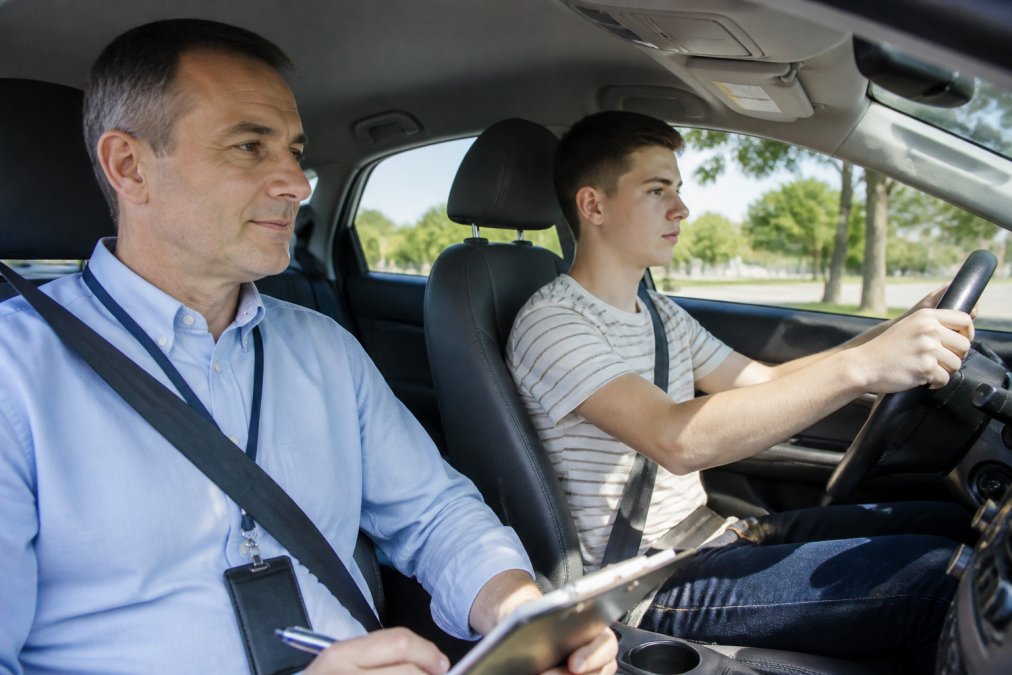
Teaching your teen to drive tests patience unpredictably.
Recognizing when parent-taught instruction will strain your relationship:
-
Your teen is anxious or nervous about driving. Anxious learners need a calm, non-judgmental environment. If your teen is already worried about making mistakes, adding parental judgment, even gentle judgment, increases anxiety and slows learning. Professional instructors are trained to build confidence systematically; parents often inadvertently reinforce anxiety by focusing on what went wrong.
-
Your teen has ADHD or executive function challenges. Teens with ADHD often struggle with sustained attention, impulse control, and processing feedback. They benefit from structured, externally-imposed accountability (which a professional instructor provides) rather than relying on parental reminders. Parent-taught instruction often becomes a source of conflict around “why aren’t you remembering to check your mirrors?” when the issue is neurological, not motivational.
-
Your teen is a perfectionist or shame-prone. Some teens internalize mistakes as personal failure. If your teen tends to get upset with themselves after errors, parent-taught instruction can amplify this. A professional instructor can reframe mistakes as normal learning steps; a parent’s presence can make the teen feel they’ve disappointed you, even if you haven’t said so.
-
You have a history of tension around performance or criticism. If your relationship with your teen already involves conflict around grades, chores, or other performance areas, adding driving instruction to that dynamic is high-risk. The car becomes another arena for conflict rather than learning.
-
You’re anxious about their safety. If you’re a nervous passenger or tend to grip the dashboard, your anxiety transmits to your teen. Professional instructors manage their own anxiety; they’ve sat in hundreds of cars with nervous drivers and remain calm. Your anxiety, however well-intentioned, teaches your teen that driving is dangerous and they should be afraid.
The bonding myth:
The psychological safety of professional instruction matters as much as the technical training. A nervous driver learns better from someone trained to manage anxiety than from a parent managing their own stress about their teen’s safety. If your teen is anxious, perfectionist, or you have a history of tension around performance, professional instruction isn’t a luxury, it’s a protective investment in both their driving skills and your relationship.
Hybrid Learning: Combining Professional Instruction With Parental Support
The best approach for many families isn’t either-or, it’s both.
Which Approach Is Right for You?
The decision depends on four factors: your time availability, your teen’s learning style, your patience threshold, and your confidence in your own driving knowledge.
Choose parent-taught if:
- You have significant time available (20-40 hours over several months)
- Your teen learns well from you without tension
- You’re patient with repeated mistakes and slow progress
- You understand your state’s licensing requirements and can commit to curriculum compliance
- Your teen is confident and doesn’t struggle with driving anxiety
Choose professional instruction if:
- Your schedule doesn’t allow 30+ hours of supervised driving
- Your teen is anxious or nervous about driving
- You want objective assessment separate from parental judgment
- You want specialized expertise (international students, adult learners, nervous drivers)
- You prioritize reducing emotional tension in your family during this learning phase
Choose hybrid learning if:
- You want professional expertise but also want to be involved
- You have some time but not enough for full parent-taught instruction
- Your teen benefits from both objective instruction and your supportive presence
- You want to build confidence through both structured lessons and familiar practice
Frequently Asked Questions
Is professional driving instruction better than learning with a parent?
Neither is universally better, it depends on your situation. Professional driving instruction offers objective assessment, structured curriculum compliance, and instructor expertise without the emotional tension that can arise in parent-child teaching. Parent-taught lessons provide scheduling flexibility, cost-effectiveness, and familiarity with your own vehicle. Many learners benefit most from a hybrid approach: professional instruction for foundational skills and road test preparation, combined with supervised practice with parents.
What are the main benefits of DMV-certified driving instructors?
DMV-certified driving instructors bring professional certification, formal training in defensive driving and hazard perception, and objective assessment of your skills. They follow state-mandated curriculum requirements and know exactly what examiners expect on the practical exam. Unlike parents, they teach without emotional involvement, which helps nervous drivers focus on technique. They also understand dual-control vehicles and safety protocols designed to protect learners during behind-the-wheel training.
How do pre-licensing course requirements affect my choice?
Most states require completion of a pre-licensing course before taking the road test. Professional driving schools typically include this requirement in their packages. If you choose parent-taught instruction, you’ll need to complete the pre-licensing course separately, either online or in-person, to meet licensing requirements. This adds time and cost to the parent-taught route, so factor it into your decision.
Can parents effectively teach road test preparation?
Parents can help with supervised practice and driving habits, but professional instructors specialize in road test preparation tips. They know the specific maneuvers, traffic laws, and examiner expectations that determine pass rates. Instructors teach hazard perception and defensive driving techniques examiners assess. If you’re anxious about the test itself, professional instruction focused on practical exam skills often produces better results than general parental guidance alone.
Does professional driving school affect insurance premiums?
Many insurance companies offer discounts for graduates of professional driver education programs. This can offset some or all of the cost of professional instruction. Parent-taught drivers don’t qualify for these discounts. Check with your insurance provider about specific discount eligibility before deciding between professional and parent-taught instruction.