Table of Contents
- What Road Test Support Packages Include
- Driving School Car Rental for Road Test: What to Expect
- How to Pass the DMV Road Test on the First Try
- Road Test Anxiety Management Techniques That Work
- Comparing Road Test Support Packages: Features and Pricing
- Common Road Test Failure Points and How to Avoid Them
- Scheduling, Documents, and Test Day Logistics
- Conclusion
Last Updated: August 21, 2026
What Road Test Support Packages Include
Road test support packages are comprehensive bundles designed to prepare you for the DMV driving exam. These packages typically combine behind-the-wheel instruction, vehicle rental for your test day, and administrative support like appointment scheduling. Most packages include a pre-test lesson where an instructor reviews key maneuvers you’ll face during the exam in a dual-controlled vehicle, which eliminates the stress of using an unfamiliar car on test day and ensures you’re driving a vehicle that meets all DMV requirements (dmv.ny.gov).
Road test support packages handle logistics that many nervous drivers overlook, including appointment scheduling and sometimes the mandatory 5-hour pre-licensing course (dmv.ny.gov). The key difference between packages comes down to how much instruction you receive before test day. Minimal packages offer a single hour of practice immediately before your exam, while comprehensive packages stack multiple lessons over weeks, building your skills progressively.
The most important thing to verify: does the package include use of the school’s vehicle for your actual road test? Some providers only offer lessons in their car but require you to bring your own vehicle for the exam.
Driving School Car Rental for Road Test: What to Expect
Using a driving school vehicle for your road test removes one major variable from an already stressful day. These cars are specifically maintained to meet DMV standards and equipped with dual controls. School vehicles are typically mid-size sedans or compact SUVs with automatic transmissions, kept in good mechanical condition and regularly inspected.
Arrive early on test day to familiarize yourself with the car’s controls: windshield wipers, steering responsiveness, and seat adjustment. Fifteen minutes of adjustment time can significantly reduce test-day jitters. Confirm whether your provider includes home pickup or requires you to meet them at their facility, as unexpected logistics can add unnecessary stress.
One critical point: the car you practice in during your lessons should be the same vehicle you’ll use for your road test. Switching between different cars means relearning how each one handles. Consistent practice builds muscle memory for steering response, braking feel, and mirror positioning.
Some students assume [the DMV](/how-to-prepare-for-dmv-road-test/) examiner will be lenient because they’re testing in a school car. This is a common mistake. The examiner applies the same standards regardless of whose vehicle you’re driving. What the school car gives you is reliability and familiarity, not favoritism.
How to Pass the DMV Road Test on the First Try
Passing your road test on the first attempt comes down to three things: knowing what the examiner is actually looking for, practicing the specific maneuvers they’ll test, and managing your anxiety so it doesn’t sabotage your performance.
The DMV road test evaluates your ability to operate the vehicle safely and follow traffic laws. The examiner watches for smooth acceleration and braking, proper use of mirrors and signals, appropriate speed for conditions, and correct lane positioning. Most test routes include residential streets, at least one main road, and a parking maneuver.
Behind-the-wheel training that focuses on test-specific skills is more valuable than general driving practice. A good instructor will run you through mock road tests, teaching you to anticipate what the examiner expects: smooth lane changes with proper mirror checks, controlled speed around corners, and deliberate hand positioning. The mental component matters as much as technical skills. Test anxiety causes people to make mistakes they wouldn’t normally make. Practicing with an instructor who creates a calm, supportive environment builds your confidence so that when test day arrives, you’re executing skills you’ve already internalized.
The single biggest difference between first-time passers and test repeaters is preparation specificity. Drivers who pass tend to have practiced the exact maneuvers and scenarios they’ll face.
Road Test Anxiety Management Techniques That Work
Anxiety around your road test is normal. The solution isn’t to eliminate anxiety, but to manage it so it doesn’t interfere with your performance.
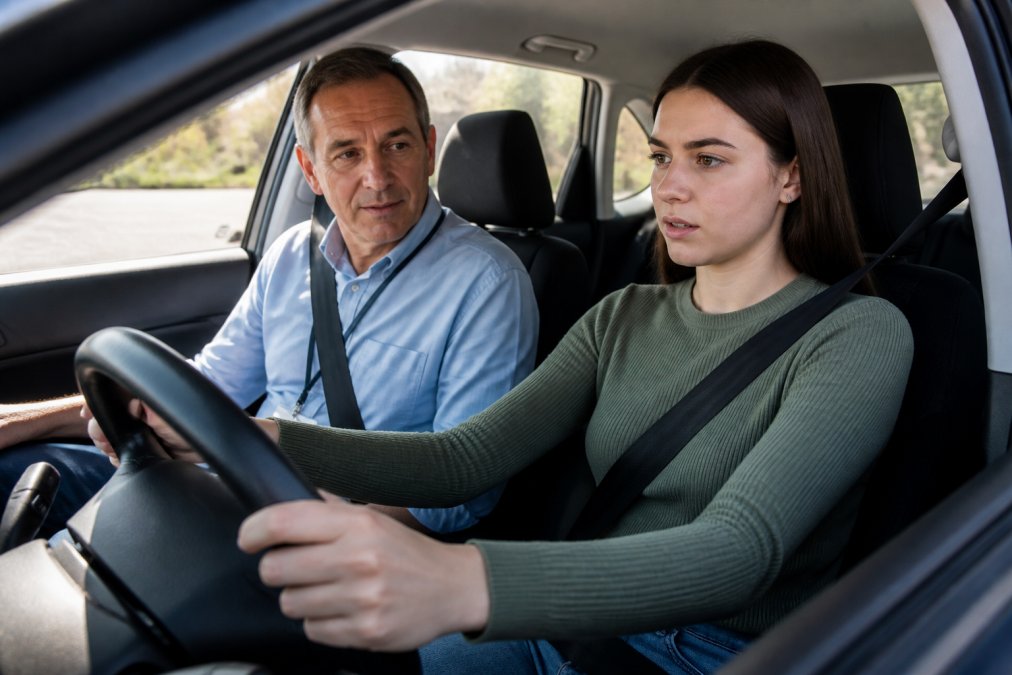
Familiarity reduces anxiety. Practicing in the actual vehicle you’ll use for your test matters because your nervous system recognizes the environment and tasks, which calms your stress response. Running mock road tests with your instructor is equally valuable.
Breathing techniques work. Before you start the test, take slow, deliberate breaths: in for a count of four, hold for four, exhale for four. This activates your parasympathetic nervous system, counteracting the fight-or-flight response. You can do this in the car before the examiner gets in.
Reframe what the examiner represents. The examiner isn’t your enemy. They’re assessing whether you can drive safely, not judging you as a person. Positive visualization also works: the night before your test, mentally run through a successful test, seeing yourself executing turns with proper technique and parking cleanly.
Many nervous drivers benefit from working with an instructor who specializes in anxious students. The difference between an instructor who rushes through lessons and one who paces instruction to your comfort level is enormous. driving companion apps.
Schedule your test for a time of day when you’re naturally calmer. If you’re a morning person, book an early test. If you’re sharper in the afternoon, book later.
Comparing Road Test Support Packages: Features and Pricing
Different packages serve different needs. Understanding what each type includes helps you choose the right fit.
Minimal Practice Packages (1-Hour Lesson Plus Test)
These packages are designed for drivers who already have solid driving skills but want a final tune-up and a guaranteed vehicle for test day. You get one hour of instruction immediately before your road test, then use the school’s car for the exam.
Minimal packages work well if you’ve been driving informally for months or are returning to driving after a long break but remember the fundamentals. The single lesson gives you a chance to identify any bad habits before they cost you on the exam. The trade-off is limited practice time. One hour isn’t enough to fundamentally change your driving skills if they’re weak.
| Package Type | Lessons Included | Pre-Licensing Course | Best For |
|---|---|---|---|
| Minimal | 1 hour | No | Confident drivers needing final practice |
| Comprehensive | 6-8 hours | Yes | Beginners and nervous drivers |
| Mid-Range | 3-4 hours | Sometimes | Drivers with some experience |
Comprehensive Packages (Multiple Lessons Plus Pre-Licensing)
Comprehensive packages are built for drivers starting from scratch or those with significant anxiety. You receive multiple lessons spread over weeks, the mandatory 5-hour pre-licensing course, and full support for your road test. This gives you time to build skills progressively and address specific weak areas.
Comprehensive packages cost more, but they’re designed to maximize your chances of passing on the first attempt. If you’re anxious, haven’t driven much, or are an international student adapting to U.S. driving standards, this approach pays for itself by eliminating the need for a second test attempt.
Comprehensive packages are best for first-time drivers, people with significant driving anxiety, international students adapting to U.S. driving rules, and anyone who hasn’t driven in more than five years.
Common Road Test Failure Points and How to Avoid Them
Understanding why people fail their road tests helps you avoid the same mistakes. Most failures aren’t about catastrophic errors but small habits that add up to an unsafe driving pattern.
The most common failure point is improper mirror and blind-spot checking. Many nervous drivers forget this step because their mind is focused on steering. Make mirror checks exaggerated and obvious: turn your head, glance at the mirror, wait a beat, then move.
Parking maneuvers trip up many test-takers. Most failures come from hitting the curb or taking too many attempts. Practice parking repeatedly until it becomes automatic. Speed control is another common issue. Some nervous drivers go too slowly, which looks unsafe because they’re not matching traffic flow. The examiner wants to see that you adjust your speed appropriately for conditions and posted limits.
Failing to signal or signaling too late causes failures. You need to signal at least 100 feet before turning or changing lanes (dmv.ny.gov). Make signaling automatic: check mirrors, signal, count to two, then move. Finally, if you miss a turn or take a wrong street, continue safely, find a legal place to turn around, and get back on track. The examiner cares about your response to mistakes more than whether you make them.
Scheduling, Documents, and Test Day Logistics
Getting your road test scheduled and preparing the required documents is straightforward, but missing a single requirement can derail your test day.
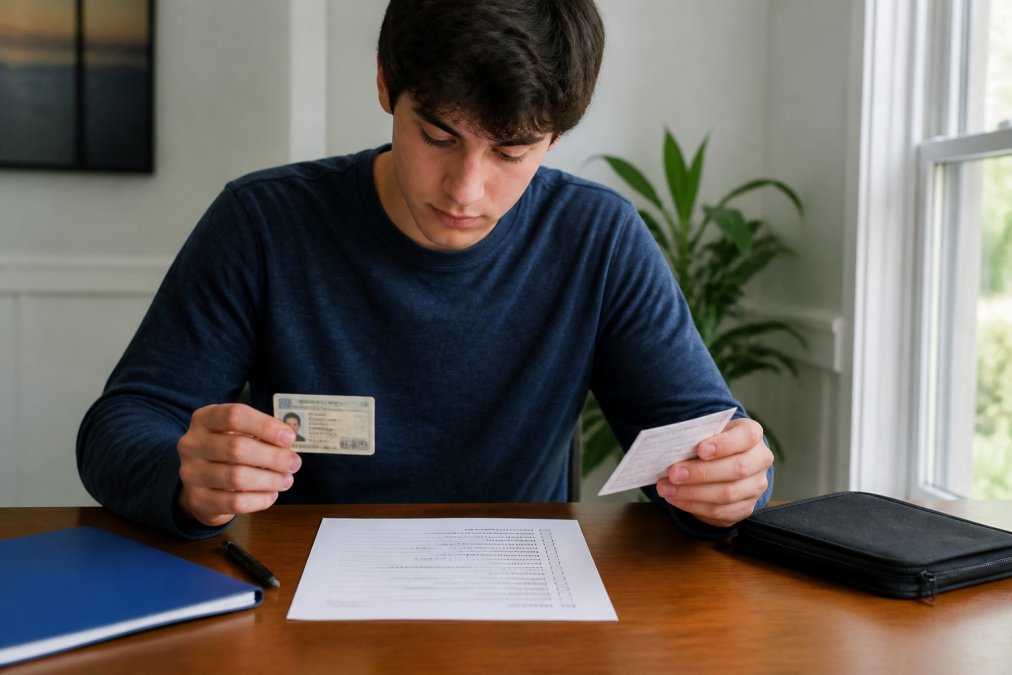
You need your learner’s permit before you can schedule your road test. The permit requires passing the written knowledge test at the DMV. Many road test support packages include or recommend completing the 5-hour pre-licensing course before you take the written test, which improves your chances of passing.
Once you have your permit, you can schedule your road test. Some providers handle this for you as part of their package. Others require you to schedule it yourself through the DMV. Book your test for a time when you can practice consistently beforehand. Scheduling a test two weeks out gives you time for meaningful preparation.
Required documents for test day typically include your learner’s permit, proof of insurance, and a valid ID. Some DMV locations also require proof that you’ve completed the 5-hour pre-licensing course. Check your specific DMV’s requirements before test day, as requirements vary slightly by location.
Arrive early on test day, plan to be at the testing location 15 minutes before your scheduled time. This gives you time to collect yourself and do final mental preparation. The examiner will start by checking your documents and asking you to demonstrate basic vehicle controls. Then you’ll drive a route that typically lasts 15-20 minutes, including residential streets, at least one main road, and at least one parking maneuver. After the test, you’ll receive your score. If you don’t pass, you’ll get feedback on what to work on before your next attempt.
Preparing for your road test doesn’t have to be stressful when you have the right support. Road test support packages give you access to DMV-certified instructors, reliable vehicles, and structured preparation that addresses the exact skills the examiner evaluates. White Plains Driving Center has been helping drivers in the Westchester area build confidence and pass their road tests since 1978. Our flexible scheduling accommodates busy professionals and students, and our instructors specialize in working with nervous drivers, adults returning to driving, and international students adapting to U.S. driving standards. Whether you need a single focused lesson or comprehensive instruction with the pre-licensing course included, we prepare you thoroughly so you can drive with confidence. Book Now with White Plains Driving Center and take the first step toward getting your license.
Frequently Asked Questions
Q: What is included in a typical road test support package?
A: Most road test support packages include a combination of behind-the-wheel lessons, use of a school vehicle with dual controls, an instructor for the actual road test, and road test appointment scheduling. Comprehensive packages also include the mandatory 5-hour pre-licensing course. Minimal packages focus on a final practice session and vehicle rental only. Check with your driving school to confirm exactly what each package covers, as offerings vary.
Q: How can a driving school help reduce road test anxiety?
A: Experienced driving schools use several anxiety management techniques: familiarizing you with the test route beforehand, practicing common maneuvers like parallel parking repeatedly until they feel automatic, conducting mock road tests to simulate exam conditions, and maintaining calm, encouraging instruction throughout lessons. DMV-certified instructors understand what examiners look for and can build your confidence by breaking down each skill step-by-step. A warm-up lesson immediately before your road test also helps settle nerves.
Q: What is the number one reason for failing a driving test?
A: Failure to maintain proper control during maneuverability exercises, particularly parallel parking, is a common cause of road test failure. Another common issue is improper mirror checks and failure to demonstrate awareness of blind spots. Many failures also stem from nervousness causing drivers to forget basic procedures they've practiced repeatedly. Road test support packages address this by drilling maneuverability skills and teaching anxiety management so you perform under pressure.
Q: Is 20 lessons enough to pass the road test?
A: For most learners, 20 hours of professional instruction is often sufficient when combined with the 5-hour pre-licensing course and consistent practice. However, this depends on your starting skill level, prior driving experience, and how quickly you master complex maneuvers. Nervous drivers or those new to U.S. driving regulations may benefit from additional lessons. Your instructor can assess your progress and recommend whether you need extra practice before scheduling your road test.
This article was written using GrandRanker