Table of Contents
- What Are Private Driving Lessons?
- Private vs. Traditional Driving Schools: Which Delivers More?
- The Real Impact on DMV Road Test Preparation and Pass Rates
- Private Driving Lessons for Nervous Drivers: Does One-on-One Help?
- Understanding Adult Driving Lessons Cost and Value
- Hidden Costs and Contract Traps to Watch For
- How to Choose the Right Private Instructor for You
- The Verdict: Are Private Lessons Worth the Investment?
- Frequently Asked Questions
Last Updated: September 5, 2026
What Are Private Driving Lessons?
Private driving lessons are one-on-one behind-the-wheel training sessions with a certified instructor, focused entirely on your skill level, learning pace, and specific goals. Unlike classroom-based driver education, these sessions put you in the driver’s seat from the first minute.
Every minute of the lesson belongs to you, no waiting for other students, no shared curriculum, no group pressure. Instruction adapts to what you struggle with, whether parallel parking, highway merging, or staying calm at a busy intersection.
At White Plains Driving Center, we have served students since 1978. Private instruction builds competence faster because the feedback loop is immediate, you correct mistakes right then, not after the instructor helps someone else.
Private vs. Traditional Driving Schools: Which Delivers More?
Traditional driving schools combine classroom sessions with group behind-the-wheel training. Private lessons replace the group component with dedicated one-on-one coaching.
For most learners, private instruction delivers more measurable progress per hour by targeting specific weaknesses immediately. In a group setting, the instructor divides attention across students, meaning less active driving time.
Private lessons carry a higher hourly rate because you pay for exclusive instructor time, but the cost-benefit analysis often favors private instruction when factoring in fewer total hours to reach test readiness.
| Learning Model | Instruction Format | Best For | Key Advantage |
|---|---|---|---|
| Private Lessons | One-on-one, in-car | Nervous drivers, adults, quick skill building | Personalized pacing and immediate feedback |
| Traditional School | Classroom plus group driving | Teens needing state-mandated hours | Lower hourly cost, structured curriculum |
| Hybrid Programs | Online theory plus private driving | Busy adults balancing cost and quality | Reduced classroom time, flexible scheduling |
The choice depends on your learning style and timeline: traditional education works if you thrive in a classroom; private lessons deliver more value per session for efficient, targeted skill acquisition.
The Real Impact on DMV Road Test Preparation and Pass Rates
Private driving lessons directly improve your odds on the DMV road test because they mirror what the examiner evaluates.
The practical test is a checklist of specific skills, maneuverability, hazard perception, traffic laws, and defensive habits. Generic practice with a licensed friend builds comfort but does not systematically address what the examiner scores.
A good instructor knows the test route, common failure points, and DMV standards, running mock tests that replicate the pressure of the real thing.
New York State DMV road test requirements and scoring criteria outline specific maneuvers that examiners evaluate, including parallel parking, turns, and stopping procedures. Private instructors who train to these standards give you a structural advantage over students who practice informally.
Students who complete structured private lessons with mock test practice arrive more prepared than those who log generic supervised hours.
Private Driving Lessons for Nervous Drivers: Does One-on-One Help?
Private lessons are frequently the deciding factor for people with driving anxiety. The one-on-one format removes social pressure, but the real value is a trained professional who can systematically deconstruct the anxiety response.
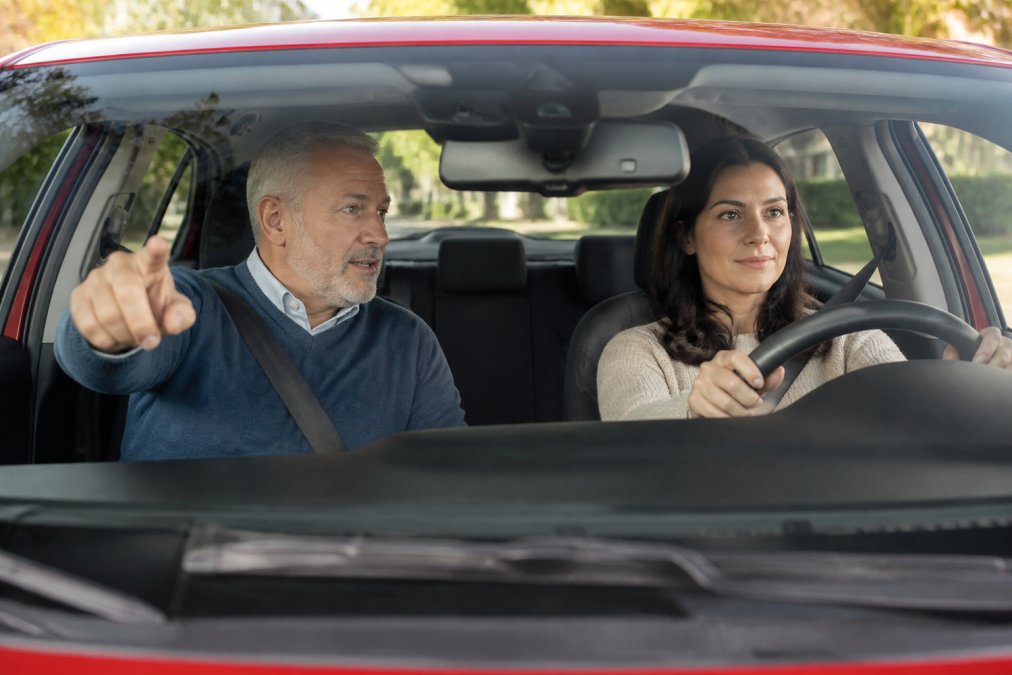
The mechanism behind the anxiety
Driving anxiety is a fear response triggered by losing control, fear of judgment, or past trauma. A generic instructor says “just relax,” but a specialized instructor understands relaxation is a skill to be taught, not a command.
Most practitioners use graded exposure, deliberately controlling difficulty. Your first lesson might not leave the parking lot; the second, a quiet residential street; the third, a multi-lane road with light traffic. This prevents the brain from associating driving with panic.
What to look for in an instructor for anxiety
Not every instructor is equipped for this work. When you call to book, ask these specific questions:
- “Do you have experience with students who have panic attacks or high anxiety?”, A yes is not enough. Ask for a specific example of how they handled it.
- “What is your policy if I need to pull over and stop during a lesson?”, The answer should be immediate and supportive, not hesitant.
- “Can we start in a parking lot or empty road for the first session?”, A flexible instructor who agrees to this is showing they understand graded exposure.
- “Do you use a dual-brake and dual-mirror vehicle?”, This is standard for professional schools, but confirming it out loud reassures your nervous system that there is a physical safety net.
The psychological profile match
Nervous drivers are often high-achieving perfectionists who find being a beginner ego-dystonic. They need an instructor who frames mistakes as data, not failures, saying “That stall tells us you need to feel the clutch bite point more slowly,” not “You stalled again.”
In a group, a perfectionist compares themselves to others, amplifying anxiety. In a private car, the only comparison is to your own previous attempt, with concrete improvements.
When booking private lessons for anxiety, ask specifically for an instructor who specializes in nervous drivers. Not every instructor has the patience or training for this work. A calm, reassuring teaching style is as important as technical expertise. Ask if you can have a brief phone conversation with the instructor before your first lesson to gauge their demeanor.
The physiological side of the equation
Anxiety is physical as well as mental. A nervous driver grips the wheel with white knuckles and may hold their breath. A skilled instructor coaches physical cues, breathing out when braking, relaxing shoulders at red lights, lighter grip, physiological interventions that lower heart rate and improve motor control.
If anxiety has made you avoid driving for years, consider pairing private lessons with CBT focused on driving phobia. The instructor handles the skill; the therapist handles the fear.
A nervous beginner needs an instructor who explains clearly, never raises their voice, and provides positive reinforcement, a match easier to achieve in private lessons, where you can request a specific instructor.
Understanding Adult Driving Lessons Cost and Value
Adult driving lessons cost more per hour than teen group programs, but you are buying targeted instruction, flexible scheduling, and preparation for a specific outcome, not just seat time.
For adults learning to drive for the first time, or returning after years away, the stakes are higher given work, family, and a pressing need to get licensed. Wasted hours are expensive regardless of the hourly rate.
Private instruction compresses the learning curve because the instructor focuses solely on you, so each lesson accomplishes more than a group session of the same length.
Lesson packages often reduce per-session cost, so estimate how many sessions you need, then compare package pricing against your budget.
When evaluating adult driving lessons cost, calculate the total investment to reach test readiness, not just the hourly rate. Ten focused private hours that get you licensed quickly often cost less than twenty unfocused group hours that drag out over months.
Scheduling flexibility is another hidden value. Private schools typically offer evening and weekend appointments, removing a major barrier for working adults.
Hidden Costs and Contract Traps to Watch For
Not all private driving schools are transparent about pricing, so understand exactly what your package includes and what it does not.
Common traps include extra charges for road test vehicle rental, DMV appointment fees, and surprise exam vehicle costs. Some schools quote a low per-lesson rate, then add undisclosed fees for insurance, fuel, or pick-up.
Ask before booking: Does the package include the vehicle for the road test? Is there a fee for the exam car? What if you need to reschedule? Are make-up sessions charged at full rate?
State mandates can add unexpected costs. Many states, including New York, require supervised practice hours and a pre-licensing course before the road test, so verify your state’s mandates and confirm your school’s program satisfies them.
New York State learner permit and driver education requirements clarify the five-hour pre-licensing course and supervised driving expectations that apply before road test eligibility.
A reputable school will answer these questions clearly and put terms in writing. Hesitation or vague answers about fees are a red flag.
How to Choose the Right Private Instructor for You
Selecting the right private instructor is the single most important decision in your driver education. Here is a specific, actionable vetting framework.
Step 1: Verify the license, not just the certificate
Every state has a different licensing agency, in New York and California it is the DMV, in Texas the TDLR. Do not assume a “certified” instructor is licensed in your state; ask for their license number and verify it on your state’s public database.
A licensed instructor has passed a background check, completed state-approved training, and is subject to continuing education. An unlicensed instructor lacks these safeguards and may lack proper insurance, leaving you personally liable for damage.
Step 2: Match the instructor’s specialty to your profile
Most instructors are generalists, but the best have niches. When you call a school, ask “Which of your instructors specializes in my situation?” Here is what to ask based on your profile:
- Nervous or anxious driver: Ask for an instructor who uses a graded exposure approach and has experience with panic attacks. Ask if they are comfortable ending a lesson early if you become overwhelmed.
- Adult returning driver: Ask for an instructor who teaches defensive driving habits, not just test maneuvers. Adults often need to unlearn bad habits from years of driving illegally or need a refresher on modern traffic patterns.
- Teen driver: Ask for an instructor who is patient with inexperience and who communicates with parents about progress. Some states require a certain number of hours with a licensed instructor for teens.
- International driver: Ask for an instructor who is familiar with the specific differences between your home country’s driving rules and U.S. rules. For example, right-hand drive habits, different roundabout protocols, or unfamiliar signage.
- Test-ready driver: If you have failed the road test before, ask for an instructor who conducts mock tests that replicate the exact scoring rubric of your state’s exam.
Step 3: Ask about the curriculum structure
A good private lesson follows a structured progression. Ask the school for a syllabus or lesson plan outline, a reputable school will have one:
- Vehicle controls and basic maneuvers (starting, stopping, turning, parking lot work)
- Residential driving (stop signs, right-of-way, pedestrian awareness)
- Multi-lane roads and lane changes (mirror checks, blind spots, speed management)
- Highway driving (merging, exiting, maintaining speed)
- Complex scenarios (rush hour, construction zones, adverse weather if applicable)
- Mock test preparation (replicating the state’s road test route and scoring)
If the school cannot articulate a curriculum and says “we just drive around and see what happens,” that is a red flag, you are paying for expertise, not seat time.
Step 4: Verify the vehicle and insurance
Ask what type of vehicle you will drive. Is it a late-model sedan with dual brakes? Is it the same vehicle for the road test? Using the same car for lessons and the test is a significant advantage because you will know its feel, blind spots, and dimensions.
Confirm the school’s insurance covers you as a student driver. Ask for the carrier and policy type, in most states, a driving school must carry liability insurance covering student drivers. If they hesitate, move on.
Step 5: The 15-minute phone interview
Before booking, ask for a 15-minute phone conversation with the specific instructor. A confident instructor will agree. Gauge their communication style: Do they explain clearly? Do they ask about your goals and fears? Do they sound patient? Chemistry matters.
AAA Foundation for Traffic Safety research on driver training effectiveness consistently shows that the quality of the instructor-student interaction matters more than the total number of training hours when predicting safe driving outcomes. That interaction quality is determined by the match between the instructor’s teaching style and your learning style.
Step 6: Check for state-specific regulatory compliance
Some states have requirements beyond instructor licensing. New York requires a five-hour pre-licensing course before the road test. Some schools bundle this; others charge extra. Verify your school’s program satisfies your state’s requirements for permits, supervised hours, and test eligibility, a mismatch can delay licensing by weeks.
Finally, read reviews and ask for references. Look for patterns: multiple mentions of patience and clarity are a strong signal; lateness or phone use during lessons is a dealbreaker. The vetting process separates a good investment from a costly mistake.
The Verdict: Are Private Lessons Worth the Investment?
For most learners, private driving lessons are worth it, provided you choose the right school and instructor. The investment pays off in faster skill acquisition, better road test preparation, and genuine confidence.
The value is clearest for nervous drivers, adults with limited time, and anyone who has struggled with traditional education or failed the road test before.
The drawbacks, higher hourly cost and variable quality, are manageable if you verify credentials, understand pricing, and choose a school with a proven track record.
White Plains Driving Center has provided DMV-certified instruction since 1978, specializing in nervous, adult, and international drivers. Our flexible scheduling accommodates busy professionals, and our packages include road test support.
Federal Highway Administration data on driver licensing trends shows that adults are learning to drive later in life more than ever before, making adult-focused instruction increasingly relevant.
The bottom line: private driving lessons are worth the investment when delivered by a certified instructor who matches your learning style and prepares you specifically for the road test.
== FAQ ANSWERS (ARTICLE CONTENT, AUDIT EACH ONE SEPARATELY, SAME RULES) ===
[1] Q: Is it worth paying for private driving lessons?
A: For most learners, yes. Private lessons offer one-on-one coaching, which means the instructor focuses entirely on your specific skill gaps. This personalized attention often leads to faster skill acquisition and better DMV road test preparation than group settings. The higher hourly rate can be offset by needing fewer total lessons. If you are a nervous driver or an adult learning later in life, the tailored approach typically makes the investment worthwhile.
[2] Q: How much do private driving lessons typically cost?
A: The cost of private driving lessons varies significantly based on your location, the driving school, and the instructor’s experience. Lesson packages often provide a lower hourly rate than single sessions. While the upfront cost per hour is higher than group classes, private lessons often require fewer hours overall. Contact local driving schools directly for current pricing, as rates depend on market factors and the specific package you choose.
[3] Q: Are private driving lessons better for nervous drivers?
A: Private driving lessons are often the best choice for nervous drivers. The one-on-one coaching environment allows instructors to focus on building confidence at a pace that suits you. They can tailor lessons to address specific anxieties, such as highway driving or parallel parking. Unlike a group setting, you won’t feel pressure from peers watching you, which reduces stress and helps you learn to drive more calmly.
[4] Q: Do private driving lessons help with passing the DMV road test?
A: Yes, private driving lessons are an effective way to prepare for the DMV road test. Instructors are familiar with what examiners look for and can structure lessons around the test format, including mock tests and practice on common test routes. They can correct bad habits like improper mirror checks or rolling stops before your exam. This targeted DMV road test preparation builds the specific skills and confidence needed to pass on your first attempt.
Frequently Asked Questions
Is it worth paying for private driving lessons?
For most learners, yes. Private lessons offer one-on-one coaching, which means the instructor focuses entirely on your specific skill gaps. This personalized attention often leads to faster skill acquisition and better DMV road test preparation than group settings. The higher hourly rate can be offset by needing fewer total lessons. If you are a nervous driver or an adult learning later in life, the tailored approach typically makes the investment worthwhile.
How much do private driving lessons typically cost?
The cost of private driving lessons varies significantly based on your location, the driving school, and the instructor’s experience. Lesson packages often provide a lower hourly rate than single sessions. While the upfront cost per hour is higher than group classes, private lessons often require fewer hours overall. Contact local driving schools directly for current pricing, as rates depend on market factors and the specific package you choose.
Are private driving lessons better for nervous drivers?
Private driving lessons are often the best choice for nervous drivers. The one-on-one coaching environment allows instructors to focus on building confidence at a pace that suits you. They can tailor lessons to address specific anxieties, such as highway driving or parallel parking. Unlike a group setting, you won’t feel pressure from peers watching you, which reduces stress and helps you learn to drive more calmly.
Do private driving lessons help with passing the DMV road test?
Yes, private driving lessons are an effective way to prepare for the DMV road test. Instructors are familiar with what examiners look for and can structure lessons around the test format, including mock tests and practice on common test routes. They can correct bad habits like improper mirror checks or rolling stops before your exam. This targeted DMV road test preparation builds the specific skills and confidence needed to pass on your first attempt.
Getting licensed is a significant milestone, but the path there can feel overwhelming, especially if you are anxious, busy, or new to driving in the United States. At White Plains Driving Center, our DMV-certified instructors build confidence at your own pace with clear, calm instruction. We offer flexible scheduling, specialized training for nervous and international drivers, and road test support included in our packages. Book now and take the first step toward driving with confidence.
This article was written using GrandRanker