Last Updated: October 31, 2026
Quick Summary
You improve hazard awareness by scanning at least 12 seconds ahead and running a five-beat loop every 4 to 6 seconds: far, near, left and right, mirrors, repeat. This routine keeps your eyes moving so you spot risks early and respond calmly instead of reacting late.
- At 30 mph, a 12-second look-ahead is roughly half a block; at 60 mph it is about a quarter mile.
- Extend the far look to 20 to 30 seconds on open highway and check mirrors every 5 to 8 seconds.
- Glance at your rearview every 5 to 8 seconds and check side mirrors before every lane change or turn.
- After spotting a hazard, ease off the gas and cover the brake before deciding to slow, change lanes, or hold position.
- Take a break every two hours on longer drives, stretch, and switch drivers when you can.
Table of Contents
- Why Hazard Awareness Is a Skill You Can Build
- Scanning Techniques for Drivers: The 12-Second Look-Ahead
- Identifying Road Hazards Before They Become Dangerous
- How to Stay Alert While Driving on Familiar and Unfamiliar Roads
- Checking Mirrors, Blind Spots, and Surrounding Traffic
- What to Do After You Spot a Hazard
- What Vehicle Safety Tech Can and Cannot Do
- Practice Hazard Perception with a Certified Instructor
- Frequently Asked Questions
Why Hazard Awareness Is a Skill You Can Build
Hazard awareness is the ability to spot risks on the road early enough to act calmly instead of reacting late. At White Plains Driving Center, we’ve been teaching drivers since 1978, and we can tell you plainly: this is a learned skill, not a personality trait. Nervous beginners often assume good drivers are simply “gifted” with fast reflexes. That’s backwards. Strong drivers scan in a pattern, and patterns can be practiced.
The core idea is simple. Most crashes don’t come from nowhere. They build from small clues: a car drifting in its lane, a pedestrian hesitating at a curb, brake lights three cars ahead. Drivers who catch those clues early give themselves time to slow, change lanes, or cover the brake.
National Highway Traffic Safety Administration crash data tracks these patterns year after year, and the takeaway is consistent: prevention beats reaction.
Below, we’ll walk through the exact scanning habits, alertness strategies, and practice steps that turn hazard awareness into muscle memory.
Scanning Techniques for Drivers: The 12-Second Look-Ahead
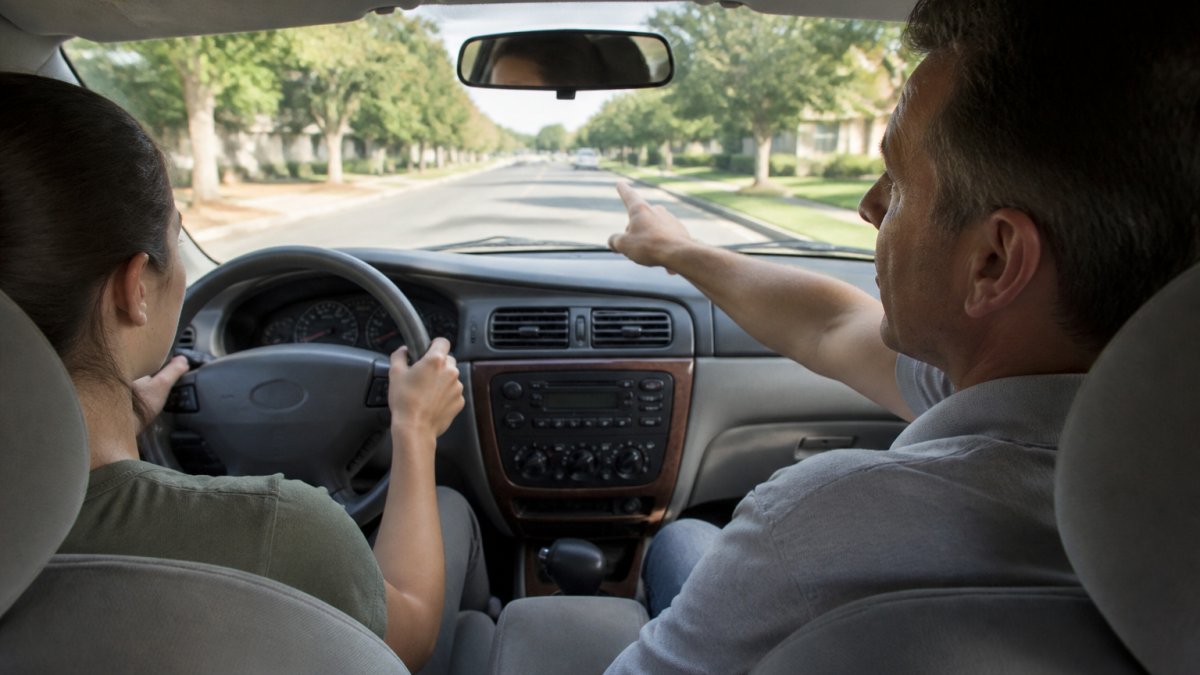
Scanning techniques for drivers start with one habit: look far ahead, not at the bumper in front of you. Aim your eyes at least 12 seconds down the road. At 30 mph that is roughly half a block; at 60 mph it is about a quarter mile. Your hands follow your eyes, so a distant focus smooths your steering and braking and gives you time to react instead of jerk the wheel.
Building a Repeatable Scan Routine
A repeatable routine beats vague “awareness.” A five-beat loop you run every 4 to 6 seconds is one way to build the habit:
- Far: check the road 12 seconds ahead for brake lights, merging traffic, and stale green lights.
- Near: sweep back to the vehicle directly in front and note its following distance.
- Left and right: glance at cross streets, driveways, and parking-lot exits.
- Mirrors: quick rearview and side-mirror checks.
- Repeat: restart the loop without locking onto any single object.
Scan Sequences for Common Situations
The loop stays the same, but the emphasis changes by scenario:
- Intersections: scan the crosswalk, then the left-turn lane, then oncoming traffic before the light turns green. A stale green light is a cue to cover the brake, not accelerate.
- Lane changes: mirror, signal, shoulder check, then mirror again before moving. The second mirror check catches a vehicle that entered your blind spot during the shoulder turn.
- Open highway: extend the far look to 20 to 30 seconds, scan the shoulder and median for debris and stopped vehicles, and check mirrors every 5 to 8 seconds.
- Residential streets: shorten the far look, widen the near sweep to parked cars and driveways, and expect pedestrians between vehicles.
Practice the loop out loud for one week: name each beat (“far, near, left, right, mirrors”) as you drive. Verbalizing keeps your eyes moving and builds the habit faster than silent repetition.
A set routine keeps your eyes moving instead of locking onto one spot, and it gives you a consistent way to measure whether you are actually scanning or just staring.
Here is the five-beat scan loop the article recommends running every 4 to 6 seconds.
| Beat | What to check |
|---|---|
| Far | Road 12 seconds ahead: brake lights, merging traffic, stale green lights |
| Near | Vehicle directly in front and its following distance |
| Left and right | Cross streets, driveways, parking-lot exits |
| Mirrors | Quick rearview and side-mirror checks |
| Repeat | Restart the loop without locking onto one object |
Identifying Road Hazards Before They Become Dangerous
Identifying road hazards means reading the clues that come before trouble. A ball rolling into the street usually means a child follows. A car hugging its lane line is often about to drift. A driver braking hard for no clear reason may be distracted.
Watch out: staring at a potential hazard too long is its own risk. Glance, assess, then move your eyes back to the road ahead.
Vulnerable Road Users: Pedestrians, Cyclists, Motorcyclists
Pedestrians, cyclists, and motorcyclists deserve extra space and earlier attention. They’re harder to see and have no metal around them. Give cyclists a wide berth, expect pedestrians to step out from between parked cars, and check for motorcyclists twice before lane changes. A quick shoulder check costs you a second and can prevent a serious crash. Maintaining this level of vigilance remains equally critical during nighttime hours, where mastering the techniques for avoiding headlight glare ensures that vulnerable road users remain visible even when visibility is compromised.
How to Stay Alert While Driving on Familiar and Unfamiliar Roads
Staying alert is harder on familiar routes, not easier. When you know every turn, your brain goes quiet, and quiet leads to autopilot. On unfamiliar roads, the opposite happens: too much new information crowds your focus. Both states raise risk.
On familiar routes, say your hazards out loud to stay engaged. On unfamiliar roads, slow down and give yourself more time to read signs. Take a break every two hours on longer drives, stretch, and switch drivers when you can.
If highway nerves are part of the problem, our highway driving lesson gives you real road practice with a calm instructor beside you. Nervous drivers can also review these techniques for nervous drivers on highways before the lesson.
Checking Mirrors, Blind Spots, and Surrounding Traffic
Mirror checks should run on a rhythm, not a whim. Glance at your rearview every 5 to 8 seconds, and check side mirrors before every lane change or turn. Surrounding traffic tells you what’s coming, and blind spots hide what mirrors miss.
- Signal early, then check mirrors.
- Turn your head for a shoulder check.
- Look twice for motorcycles and bikes.
- Move only when the lane is clear.
Mirrors leave gaps, and a quick head turn covers them.
What to Do After You Spot a Hazard
Spotting a hazard is only half the job. The other half is responding without panic. Ease off the gas and cover the brake first. That buys reaction time and keeps your speed in check. Then decide: slow down, change lanes, or hold your position.
Watch out: slamming the brake or swerving hard can cause a worse crash than the hazard itself. Calm, early, small inputs beat sudden moves every time. If fear after a crash is clouding your awareness, our guide on how to overcome fear of driving after an accident walks through the steps to rebuild it.
What Vehicle Safety Tech Can and Cannot Do
Modern safety tech helps, but it has limits. Automatic braking, lane alerts, and blind-spot monitors are backup systems, not replacements for your eyes.
Treat every alert as a signal that you missed something. The tech is the second line of defense. Your scan is the first.
Practice Hazard Perception with a Certified Instructor
Hazard perception improves fastest with feedback from someone who watches your eyes and your choices. A certified instructor can point out what you missed in real time, which is something no app or video can copy.
At White Plains Driving Center, our DMV-certified instructors build lessons around your pace. We serve nervous beginners, adults returning to driving, and international drivers adapting to U.S. rules. If you want to understand what certification means for adult learners, our guide on a DMV certified instructor for adult learners explains it. Ready to build real scanning skills? Get professional driving instruction in White Plains NY with instructors who teach awareness, not just rules.
Frequently Asked Questions
How can you increase awareness while driving?
Build a repeatable scan routine instead of staring at the car in front. Look 12 to 15 seconds ahead, sweep your mirrors every 5 to 8 seconds, and check blind spots before any lane change. Keep a space cushion of at least three seconds behind the vehicle ahead. These habits raise hazard awareness because you see potential hazards earlier and give yourself more reaction time. Practice the same sequence on every drive until it becomes automatic.
What are common hazards drivers should watch for?
Watch for pedestrians stepping off curbs, cyclists in bike lanes, motorcyclists in blind spots, and drivers who drift or brake erratically. Intersections, parking lot exits, and school zones produce the most unexpected events. Weather conditions like rain or fog cut visibility and stretch stopping distances. Identifying road hazards early means scanning side streets and driveways, not just the lane ahead, so you can adjust speed before a situation develops.
How can you stay alert while driving on familiar roads?
Familiar routes invite autopilot, so treat them like new roads. Narrate what you see out loud, vary your scan pattern, and check mirrors on a timer. Take a break every two hours on longer trips, stretch, and watch for fatigue signs like heavy eyelids or missed exits. Staying alert while driving also means limiting distractions: set navigation before you move and keep your phone out of reach. Small habits keep concentration sharp when the route feels routine.
What should you do when you spot a hazard while driving?
React calmly and early. Ease off the accelerator to add space, cover the brake if the hazard may cross your path, and check your mirrors before changing lanes to avoid it. Signal any move so surrounding traffic understands your intent. If the hazard passes, rebuild your space cushion. The goal is a calm reaction, not a sudden swerve. Early detection gives you time to adjust speed and position smoothly, which is the core of defensive driving.
Hazard awareness doesn’t improve by hoping for it. It improves with a routine, honest feedback, and practice on real roads. White Plains Driving Center has helped drivers build that skill since 1978, with DMV-certified instructors, flexible scheduling, and calm, clear coaching for nervous and adult drivers alike. Get started with White Plains Driving Center and drive with sharper awareness and real confidence.
