Table of Contents
- Refresher Driving Course vs Full Beginner Program: Key Differences
- Who Should Choose a Refresher Driving Course
- Who Needs a Full Beginner Driving Program
- How Many Driving Lessons Do Adults Need
- Driving Lesson Assessment: Finding Your Starting Point
- Nervous Driver Lessons: Building Confidence in Either Program
- Refresher Driving Lesson Cost and Timeline Expectations
- Making Your Decision: Refresher or Beginner Program
- Frequently Asked Questions
Last Updated: October 14, 2026
Refresher Driving Course vs Full Beginner Program: Key Differences
Understanding the difference between a refresher course vs beginner program is essential, as they serve different purposes and the choice depends on your experience level and goals. If you’ve driven before but want to sharpen your skills or rebuild confidence, a refresher course is designed for you.
At White Plains Driving Center, we work with both returning drivers and complete beginners every week. The distinction matters because they require different instruction approaches, timelines, and focuses.
Understanding which program fits your situation prevents wasted time and money. This guide breaks down what each program covers, who benefits, and how to assess where you stand.
What Each Program Covers
A refresher driving course focuses on updating your skills after a gap in driving experience. These programs review traffic laws, modern vehicle technology, hazard awareness, and defensive driving techniques, assuming you remember how to operate a vehicle and handle basic maneuvers.
A full beginner program covers everything from the ground up: vehicle controls, starting and stopping safely, steering, parking, lane changes, merging, navigating intersections, and traffic laws.
The curriculum depth differs significantly. Refresher courses typically run 4-8 hours of instruction. Full beginner programs often require 15-30 hours or more, depending on your pace and the program structure.
Comparison Table: Refresher vs Beginner
| Aspect | Refresher Course | Full Beginner Program |
|---|---|---|
| Best For | Returning drivers, nervous drivers after a break | First-time drivers, international students, unlicensed adults |
| Assumed Starting Point | Can operate a vehicle, familiar with basic road rules | No driving experience or knowledge |
| Lesson Focus | Defensive driving, confidence rebuilding, law updates | Vehicle control, road rules, licensing prep, all fundamentals |
| Typical Duration | 4-8 hours | 15-30+ hours |
| Road Test Prep | Targeted review | Comprehensive preparation |
| Cost Model | Lower overall investment | Higher total investment |
| Skill Assessment | Quick evaluation of current ability | Thorough baseline assessment needed |
Who Should Choose a Refresher Driving Course
You’re a good candidate for a refresher course if you’ve held a license before, driven regularly at some point, and now want to get back behind the wheel with confidence.
Refresher courses work well for nervous drivers who have experience but lost confidence. If you understand the mechanics, the issue isn’t learning basics but rebuilding trust in your abilities and updating your knowledge of current traffic laws and safety practices.
Returning drivers often benefit from refresher training because driving rules, vehicle technology, and road conditions change. What you learned years ago may not reflect current best practices. A refresher course brings you current without the time investment of a full beginner program.
Who Needs a Full Beginner Driving Program
A full beginner program is necessary if you’ve never held a valid driver’s license or haven’t driven in many years and need to relearn everything. International students and residents moving to the U.S. typically need a beginner program because driving standards, road signs, and traffic laws differ significantly by country; even experienced drivers from other nations must learn U.S.-specific regulations.
Adults learning to drive for the first time benefit from comprehensive beginner instruction; there’s no shortcut when starting from zero. A beginner program teaches vehicle control, reading traffic situations, proper technique for every maneuver, and the rules that govern safe driving, fundamentals that take time to build correctly.
If you need to pass your road test, a full beginner program typically includes test preparation. The instructor teaches exactly what examiners look for and helps you practice the specific skills tested on your licensing exam.
How Many Driving Lessons Do Adults Need
Lesson count varies widely depending on your starting point, learning pace, and goals. An adult returning after a break might need 4-8 refresher lessons to feel confident, while an adult learning for the first time typically requires 15-30 lessons, sometimes more, before a road test.
Several factors affect lesson count: your natural coordination and comfort level, how much practice specific skills like parallel parking or highway merging require, and your schedule, intensive lessons over two weeks versus one per week over two months changes how quickly skills develop.
Your goal also shapes lesson count. Preparing for a road test takes more lessons than simply wanting to drive locally with confidence, and complex environments like city traffic or highways require more practice than quiet residential streets.
White Plains Driving Center recommends starting with a skill assessment to determine your actual needs. This prevents overbuying lessons you don’t need or underestimating the time required to reach your goals.
Driving Lesson Assessment: Finding Your Starting Point
A proper driving lesson assessment determines whether a refresher course vs beginner program fits your needs. An instructor evaluates your current abilities, identifies gaps in knowledge or skill, and recommends a personalized lesson plan.
The assessment typically includes a short drive where the instructor observes your vehicle control, traffic awareness, understanding of road rules, and confidence level, plus questions about your driving history and specific concerns. This reveals whether you need foundational skill-building or targeted confidence work.
A good assessment answers critical questions: Can you safely operate the vehicle? Do you understand traffic laws? Where are your weak spots? What’s making you nervous? The answers determine whether you need a few refresher lessons or a comprehensive beginner program.
Nervous Driver Lessons: Building Confidence in Either Program
Nervousness affects both refresher and beginner students, but the approach differs.
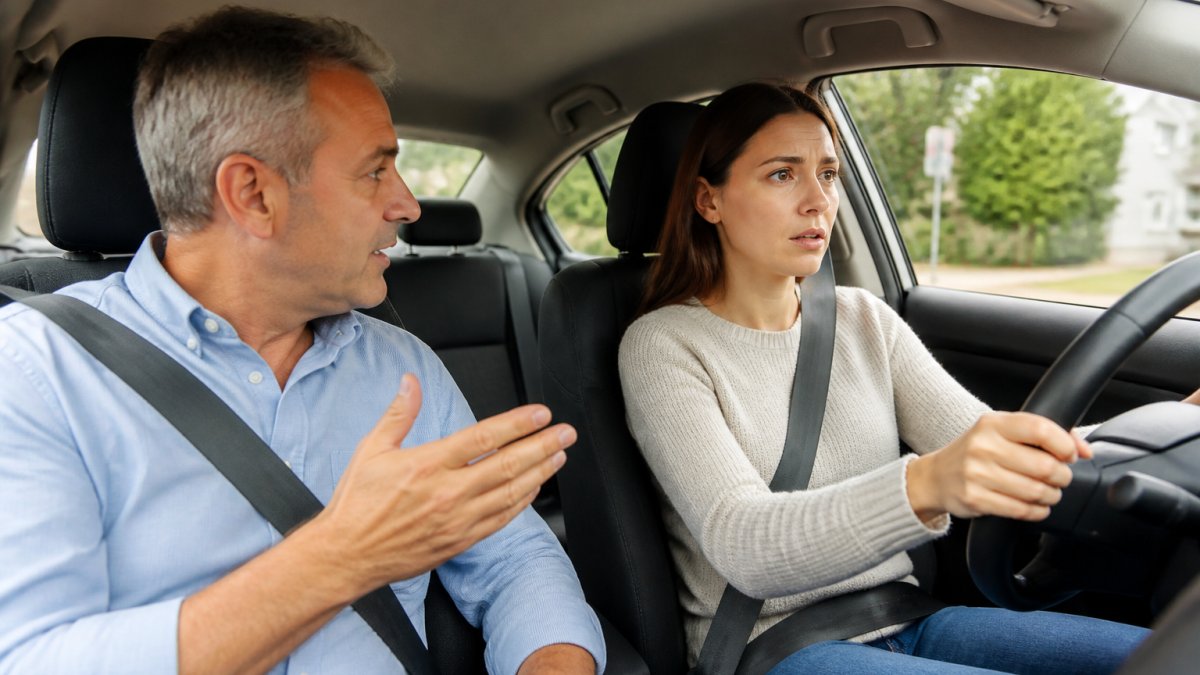
A good instructor recognizes that driving anxiety is legitimate and common.
Nervous drivers benefit from instructors who understand their specific concerns, highway driving, parallel parking, busy intersections, addressing your actual worries rather than offering generic anxiety management.
The key difference: nervous beginners need foundational skill-building in a calm environment. Nervous returning drivers need confidence rebuilding through targeted practice on skills they once had.
Refresher Driving Lesson Cost and Timeline Expectations
Cost is where the refresher-versus-beginner comparison usually gets vague, so here is the concrete version. Driving schools generally price lessons per lesson, in a prepaid package, or as a flat fee for a defined program.
Full beginner programs cost more in total because they cover more hours, but the per-hour rate is often similar or slightly lower when bundled. Some schools also charge separately for a road-test car rental on exam day and a formal skill assessment.
What actually drives the price up or down:
- Market and instructor type. DMV-certified instructors and schools with newer dual-control vehicles charge more than independent instructors using older cars.
- Package versus à la carte. Prepaid packages usually discount the per-hour rate by 10 to 25 percent but lock you into a set number of hours.
- Add-ons. Highway lessons, night driving, and road-test-day car rental are frequently priced separately.
- Cancellation policy. Many schools charge the full lesson rate if you cancel inside 24 hours, which effectively raises your real cost if your schedule is unpredictable.
Timeline depends almost entirely on frequency, not the program label. Most instructors find spacing lessons a few days apart produces better retention than stacking them back-to-back, so the fastest schedule isn’t always the most effective (pubmed.ncbi.nlm.nih.gov).
Ask any school for a written breakdown of per-hour rate, package discount, road-test car fee, and cancellation policy before you commit. The sticker price and the real cost are often different numbers.
When you compare a refresher course against a full beginner program, compare total cost for the hours you actually need, not the headline rate. A cheaper per-hour rate on a 30-hour package you don’t need is more expensive than a slightly higher per-hour refresher block that gets you road-ready in 6 hours.
Making Your Decision: Refresher or Beginner Program
Most articles tell you to ‘assess your ability’ and stop there. Here is a decision framework you can run in about two minutes.
Step 1: Answer five yes/no questions.
- Have you ever held a valid driver’s license?
- Have you driven at least somewhat regularly within the past five years?
- Can you start, stop, steer, and park a car without step-by-step instruction?
- Do you understand right-of-way rules, speed limits, and basic road signs in your state?
- Is your main concern confidence and rust rather than not knowing how to drive?
Step 2: Read your result.
- Five yes answers: A refresher course is almost certainly the right fit. You need targeted practice, not foundational instruction.
- Three or four yes answers: Start with a skill assessment. You may need a short refresher plus a few targeted lessons on specific weak areas, or a hybrid plan.
- Two or fewer yes answers: A full beginner program is the safer path. Trying to shortcut foundational skills usually costs more in the long run through repeated failed road tests and extra lessons.
Step 3: Match your goal to the program.
| Your Goal | Better Fit | Why |
|---|---|---|
| Rebuild confidence after years away | Refresher | You already have the mechanics; you need practice and reassurance |
| Pass a road test for the first time | Beginner | Comprehensive prep covers every tested maneuver |
| Adapt to driving after driving in another country | Beginner or hybrid | Traffic laws, signs, and right-of-way rules differ enough to require structured instruction |
| Prepare for a specific challenge (highway, city, night) | Refresher | Targeted lessons on the specific skill |
| Learn to drive with no prior experience | Beginner | No shortcut exists for foundational skill-building |
Eligibility and prerequisites to check before you enroll. Requirements vary by state, so confirm with your state licensing agency. In general:
- A refresher course usually requires a valid or recently expired license; some schools accept a learner’s permit.
- A beginner program typically requires a learner’s permit or eligibility to obtain one, and often a minimum age (commonly 15 to 16 for permit holders, though adult beginners are welcome at most schools).
- Some states require a certain number of supervised hours before a road test, which affects how many lessons you should buy.
Insurance, licensing, and legal implications. Completing a beginner program can sometimes qualify you for an insurer discount, and some states require a certified driver education course for applicants under a certain age. Refresher courses rarely affect insurance rates because they don’t change your license status. Neither course replaces your state’s licensing requirements, and neither can restore a suspended license, that’s a separate process through your state agency.
The fastest way to decide is to book a single skill assessment. One hour of professional evaluation tells you more about which program fits than any self-quiz, and most schools apply the assessment fee toward whichever program you choose.
If you’re still torn, default to the assessment. It’s cheaper than buying the wrong program and gives you a personalized lesson plan either way.
Frequently Asked Questions
How is a refresher driving course different from a beginner program?
A refresher driving course targets drivers with prior experience who need to rebuild skills or confidence. A full beginner program covers foundational driving skills, traffic laws, and vehicle control from scratch. Refresher courses assume you understand basic mechanics and road rules; beginner programs teach everything. Choose refresher if you’ve driven before; choose beginner if you’re starting from zero or need comprehensive pre-licensing preparation.
How many driving lessons does an adult beginner usually need?
Most adult beginners need professional in-car instruction, though this varies by learning pace and prior experience. Some adults with strong foundational knowledge may need fewer lessons; others benefit from more hours. A driving lesson assessment can determine your specific needs. Factors include comfort level, traffic complexity in your area, and whether you’re preparing for a road test. Consistent, frequent lessons (2-3 per week) often lead to faster skill development than sporadic instruction.
Can a refresher course help a nervous driver regain confidence?
Yes. Nervous driver lessons specifically target anxiety and confidence-building through patient, supportive instruction in a controlled environment. Refresher courses allow you to practice at your own pace without the pressure of learning entirely new skills. A calm, experienced instructor can help you identify specific fears, highway driving, city intersections, parking, and work through them systematically. Many returning drivers report that focused refresher training restores their confidence faster than general lessons because the instruction addresses their actual concerns rather than basic skills.
What should I expect during a driving assessment lesson?
A driving lesson assessment evaluates your current skill level, comfort zones, and areas needing improvement. The instructor observes your vehicle control, lane positioning, awareness of traffic, decision-making at intersections, and confidence behind the wheel. They’ll ask about your driving history, anxiety triggers, and goals to customize your training plan. Assessment lessons typically last 1-2 hours and result in a personalized recommendation: refresher course, beginner program, or specialized nervous-driver instruction. This ensures your lessons match your actual needs rather than a one-size-fits-all approach.