Table of Contents
- Professional Driving Lessons Build Real Vehicle Control Skills
- Driving Lessons for Beginners: A Structured Path to Confidence
- Driving Lessons for Nervous Drivers: Overcoming Anxiety Behind the Wheel
- How Many Driving Lessons Do I Need to Be Road-Ready
- Road Test Preparation Lessons: What Examiners Actually Look For
- Why Professional Instruction Beats Learning From Family
- Defensive Driving and Hazard Perception: Skills That Save Lives
- Frequently Asked Questions
Last Updated: October 12, 2026
Professional Driving Lessons Build Real Vehicle Control Skills
Professional driving lessons teach foundational skills that family and friends typically cannot. A qualified instructor focuses on vehicle control that casual practice doesn’t: smooth acceleration, precise braking, and steering technique that becomes automatic under pressure.
When you learn from a professional, you’re building muscle memory for the exact situations you’ll face on a road test and beyond. According to National Highway Traffic Safety Administration guidance on novice driver safety, proper vehicle control is one of the strongest predictors of crash avoidance in early driving years.
At White Plains Driving Center, we’ve spent nearly five decades teaching drivers how their vehicle actually responds. Knowing how much brake pressure to apply at different speeds separates a confident driver from a nervous one, and professional instruction gives you that precision.
A common mistake is assuming that more driving hours alone build skill. Hours matter, but quality of instruction matters more. Practicing bad habits for 50 hours teaches you to be consistently bad. One instructor correcting your technique in 5 hours changes everything.
Driving Lessons for Beginners: A Structured Path to Confidence
Beginner drivers need structure. Professional driving lessons for beginners follow a logical progression: basic vehicle operation, low-traffic environments, busier roads, then the specific scenarios on your road test.
A structured approach means each lesson builds on the last.
Beginners also benefit from an instructor’s calm consistency. An instructor doesn’t get frustrated when you miss a turn; they’ve seen it hundreds of times. That steady presence reduces the anxiety that derails learning.
Driving Lessons for Nervous Drivers: Overcoming Anxiety Behind the Wheel
Anxiety behind the wheel is real and common. Nervous drivers need an instructor who understands that fear isn’t a character flaw but a response to perceived danger, and who knows how to build confidence gradually.
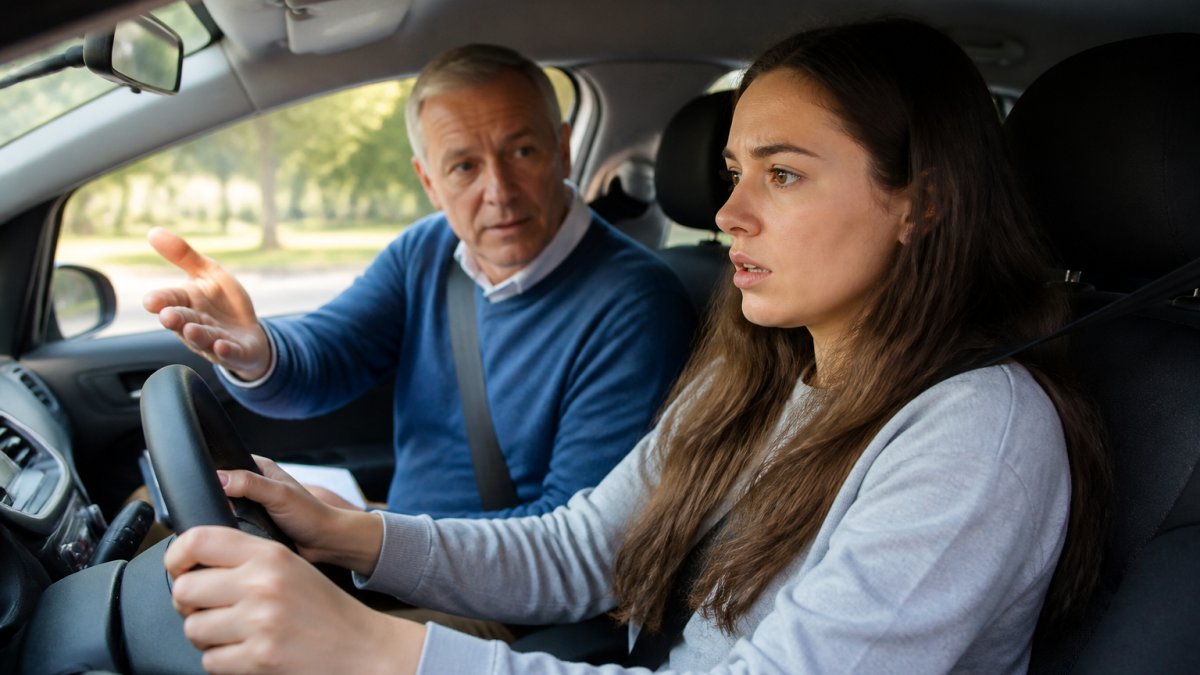
A professional won’t dismiss your concerns or push you too fast. They’ll acknowledge what makes you anxious, start where you feel safer, and expand from there.
White Plains Driving Center specializes in anxious drivers. Yelling, criticism, or impatience makes anxiety worse, so our approach is patient and encouraging: we build your confidence at your pace, not ours.
Learning from someone who gets impatient or angry actually reinforces anxiety. If an instructor or family member makes you feel worse, that’s not motivation, it’s trauma. Find someone calm. It changes everything.
How Many Driving Lessons Do I Need to Be Road-Ready
There is no universal number, but there is a defensible way to estimate it. Most state licensing agencies require supervised behind-the-wheel hours before a road test, commonly 40 to 50 total hours for teen permit holders, with a portion often at night. Professional lessons aren’t a replacement for those hours; they’re the highest-value slice of them.
A practical way to think about it:
- Complete beginners: 20 to 40 hours of professional instruction, layered on top of supervised practice with a licensed adult.
- Adults returning after years away: 10 to 20 hours, depending on how much of the skill has decayed and how much anxiety is attached to it.
- Drivers adapting to U.S. road rules and traffic patterns: 15 to 30 hours, with extra time on freeway merging, four-way stops, and right-of-way conventions that differ from where they learned to drive.
- Test-ready drivers who just need polish: 3 to 6 hours focused on the specific maneuvers on the state road test.
These ranges are estimates, not guarantees. The real measure isn’t hours logged but whether you can handle your state’s road-test scenarios without hesitation, even when another driver does something unexpected.
What actually determines your number
Four factors move the estimate more than anything else:
- Starting skill. Someone who has never sat in the driver’s seat needs more hours than someone who drove for years in another country.
- Practice quality between lessons. Ten focused hours with immediate corrective feedback teaches more than 30 scattered hours of casual driving where nobody corrects a rolling stop.
- Anxiety level. Nervous drivers often need more repetitions to reach the same competence, not because they learn slower, but because fear consumes attention that would otherwise go to the road.
- Test route familiarity. If your instructor knows the actual road-test route, you can compress the final stretch of preparation significantly.
What lessons cost, and what you get for it
Professional instruction is priced per lesson or in packages. Pricing depends on quantity, dates, and delivery. Some schools charge extra to use their vehicle for the road test.
That number only means something next to the alternative. Informal practice with a family member is free in cash terms but carries hidden costs: bad habits that take paid hours to unlearn, a higher chance of failing the first road test (meaning a retest and more practice), and, for teens, insurance implications, since many insurers discount for documented professional instruction or driver-education courses.
How to tell you are ready
Your instructor should be able to tell you, and they should be able to explain why. A useful readiness check is whether you can consistently:
- Scan far enough ahead to identify a hazard before it becomes an emergency
- Merge, change lanes, and turn without prompting
- Handle a four-way stop correctly when two cars arrive at the same time
- Parallel park and complete a three-point turn on the first or second attempt
- Drive for a full lesson without the instructor touching the wheel or the brake
If you can do those things on unfamiliar roads, you are close. If you can only do them on the route you have practiced, you are not.
Ask your instructor for a written progress summary after every few lessons. It turns “how many hours do I need?” from a guess into a trackable answer, and it gives you a record if you switch instructors or schools.
Road Test Preparation Lessons: What Examiners Actually Look For
Examiners aren’t scoring you on style. They score a specific, published set of driving behaviors, most state licensing agencies publish the criteria or a driver’s manual describing them. In general terms, examiners watch three things: whether you follow the rules of the road, control the vehicle smoothly, and make safe decisions under mild pressure.
That framing tells you what road-test preparation should consist of: not learning to drive perfectly, but eliminating the specific errors that cause automatic failures and accumulating enough clean repetitions that nerves don’t override skill.
The maneuvers that decide most tests
Most state road tests include a predictable set of tasks. The exact list varies by state, but the common ones are:
- Parallel parking, the maneuver most likely to be practiced in isolation and most likely to be failed under pressure
- Three-point turns, scored on observation, not just execution
- Lane changes, scored heavily on mirror checks, head checks, and signaling timing
- Stop sign and traffic-light behavior, full stops, proper positioning, and correct right-of-way decisions
- Backing, straight-line backing and backing out of a parking space
- Freeway or highway merging, in states that include it
An instructor specializing in road-test preparation knows which maneuvers carry the most weight in your state and which mistakes are automatic failures versus point deductions. That knowledge isn’t secret, it’s in the state’s driver’s manual and scoring sheet, but it’s tedious to extract and apply alone.
What a good preparation lesson looks like
A well-structured road-test preparation lesson usually follows a pattern:
- Warm-up drive on low-traffic roads to settle nerves and check basic control
- Targeted drill on one or two weak maneuvers, repeated until consistent
- Simulated test on a route that mirrors the real one, with the instructor scoring you the way an examiner would
- Debrief where the instructor names the specific errors and what to do differently next time
If your lessons do not include a simulated test with scoring, you are practicing driving, not preparing for the test. Those are different activities.
How to choose an instructor or school
Not all professional instruction is equivalent, and the difference shows up on test day. Before you book, check:
- Licensing and certification. Most states require driving instructors and schools to be licensed or certified by the state licensing agency. Ask for the license number and verify it.
- Insurance. The school’s vehicle should carry commercial instruction coverage. Ask.
- Vehicle safety. Dual controls (a passenger-side brake, and often a second mirror) are standard in instruction vehicles. If the car does not have them, ask why.
- Lesson structure. Ask what a typical lesson includes and whether you get a written progress summary. A school that cannot describe its own lesson plan is a warning sign.
- Reviews and outcomes. Look for reviews that mention specific instructors and specific outcomes, not just star ratings. Ask what percentage of the school’s students pass on the first attempt, and be skeptical of anyone who claims 100%.
- Fit for your situation. If you are an anxious driver, an adult returning after years away, a neurodivergent learner, or someone who needs an adapted vehicle, ask directly whether the school has experience with that. Many do not.
The test-day logistics nobody mentions
Two practical details decide more tests than people expect. First, confirm whether your instructor’s vehicle is allowed to be used for the road test, some states require the test vehicle to meet specific equipment and registration requirements, and some schools charge a separate fee to use their car. Second, confirm what documents you need to bring. Missing paperwork is one of the most common reasons a test is cancelled on the spot.
Road test examiners score rules, control, and decisions against a published standard. Preparation should mirror that standard, including a scored simulated test, and the instructor you choose should be licensed, insured, and experienced with your specific situation.
Why Professional Instruction Beats Learning From Family
Family members mean well, but they have blind spots about their own driving.
Professional instructors don’t have those blind spots. They’re trained to teach the right way, not just how they personally drive, and they maintain emotional distance: a parent might get frustrated or worried, while an instructor stays focused on your learning.
There’s also the dynamic issue. Learning from family can create tension, where a mistake feels like a personal failure in a relationship.
Defensive Driving and Hazard Perception: Skills That Save Lives
Defensive driving isn’t aggressive driving. It’s anticipating what other drivers might do and positioning yourself to avoid problems.
These skills save lives. A driver with strong hazard perception reacts sooner and with less panic.
Road awareness develops over time, but professional instruction accelerates it.
Professional driving lessons aren’t a luxury, they’re an investment in safety and confidence.
White Plains Driving Center has been helping drivers build real skills for nearly 50 years. Our DMV-certified instructors specialize in nervous drivers, adults, and international students.
Frequently Asked Questions
Is it a good idea to learn to drive with a professional instructor instead of a family member?
Yes. Professional instructors teach systematically, remain calm under pressure, and provide immediate feedback without emotional reactions. Family members, while well-intentioned, often skip foundational skills and may reinforce bad habits. A certified instructor follows a structured curriculum, adapts to your learning pace, and prepares you specifically for the road test and real-world hazards. Research shows professional instruction leads to higher pass rates and safer independent driving.
How many driving lessons do I need before I’m ready for the road test?
The exact number of lessons depends on your starting point, learning speed, and local road conditions. Your instructor will assess your progress in vehicle control, hazard perception, and situational awareness to determine readiness. Some students need fewer lessons; others benefit from more. The goal is competence in all required skills, not a fixed number of hours.
Can professional driving lessons help me feel more confident if I’m anxious about driving?
Absolutely. Nervous drivers benefit most from professional instruction because instructors are trained to work at your pace without judgment or impatience. Repeated practice in a safe, controlled setting, starting with quiet roads and progressing to busier traffic, builds competence, which directly reduces anxiety. Knowing what to expect during lessons and on the road test also eliminates fear of the unknown. Many anxious drivers report feeling genuinely comfortable behind the wheel after consistent professional guidance.
What do professional driving instructors teach that I can’t learn on my own?
Professional instructors teach systematic vehicle control (smooth acceleration, precise braking, proper steering), hazard perception (spotting risks before they become emergencies), defensive driving techniques, and the specific rules and road signs the DMV expects you to know. They also teach you how to handle stop-and-go traffic, different road conditions, and the exact procedures examiners watch for during the road test. Most importantly, they give real-time feedback and correction, which accelerates learning far beyond solo practice.